
Saumarez Reefs
About time, I hear you say! Finally a new blog! Yes, we’ve been a little busy, (mostly socialising, I will admit). AND, we had NO internet service while we were out on the reef, so that gives me a little reprieve, I hope?
3 June: Our first destination was the Saumarez Reefs, which lay some 200 nautical miles from Bundaberg. We estimated that would be a 40-hour journey if we maintained the modest speed of 5 knots per hour, based on our boat type and the predicted conditions.
Originally, the plan was to leave Bundaberg and head straight for Saumarez, but some clever people suggested a layover at Lady Musgrave on the way, to break the trip up a little. Most of the rally participants, us included, decided this was the way to go, as we liked the idea of a short trip to help us settle in and get our ‘sea legs’.
You may have wondered from my last blog why we left Bundaberg at 0300 (and if we got any sleep before the alarm went off at 0230 – not much!). Well, for those unfamiliar with sailing in reef areas, you need to plan your trip based on what time you need to arrive. In reef areas, coral bommies can rise from depths of 50 metres to the surface, creating significant danger. If you hit one, you’ll likely sink your boat. Not something we really want to do! So, you plan to arrive based on the best conditions for being able to get a visual sighting of any navigational hazard. Best time for visibility is usually between the hours of 10am and 2pm, with the sun well overhead – when you’re not looking into the sun or dealing with the sun shining off the water. When looking out for bommies, we know how deep the coral is based on the colour we can see. If it’s yellow or green, it’s close to the surface and we try very hard to avoid it. This means I’m usually up on the bow of the boat keeping watch and using hand signals to alert Graeme (on the helm) to any potential hazards and which way to steer to avoid them! This works well for us.
4 June: We were grateful to be able to break the trip up into two legs. The island at Lady Musgrave announces itself with a white stripe of beach and a dark swath of vegetation way before you can discern the reef.
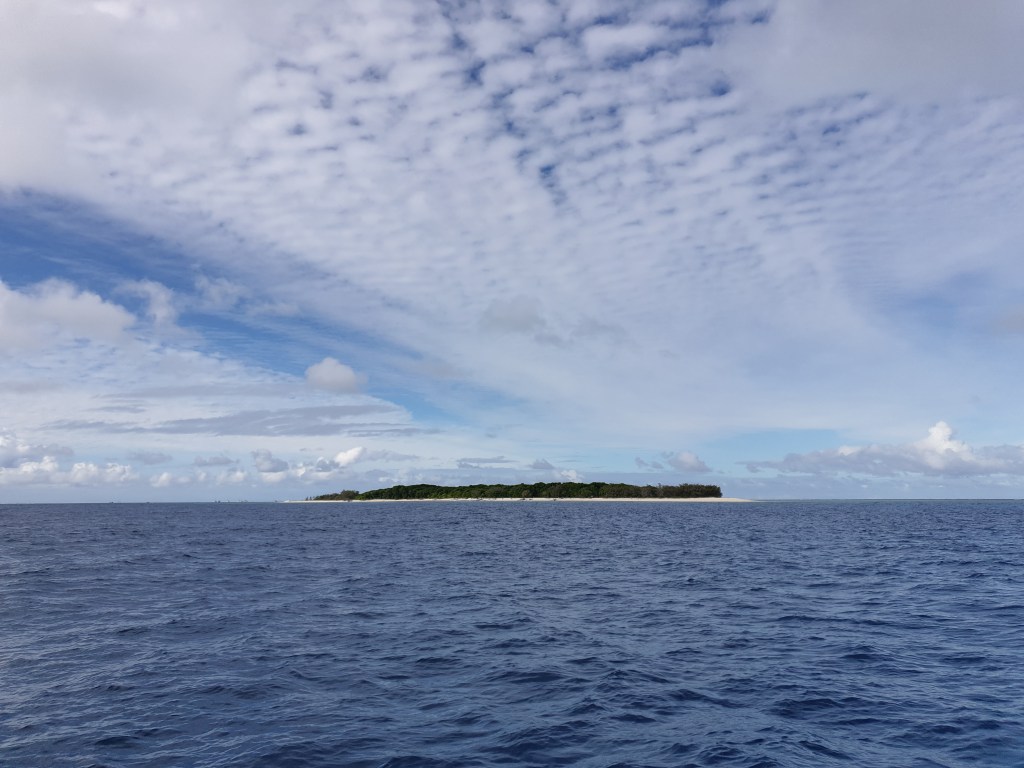
Lady Musgrave Island
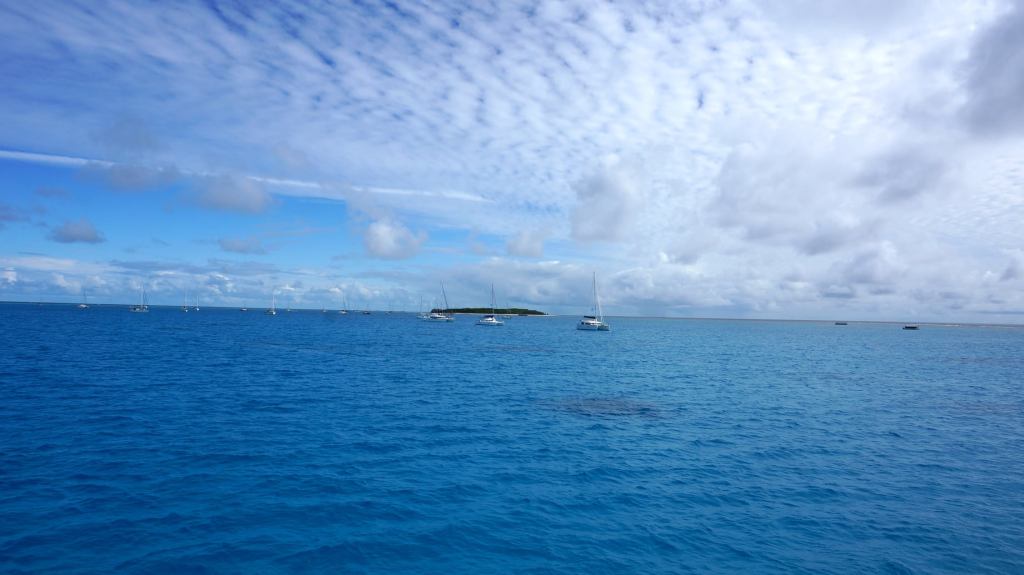
Anchored in Lady Musgrave lagoon. Photo by L. Hembrow. We are on the far left somewhere.
The water begins to change colour as you approach, shading from a navy-blue to sapphire to aquamarine. Leaving at 3am saw us arriving in Lady Musgrave easily within the visual navigation window, so no problem finding a sandy spot between bommies and settling in for the night, after what had been a pretty rough and rolly trip with little wind and lumpy seas.
Lady Musgrave is a wonderful place to spend a bit of time. There’s good diving and snorkelling, and an island to explore, while your boat can shelter in the enclosed lagoon. Our friends, Andrew and Lynne on Mischief, have been fortunate enough to be there during turtle nesting season. Those who have followed our blog will know we’ve visited before. Alas, weren’t there to do any of those things this time. We were simply hoping to get a good nights’ sleep in the protected lagoon. But it was not to be! Some unexpected rain squalls came through the anchorage during the night, which meant much anxiety and anchor watching. No dragging for us, of course, with our trusty Rocna anchor, but others had difficulties, and had to re-anchor in the night, which is an extremely risky proposition with no visual on the bommies.
Anchor a-weigh at 1000 and out through the pass into conditions that became unpleasant fairly quickly, and remained that way through the day and into the night, with what Graeme describes as ‘squirrely’ seas, due to the way they make us skitter this way and that in an unpredictable and flighty motion. The following video shows us ‘squirrelling’ around in the messy seas, with credit to Kym Petersen from Discovery. Oddly, the seas never look big in photos/video, but the way the boat is rolling around may help you appreciate what we were going through inside.
5 June: The unpleasant passage finally came to an end about 24 hours later (averaging MORE than 5 knots, thankfully). We couldn’t have been more relieved to follow the waypoints into the lagoon at Saumarez Reefs, where we anchored near the wreck of the SS Francis Preston Blair.

Symphony arriving at Saumarez with wreck in background. Photo courtesy L. Hembrow.
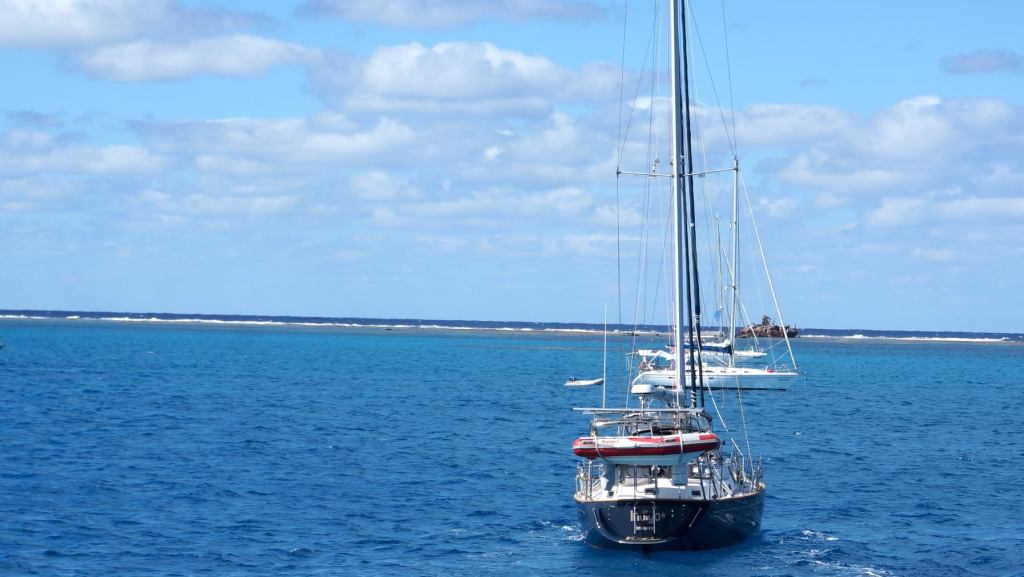
Our new friends, Indigo, coming in to anchor near us at Saumarez
There’s no sand cay at Saumarez, but the fringing reef is visible, and the wreck stands proud. You can see where we anchored in the picture above.
Graeme took the opportunity to go for a snorkel that day, reporting some wonderfully clear conditions with lots to see, including turtles and lots of fish. For sundowners, we created a ‘dinghy island’ in shallow water and floated around, chatting about the passage and the beauty of the area. Here’s a link to a video by the Down Under Rally guys. We are the dinghy furthest left. (This link will open in a new tab then you’ll need to close it and come back here to see the rest of the blog.) https://www.facebook.com/downunderrally/videos/241069104152629
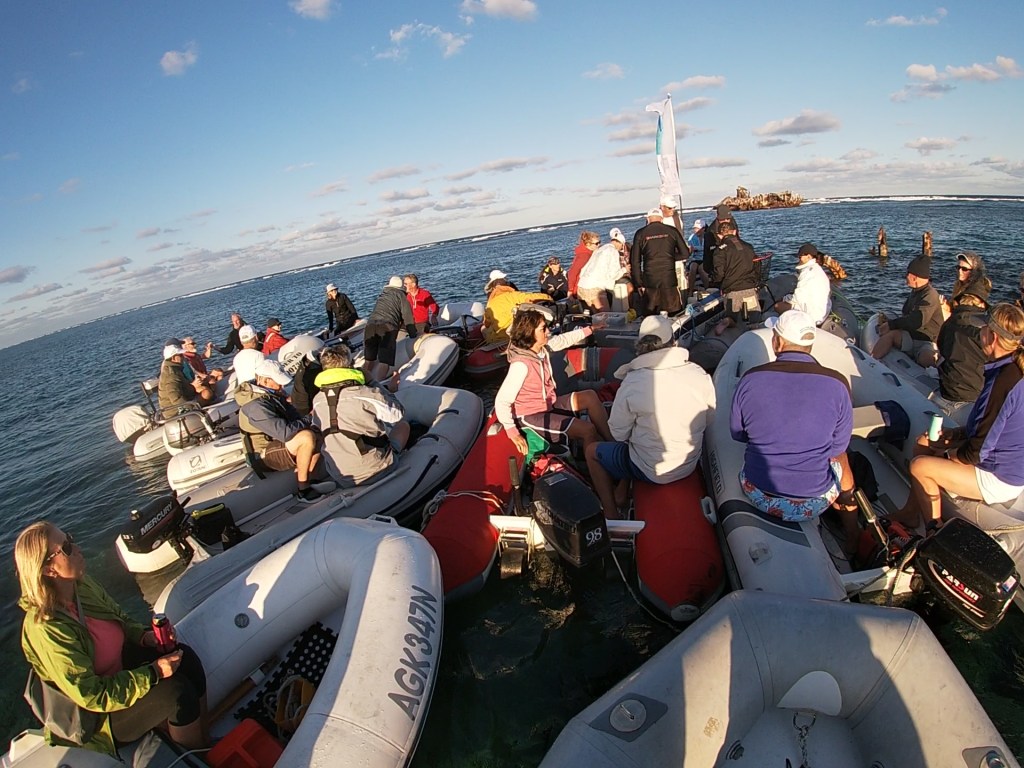
Dinghy island with wreck in background – from our dinghy.
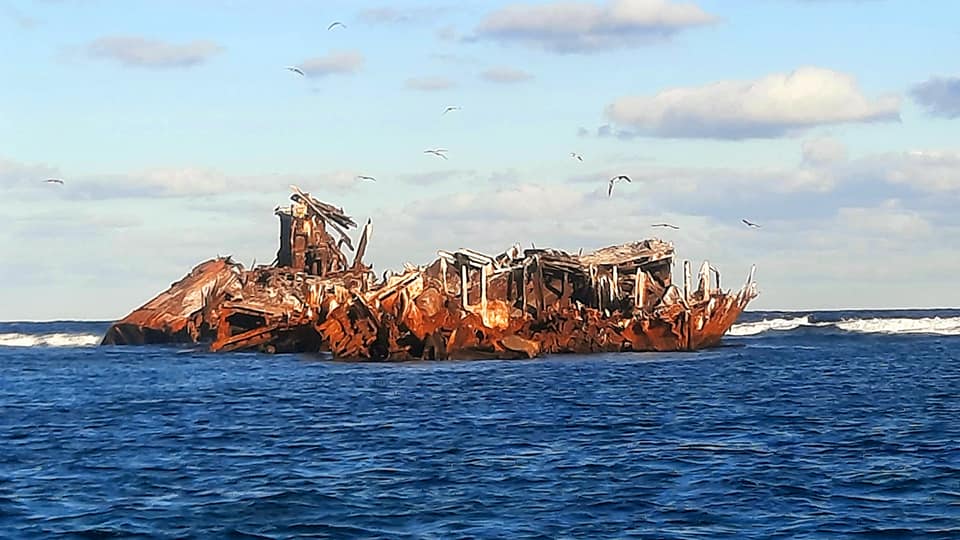
Photo by SV Walden (Leyton). 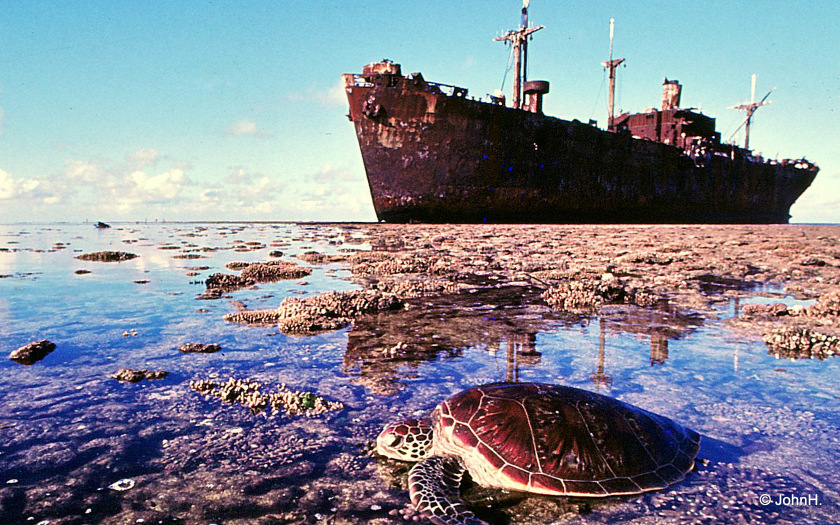
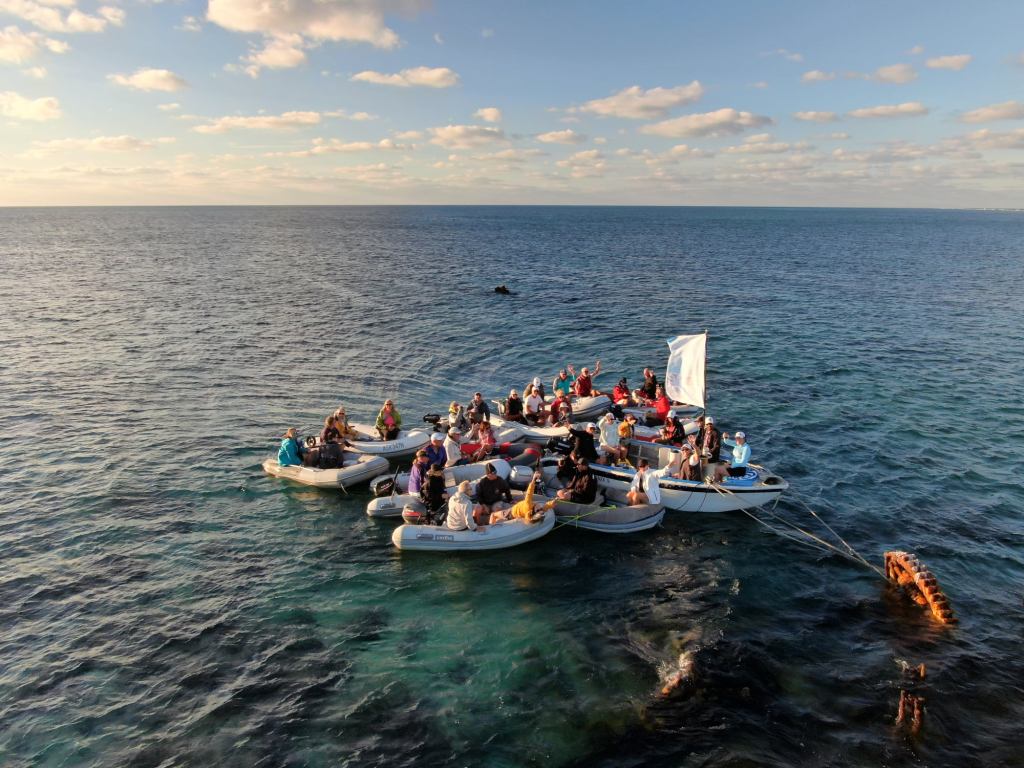
Drone photo by SV Mint (Tyson). Us far left.
The Francis Preston Blair was built in 1943 … The WW2 7196-ton Liberty Ship was struggling to maintain course during a cyclone and was forced aground on Saumarez Reefs 9.30am on 15 July 1945, while travelling between Papua New Guinea and Sydney [possibly under attack at the time]. The Liberty Ship was one of 2710, built during the war effort. The daughter of one of the crew described her father’s account of the grounding, saying ‘It was the typhoon that put Blair on the reef. The ship was taking water over the bow. When she struck the reef, she rose, then settled gently. The captain ordered all to stay on board due to the sharp coral and large number of sharks’.
The Australian Government purchased the wreck in 1952 … for target practice by the RAAF’s F-111 bombers.
Peter Sayre, Australia’s Coral Sea Islands & Marine Park (2019)
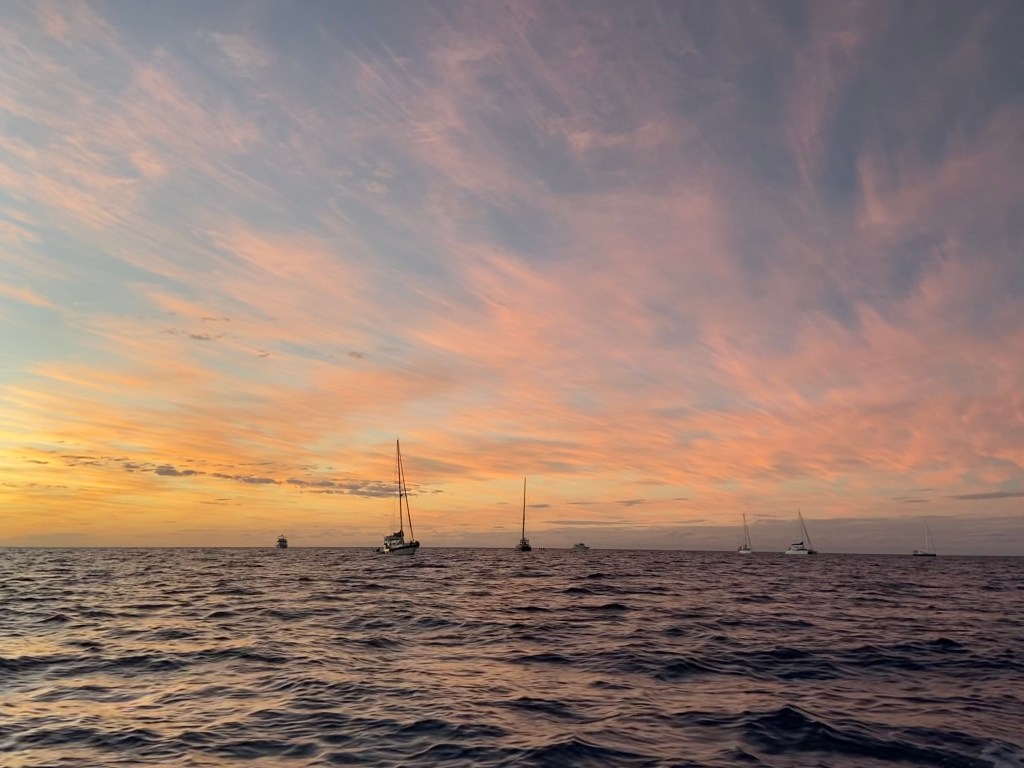
Heading back to Symphony after leaving dinghy island
6 June: The next day, pretty much everyone went snorkelling near the wreck. This is the first time we have done any diving with sea snakes, and we were pretty apprehensive about running into these slithery critters, having strong aversions to their land-based cousins. (And did I mention, they’re deadly?) Fortunately, they have very small mouths and are not aggressive. Turns out they’re wonderful to watch. They have been known to cause fatalities when they bite people in the webbing of their fingers, so as long as you’re not trying to hit them or handle them, you’re pretty safe. They tend to coil out from under a rock ledge, ripple like a gymnast’s ribbon to the surface, where they take a breath, then ripple back down to their nook. Some people experienced their inquisitiveness, with the little snakes coiling around their legs and arms. I was more than happy to watch from a distance!
We enjoyed morning tea on one of the big Schonning catamarans, Pneuma, hosted by Rod and Christine. It was a good opportunity to meet and chat to more of the rally participants over fresh baked bread and caramel slice. Jamie discovered they have a washing machine on board and extracted a promise to be allowed to help with the washing at some stage in the future.
Our first experience of the Coral Sea reefs was proving to be challenging, exciting and rewarding . There’s never been a rally out to these places before, and we were discovering we had become part of something unique and really special.
Next stop: Marion Reef.
 Symphony in Sea
Love the videos and the history of the shipwreck
LikeLike
Sea snakes!! *shudder*
LikeLike