

From playing with the whales at Fraser Island, we travel overnight to the beautiful Lady Musgrave Island…
Lady Musgrave is a coral cay island enclosed in a large lagoon. It is unique in that it is the only island with an accessible lagoon on the Great Barrier Reef. Due to its proximity to the mainland and its stunning outlook, it is very popular with both cruising boats and tourist boats. It is only a matter of hours for a high-speed boat to cruise across from Bundaberg doing 20+ knots. It’s a whole different story for a sailing boat cruising at an average of 6 knots!
We left Platypus Bay/Rooney Point at the top of Fraser Island at 2100 (9pm, for those who haven’t become familiar with my 24-hour format). We determined that we had 70 miles to cover, and we needed to be entering the lagoon after 0930 to ensure good visibility of the reef. This meant we needed to sail overnight. With no moon, and no loom of city lights, it was a deep dark night. Starlight, intensified out here, sparkled in silver lines across the water. We could hear whales all around us, so we moved at very low speed out of our anchorage, fearing that we might hit one. Once clear of the bay, we set a course, turned on the auto pilot, and motored into a calm sea. Graeme was on watch from 2130 to 0200, and watched an amazing moonrise; a huge orange glow that he initially took for an approaching ship. I took over from 0200 to 0600. It was flat and moonlit and beautiful, but otherwise uneventful – and that’s just how I like my watches to be.

We approached the entrance to Lady Musgrave lagoon just on 1000, accompanied by a small pod of dolphins. We were arriving at the optimum time for visual navigation. Too early and the sun silvers the water, making it impossible to see where the coral is. (Same thing happens if you try to leave after 1600.) The approach was clear and wide. Looking from above, you can see a distinct ‘cut’ through the lagoon’s fringing reef. Our system is that I stand forward on the coach house roof and direct Graeme. This way we make it safely through the pass and around the coral bommies. It is a system that works well for us.
The lagoon at Lady Musgrave is really something special. With calm waters most of the time, it is an oasis in what can be a wild ocean. When we arrived, the water was turquoise blue gleaming like a polished gemstone.
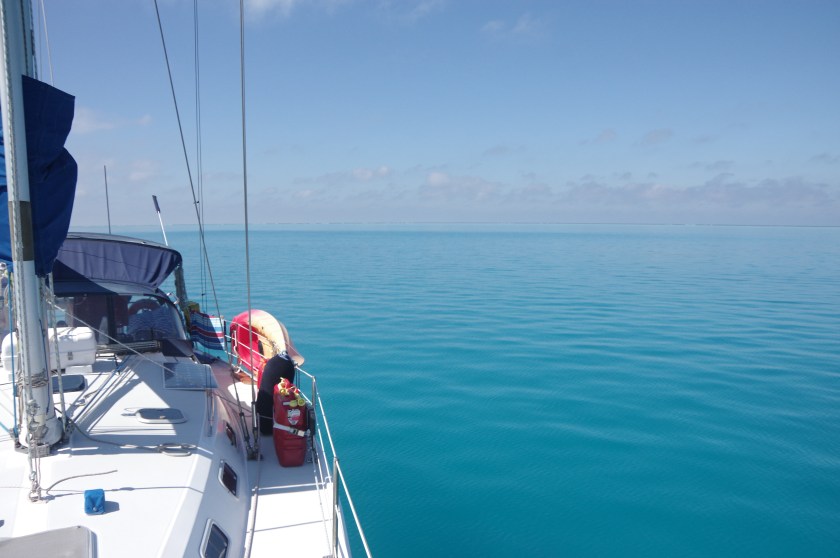
It was the busiest we’ve seen the lagoon, with about twenty-five boats including the big tourist boat. We found ourselves anchored not far from John Barleycorn and their friends from Pittwater, Aussie Rules, a Catalina similar to our friend’s yacht, Nineteen.
With the water such an inviting shade of blue, Graeme took the opportunity to dive the anchor chain. A lot of people do this in coral bommie areas to see if there might be anything the chain or anchor could get caught on, or to ensure their anchor is dug in well. While beautiful and seemingly benign, the winds can and do come up. If your anchor starts dragging in the night in a place like this, you’re up poo creek without a paddle.
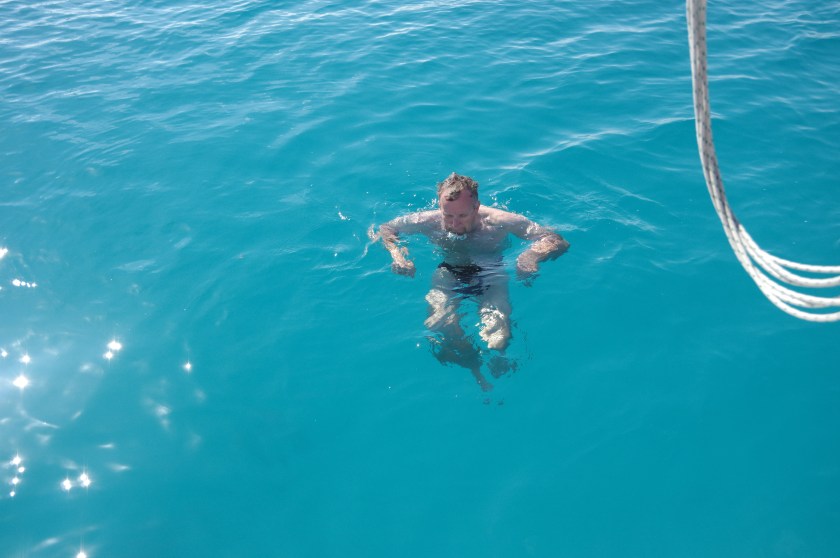
Graeme reported the water was fine, so we loaded all our snorkel gear into the dinghy and headed to a likely spot. The visibility was great and there was a lot to see, but we didn’t last long in the water, on account of Jamie getting too cold. Occasionally we need to be reminded it is still winter, even if it’s warm enough to swim. Two turtles hung around us for a while, as curious of us as we were of them. We saw an abundance of colourful fish, hard coral and even some anemone fish darting in and out of their anemone (same family as the clown fish).
More snorkelling the next day, this time with our wet suits. Getting Jamie into his full-length wet suit is quite the feat and you’re ready for a cooling swim by the end of it. It is very thick and fits like a second skin, and you have to kind of pour him in – and he does little to help the process! Our second snorkel at Lady Musgrave was altogether more successful. Everyone stayed warm and we enjoyed showing each other the giant clams, various corals, anemone fish, giant sea cucumbers and spotted cowrie shells. We were particularly taken with a boulder coral covered in tiny lilac ‘flowers’. Sorry, no snorkelling photos yet. We forgot the underwater camera both times. We intend to be more diligent next time, and try to get some shots of the underwater world.
The second night at Lady Musgrave we enjoyed a BBQ on Blackwattle and possibly had a little too much to drink.
The next day, (Wednesday 16 August) we went over to explore the island. We walked more than half way around on the coral strewn beach, delighting in the various crystal blue and green shadings of the water stretching away into the lagoon .
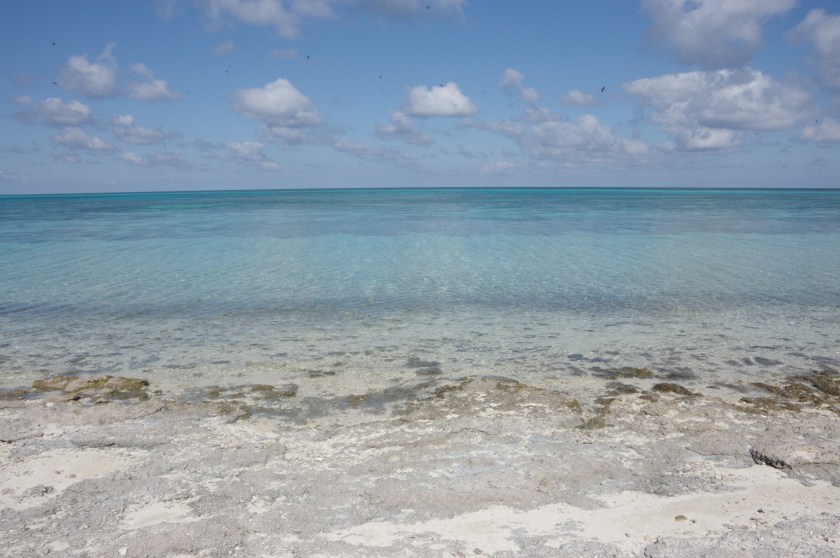
A school of fish flashed past like scattered silver coins in the shallows, herded by a reef shark. Later we watched a huge (cowtail?) stingray, rippling its wings to show the white underneath, as though getting ready for flight.

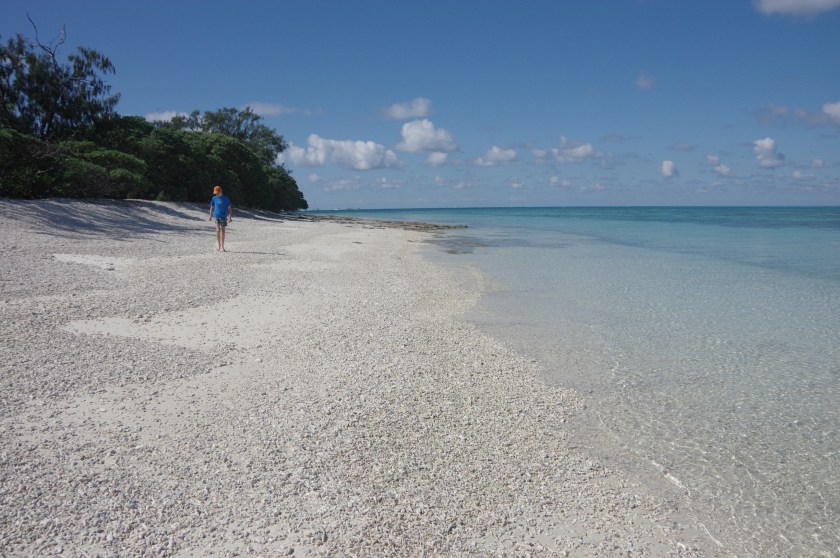


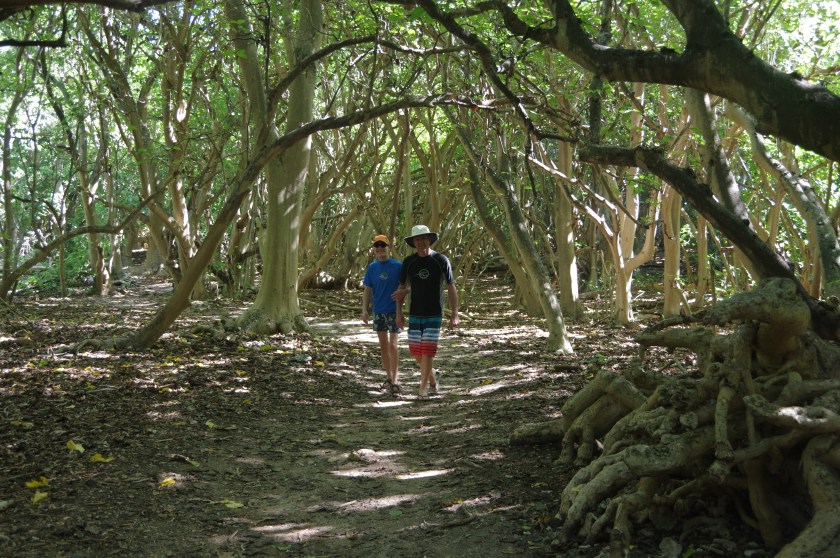
We walked back through the cool interior of the island, through the groves of pisonia trees where black noddy terns squabbled in the tree tops. Fortunately, most of the birds were out enjoying the air. We’ve walked through these groves at other times where so many birds are roosting in the trees that it appears to be raining!
That afternoon, Steve and Helen from John Barleycorn turned up for an impromptu happy hour, and Christian joined us soon after. A great end to another fabulous day. Talk got ‘round to the weather and the forecasted strong winds. We wanted to be out of there before it became untenable. It was decided Blackwattle and Symphony would depart, with plans to head to Pancake Creek, at 0930, by which time we expected to have good visibility to navigate our way back through the channel.
We had no idea what the Lady had in store for us the next day, and ignorance is bliss, hey?
 Symphony in Sea
Loving reading your blogs Sue, very entertaining and interesting. Photos are awesome, enjoy xx 😎
LikeLike
I don’t know how you’ll be able to leave this paradise…
LikeLike