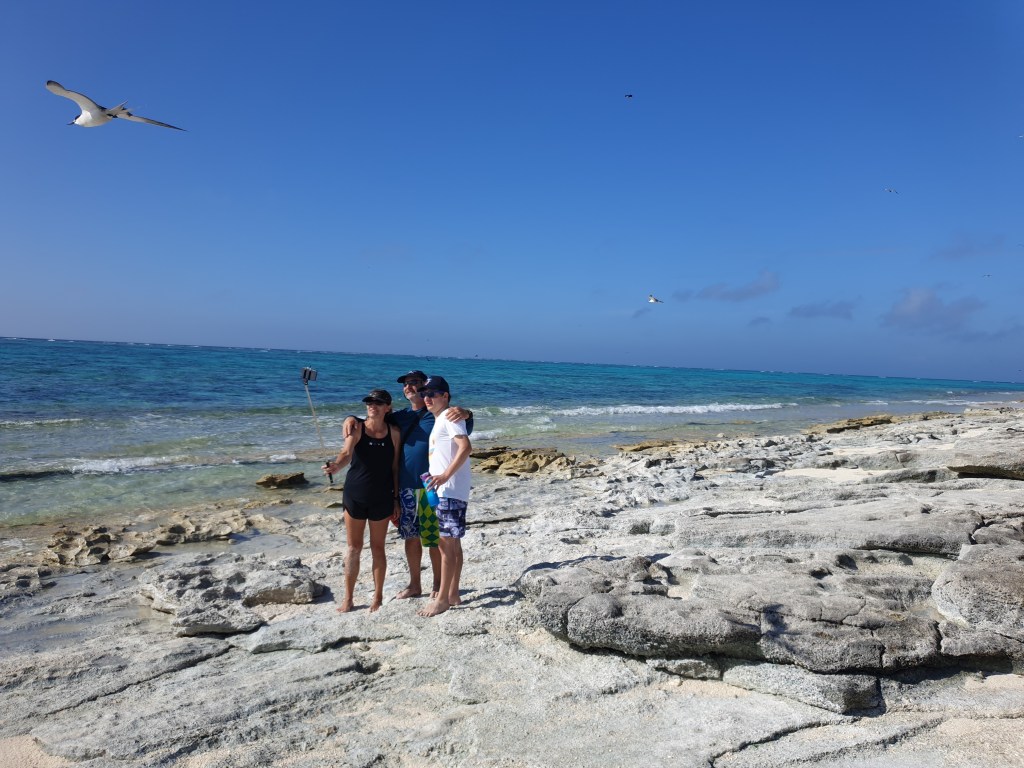
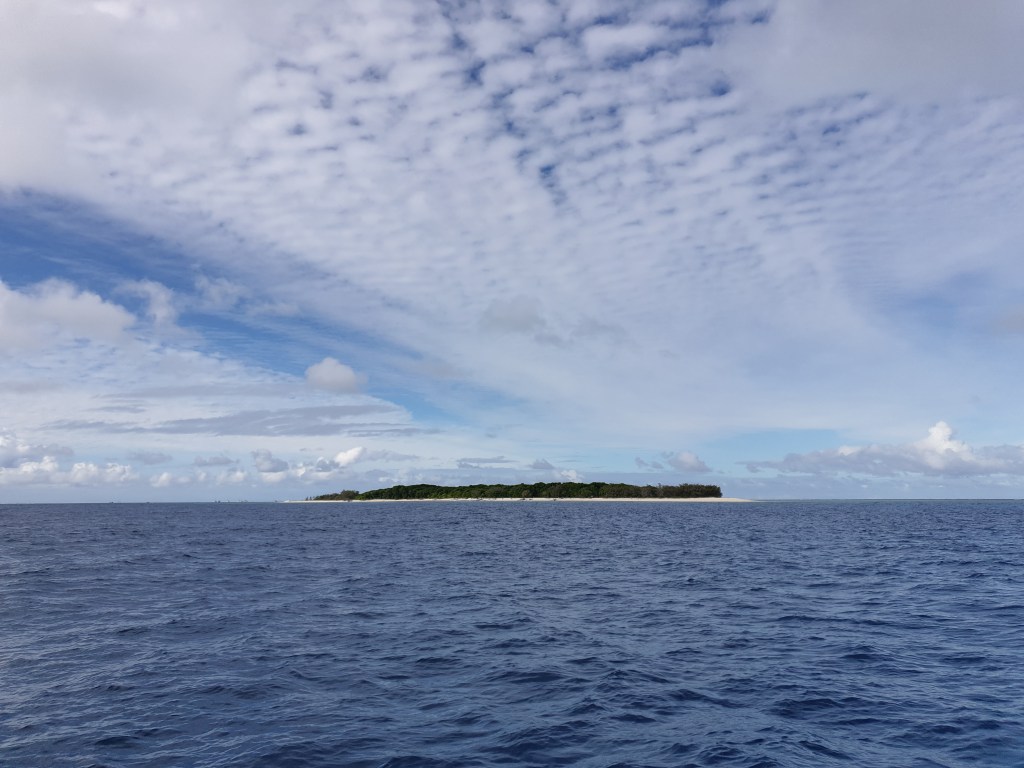
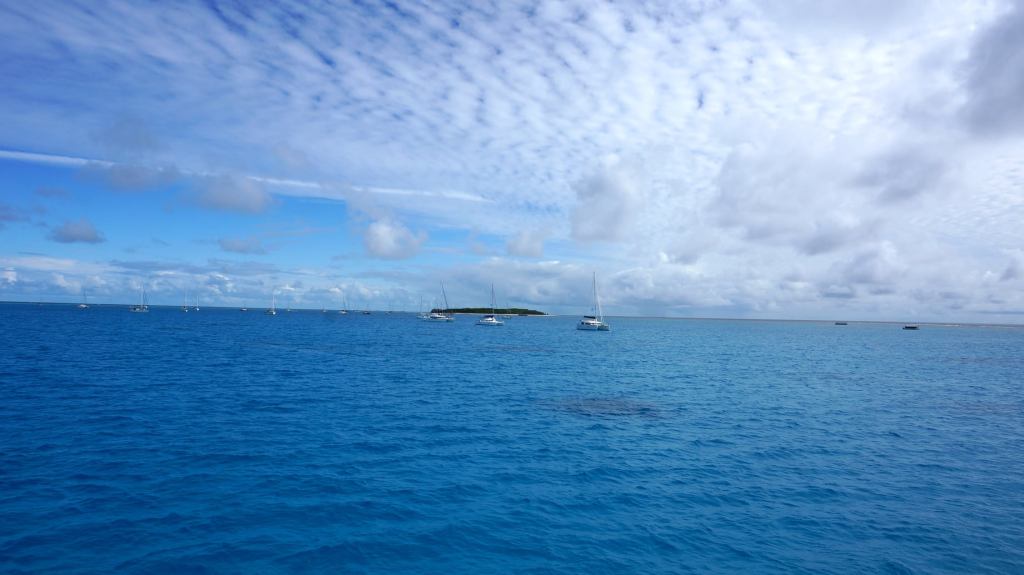
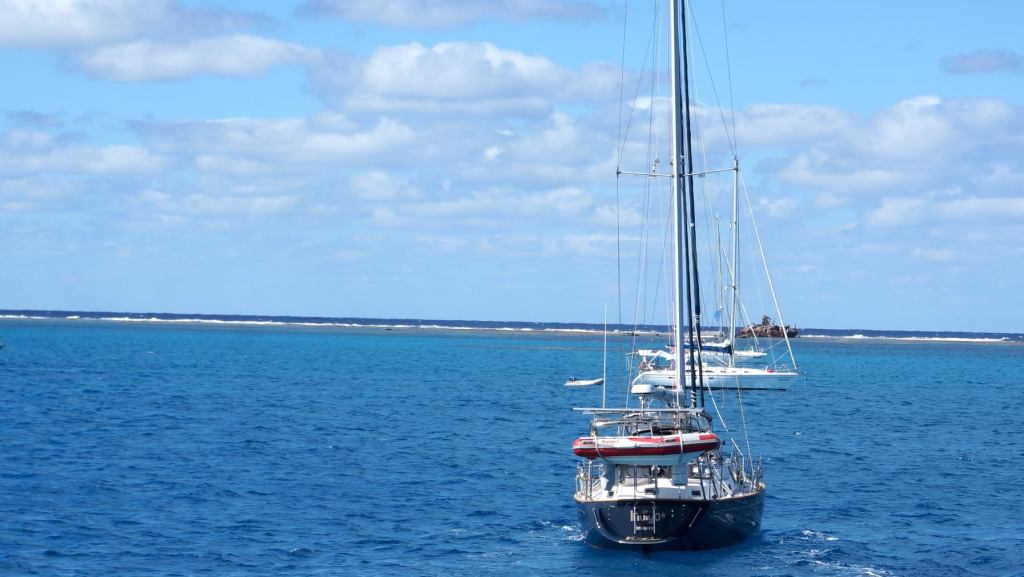
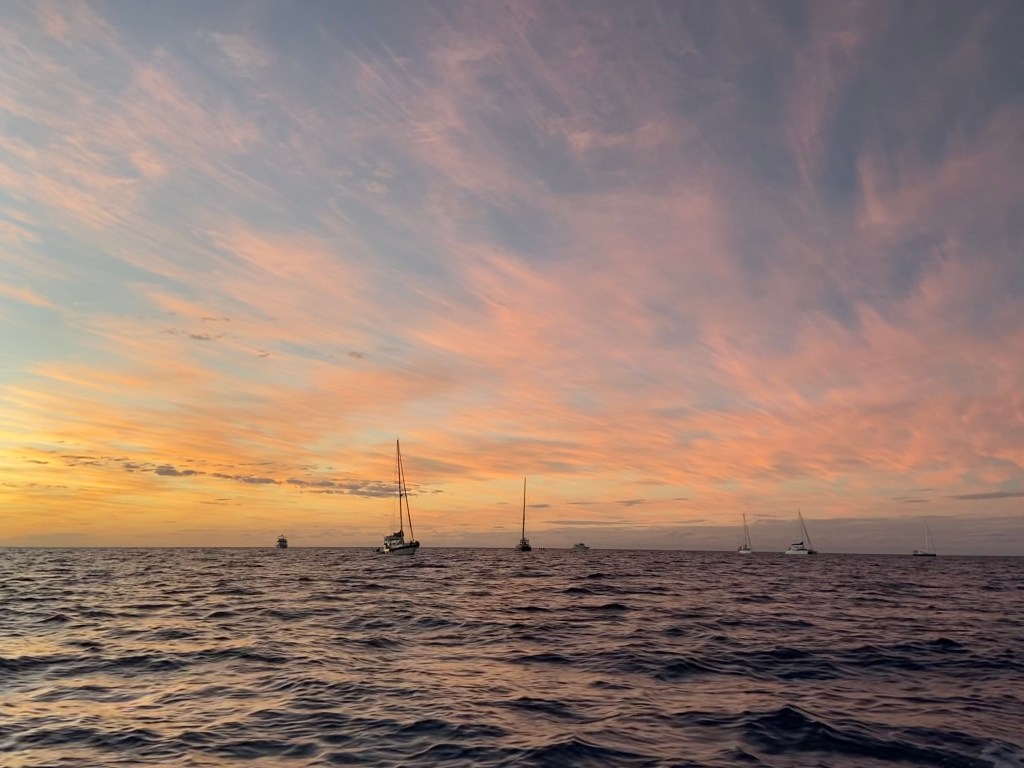
Heading in that northerly direction…

Michaelmas Reef, Low Isles, & Port Douglas

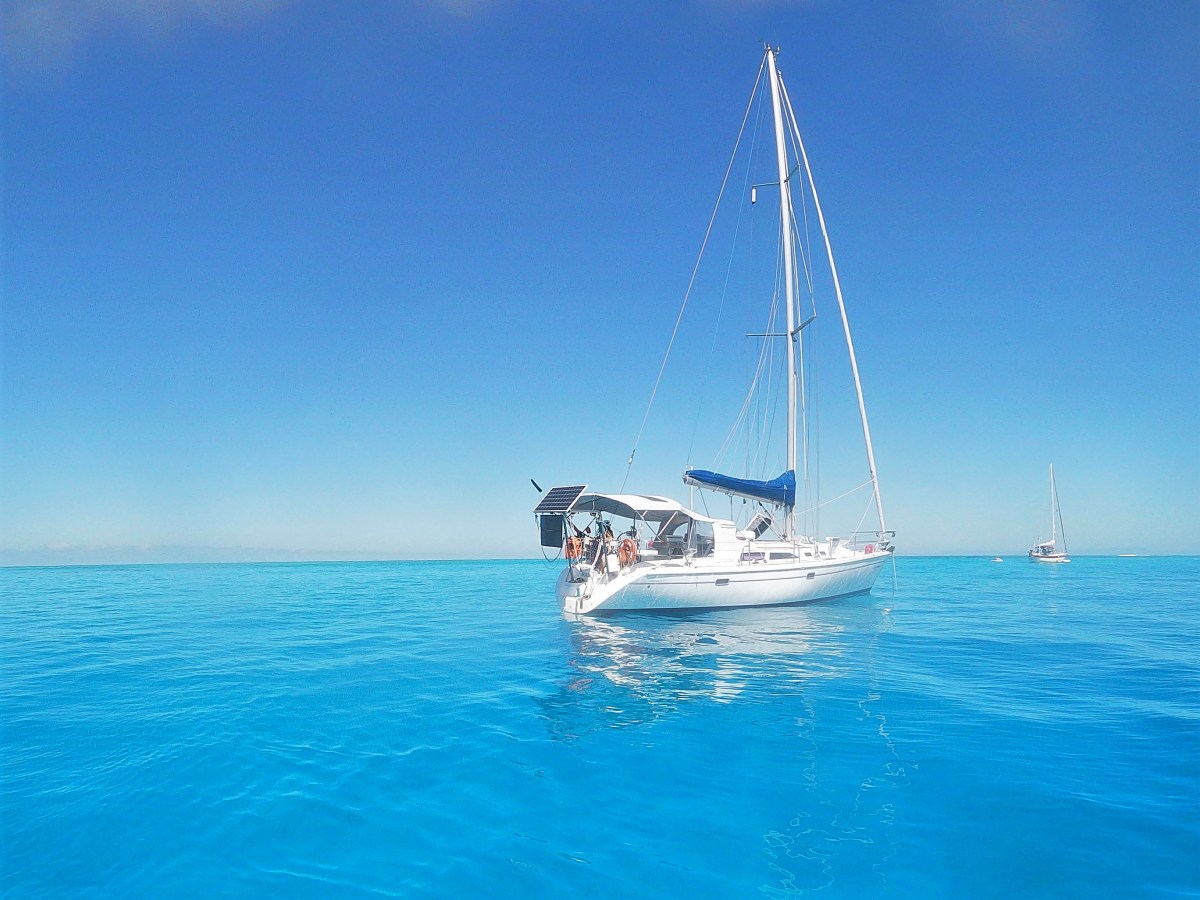
We finally broke ourselves away from the marina at Cairns and set our course for the somewhat fabled Michaelmas Reef.  We had a good day’s sail, with low seas and enough wind to get the genoa out.  It was only a trip of about 18 nautical miles (33 km), so a nice short one for our first day of extraction. We came into Michaelmas around 1400 with good light for navigating through the coral.  Being close to Cairns, Michaelmas has long been a very popular spot for day-trippers to experience the wonders of the Great Barrier Reef.  Due to COVID-19, the day-trippers are sparse, and trips to the reef have been scaled right down.  With Mischief, we were the only boats out there – quite a novel experience, we’ve been led to believe.
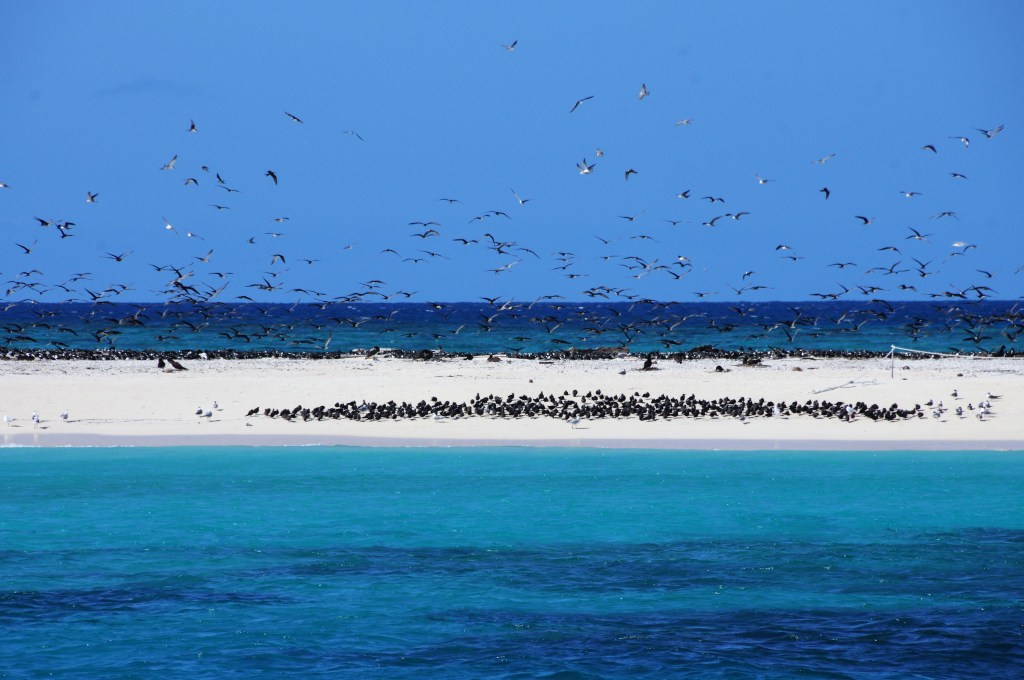
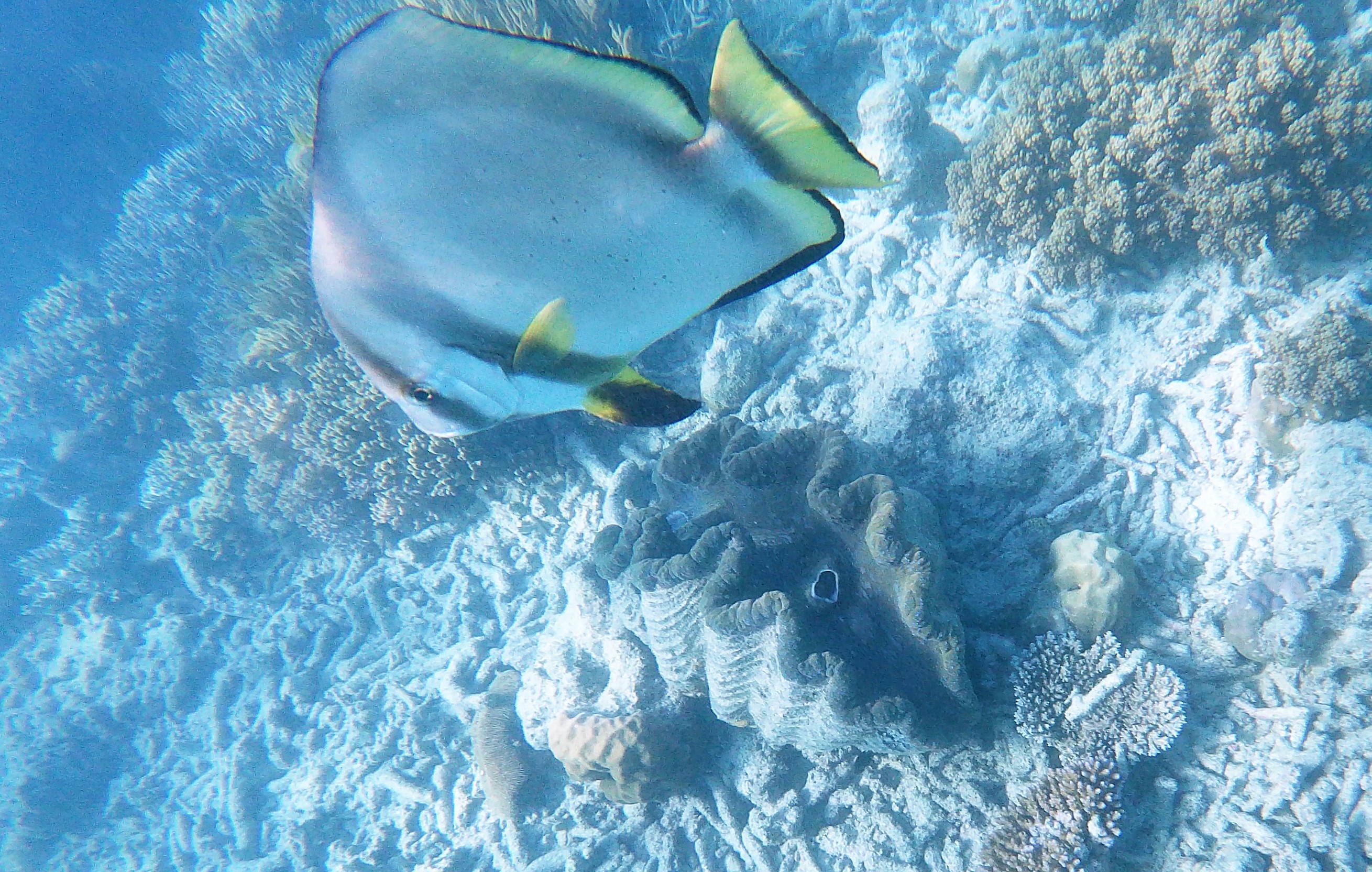
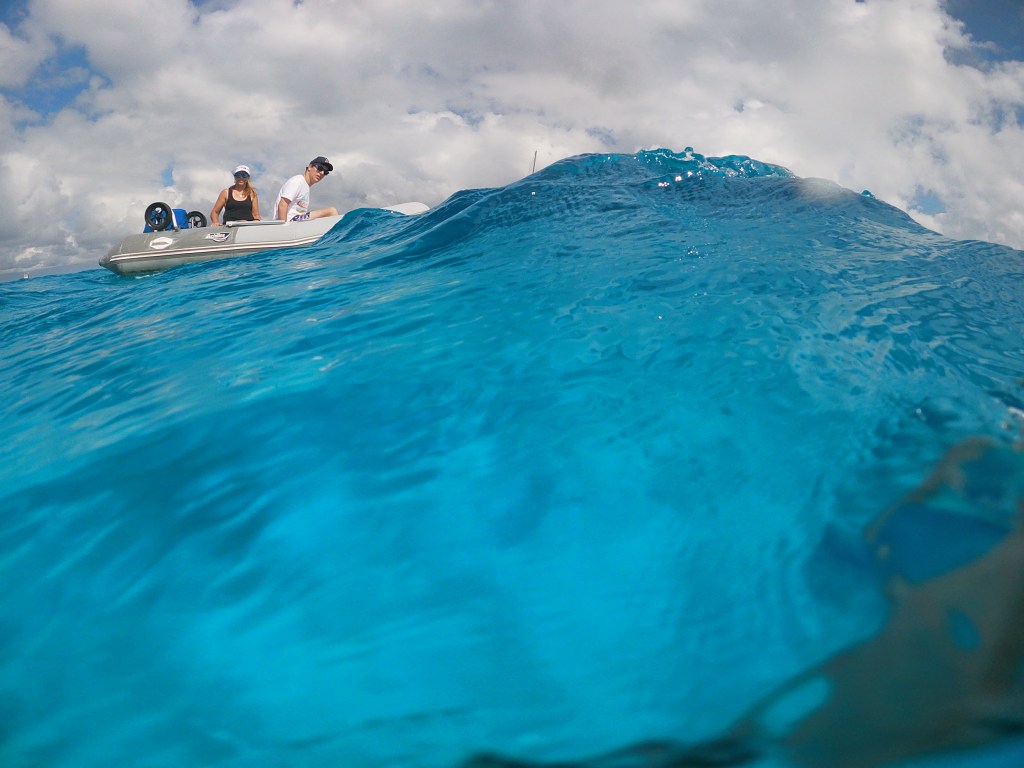
We picked up a public mooring with a time limit of 24 hours.  The only other public mooring was a small one for boats under 10 metres, so Graeme helped Mischief find somewhere good to anchor.  With the water sparkling aqua-blue and inviting, and a school of resident batfish swarming around our boat, we headed in for a snorkel. 
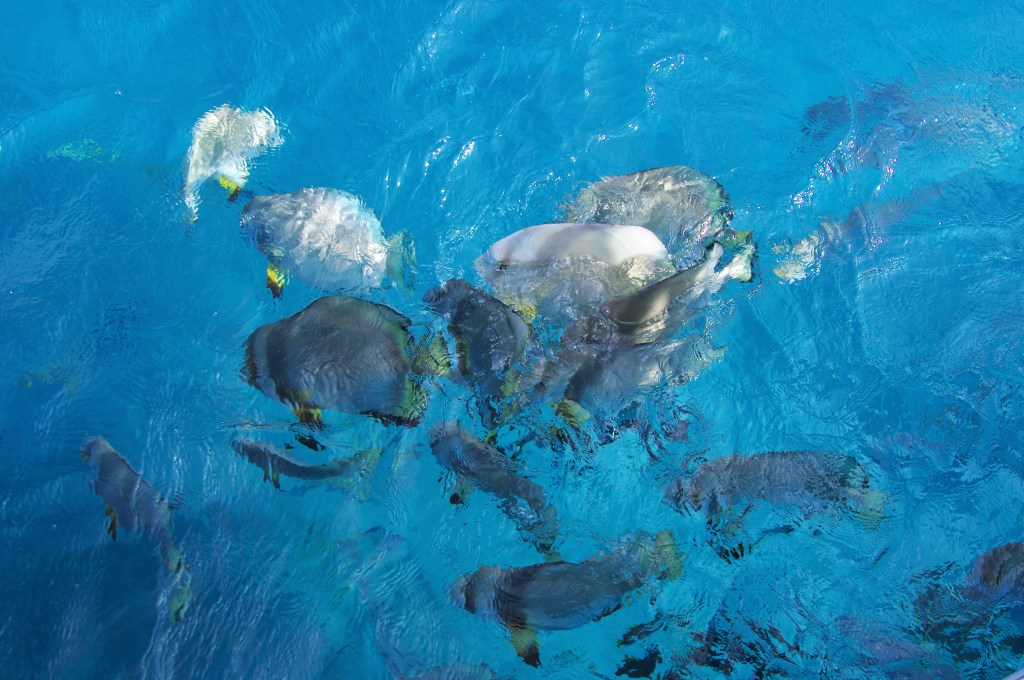
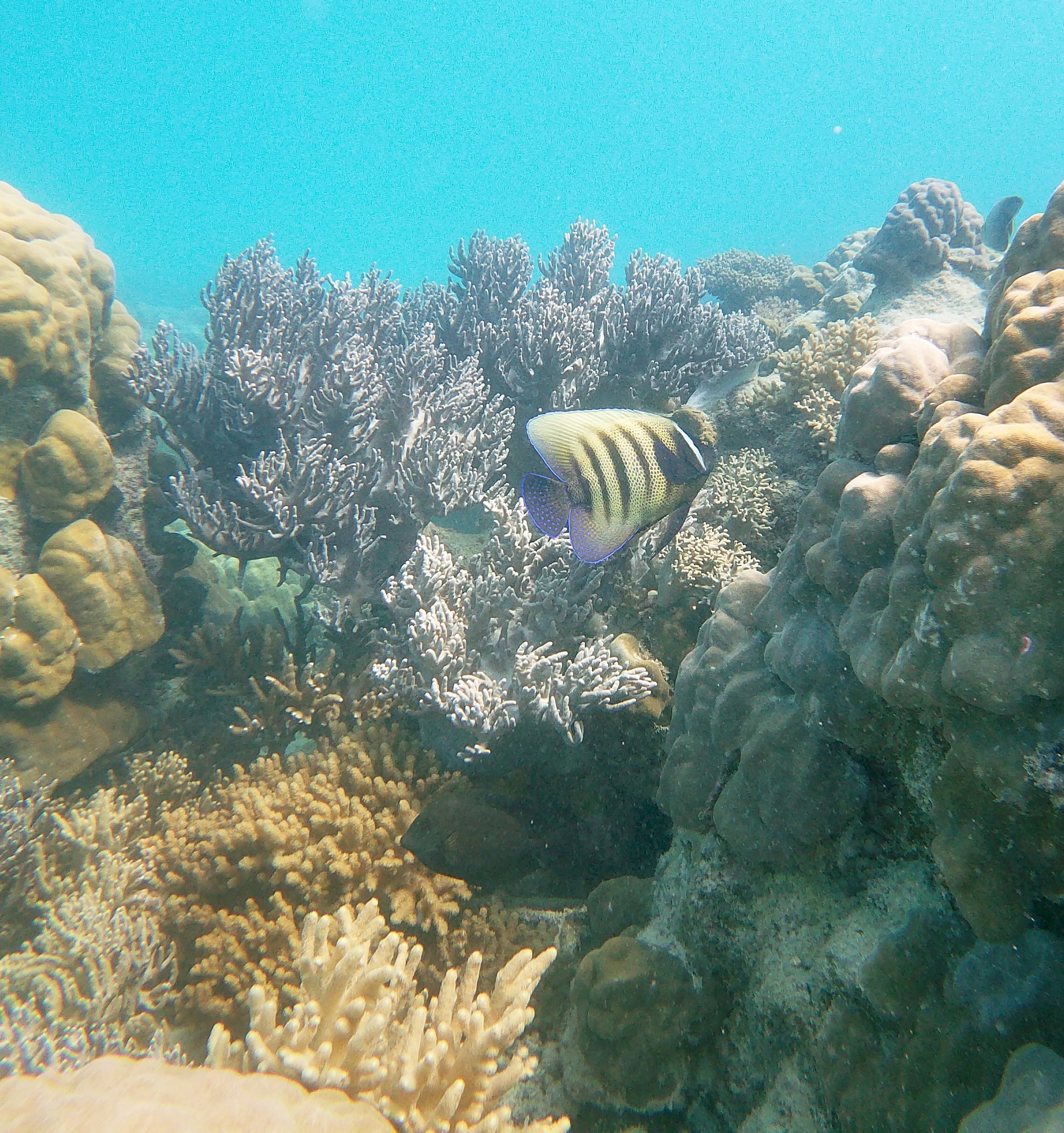
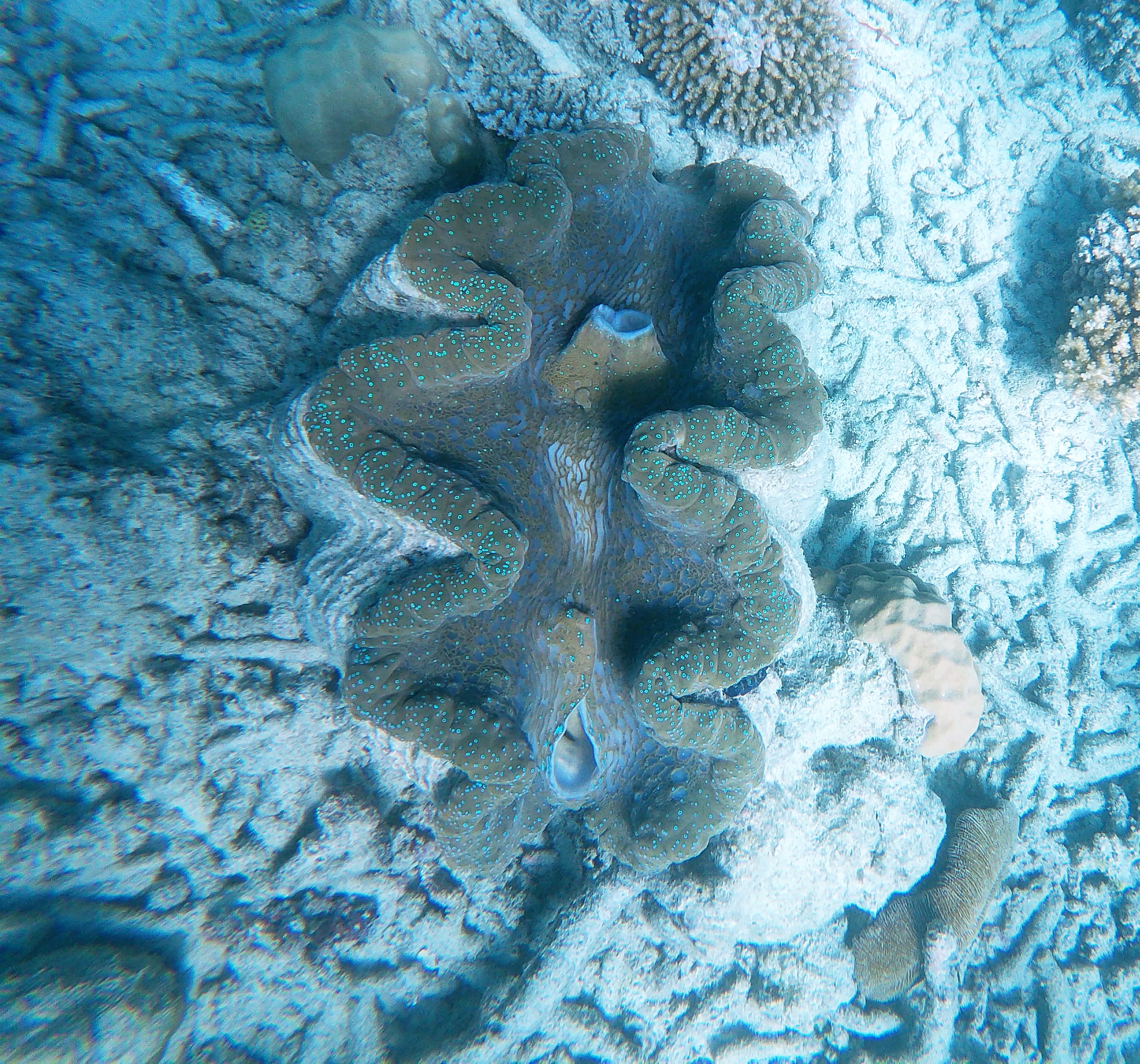
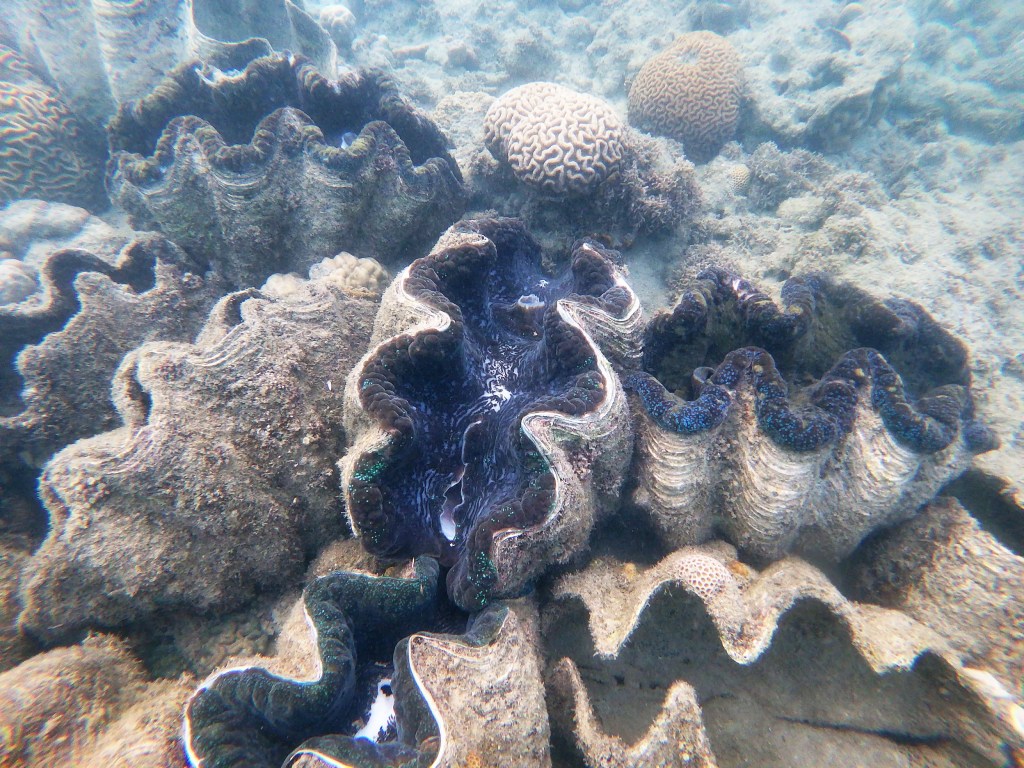
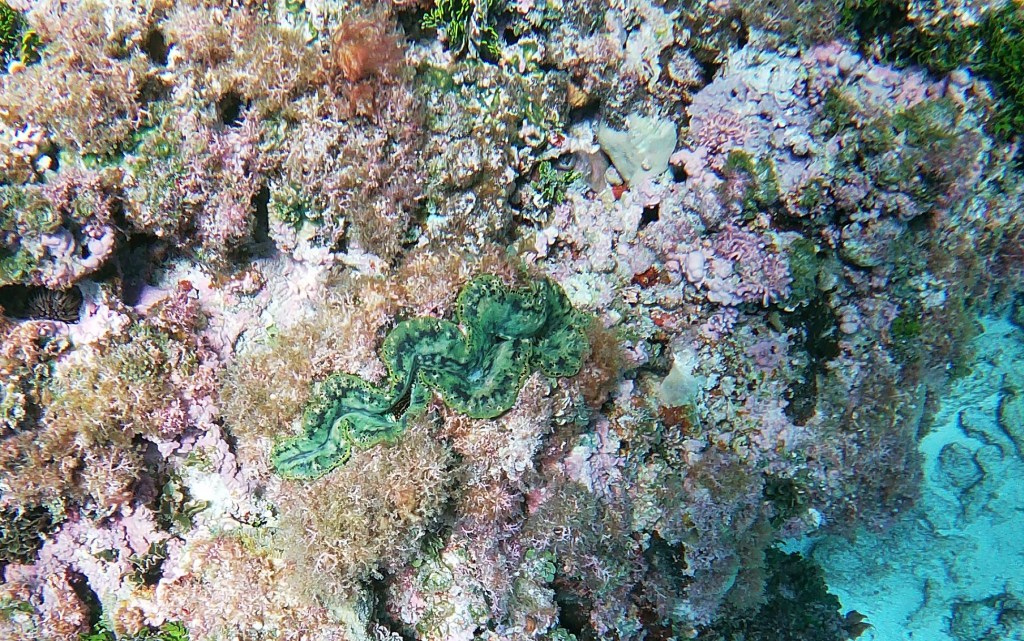
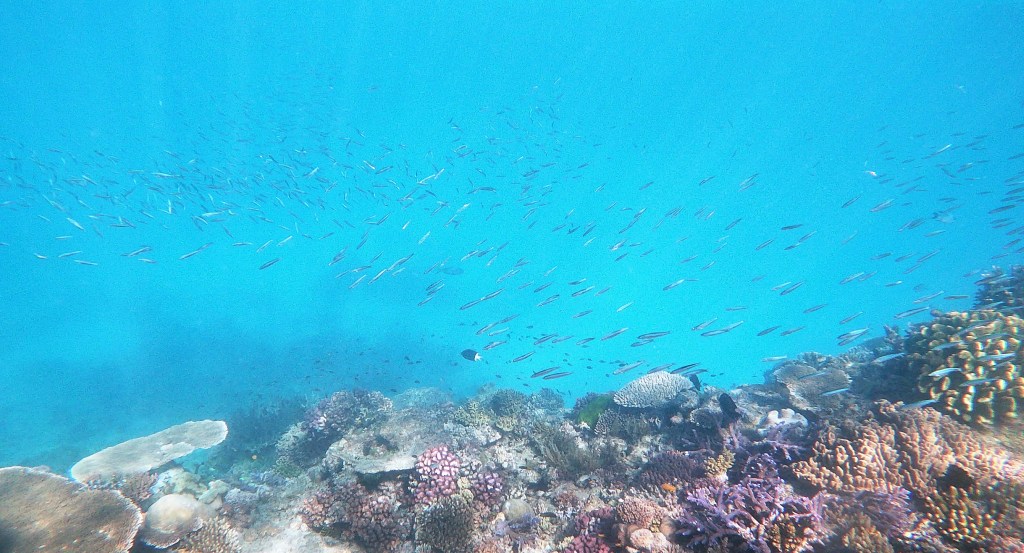
The batfish followed us and kept us company as we explored a bommie near the boat, discovering clusters of giant clams and some bigger fish amongst the batfish. 

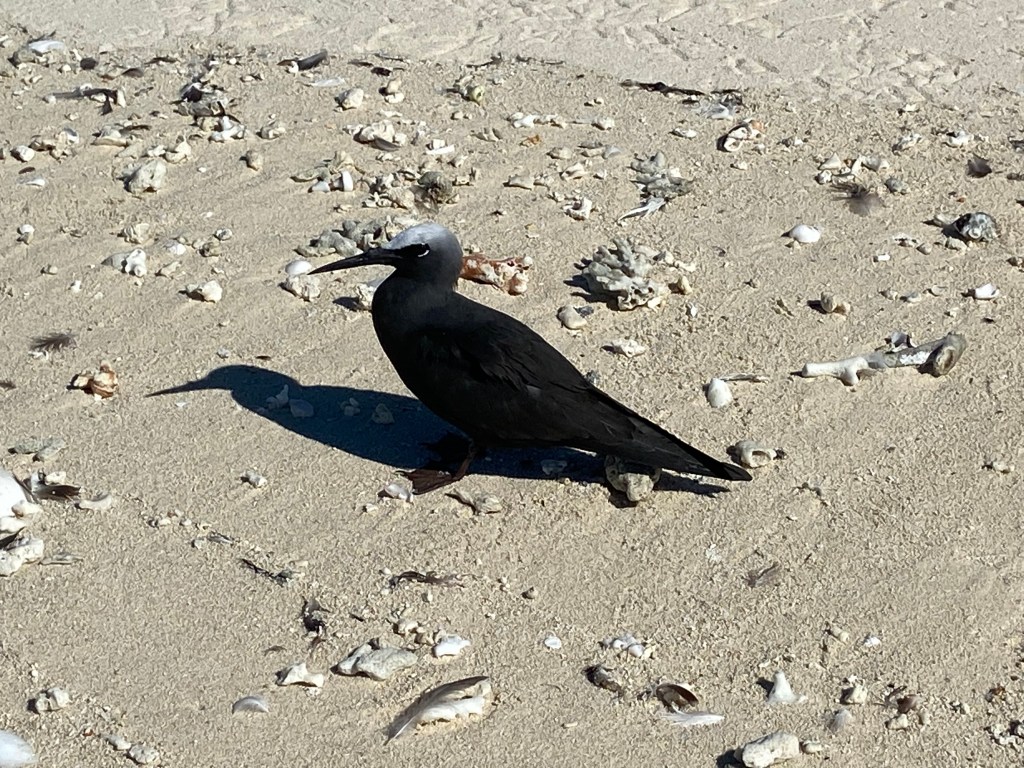
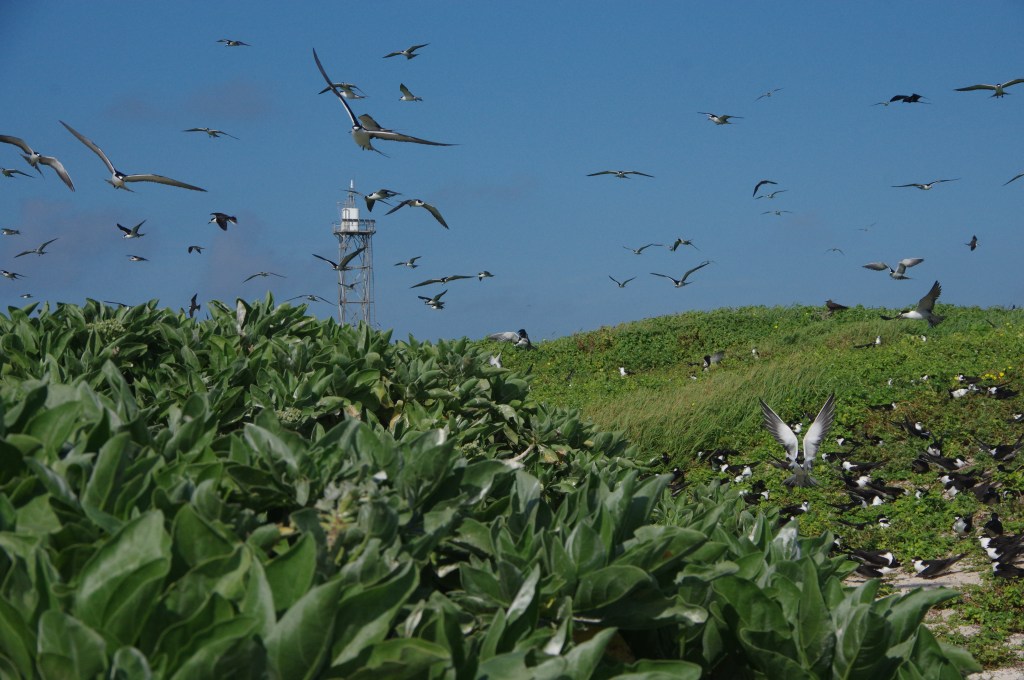
Graeme dropped Jamie and I at the sand cay, which is reported to be one of the most important seabird nesting sites in the Great Barrier Reef for noddies and terns.  The whole of the cay above the high-water mark was covered with nesting birds, many of them using piles of sticks as nests.  The squawking and screeching of the birds reminded me of East Diamond Islet, but here, they had not a stick of foliage to protect them from wind or predators.  Most of the island is cordoned off to protect the nesting sites.  (The birds lay their eggs right on the sand.) Jamie and I saw a snowflake eel in the shallows, and huge crab holes in the sand – big enough to put your hand down. (We revisited the sand cay with Andrew and Lynne the next day, with a camera!)

After an uneventful night, the morning brought some interesting visitors to our boat.  The police and Border Force. They came into the reef from their ‘mothership’ in a big dinghy, just to say ‘hello’ and ask a few questions about our travels.
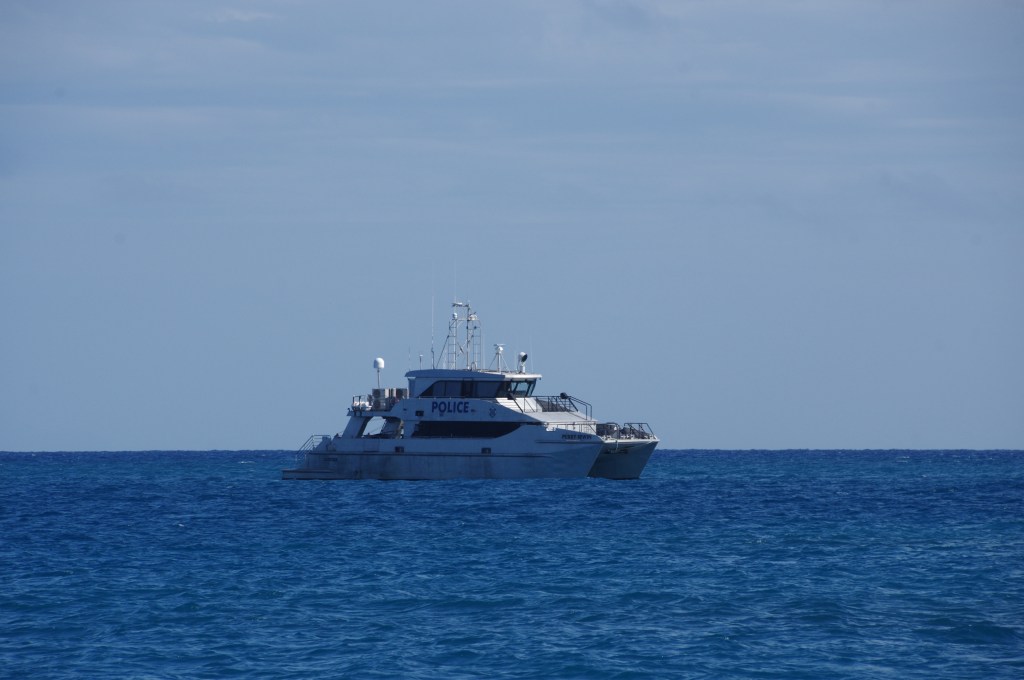
Feeling like we should share the mooring, we vacated for Mischief and picked up one of the commercial moorings.  The police had contributed to our confidence that we wouldn’t be asked to move. We used the Hooker for diving that day, revisiting the bommie with the clams with the guys from Mischief and exploring a few other spots. 

That night was quite disrupted with the huge commercial mooring buoy banging on our hull.  Graeme was out there at various times trying to reconfigure things to stop the banging.  We were all awake too early with strong winds.  Before 0930, a commercial boat turned up and asked us to move – not because we were on their mooring, but because we were in the path to them reaching the mooring they wanted to be on!  Due to the strong winds and reduced visibility over the reef for any attempt at re-anchoring, we made a snap decision to leave.

We had a 28-nautical mile passage (50 kms) of extremely boisterous seas and no time to prepare ourselves or the boat, but we eventually made it to the beautiful, sheltered anchorage of the Low Isles, where we were found a public mooring and were greeted by more batfish.
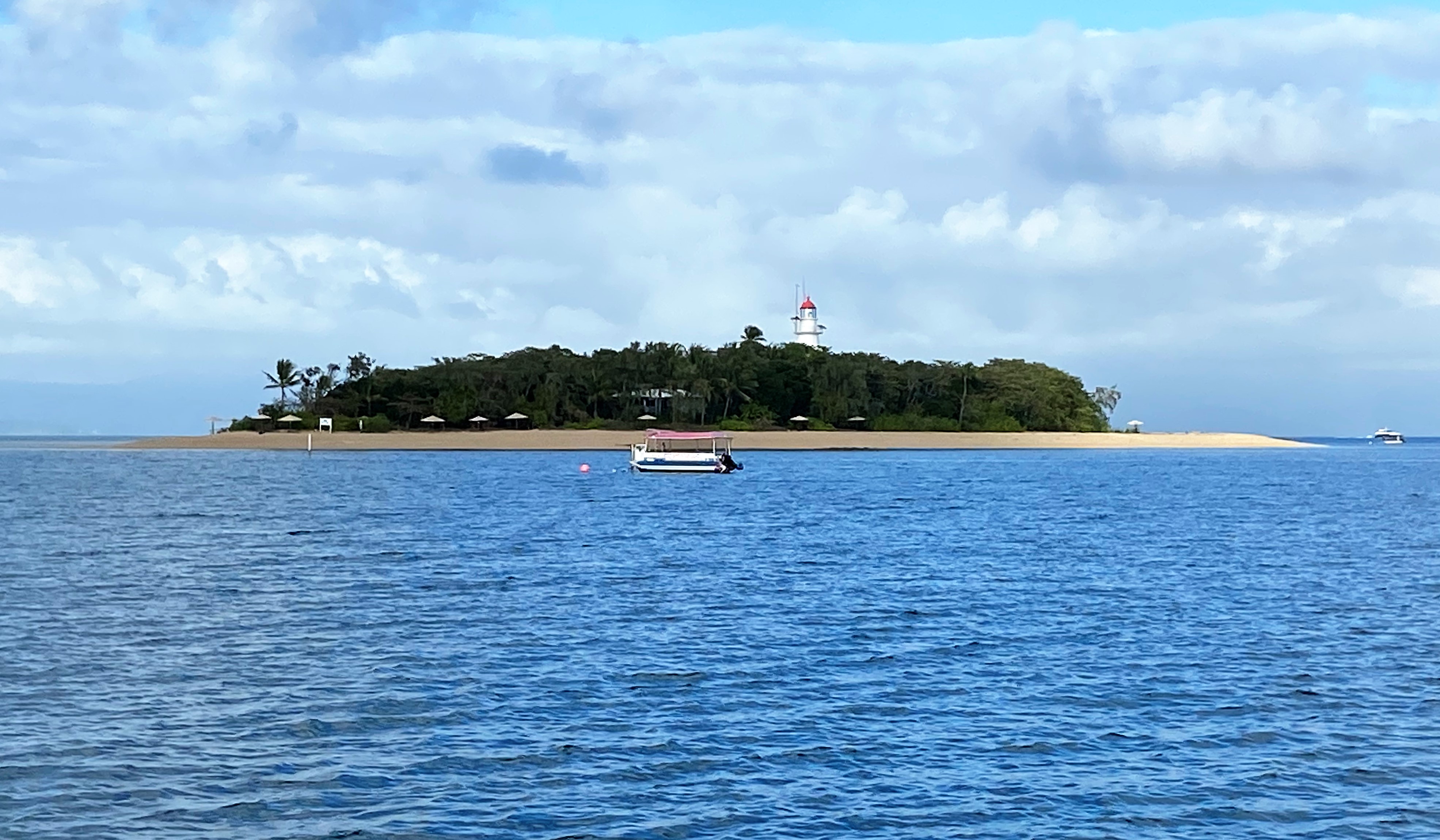
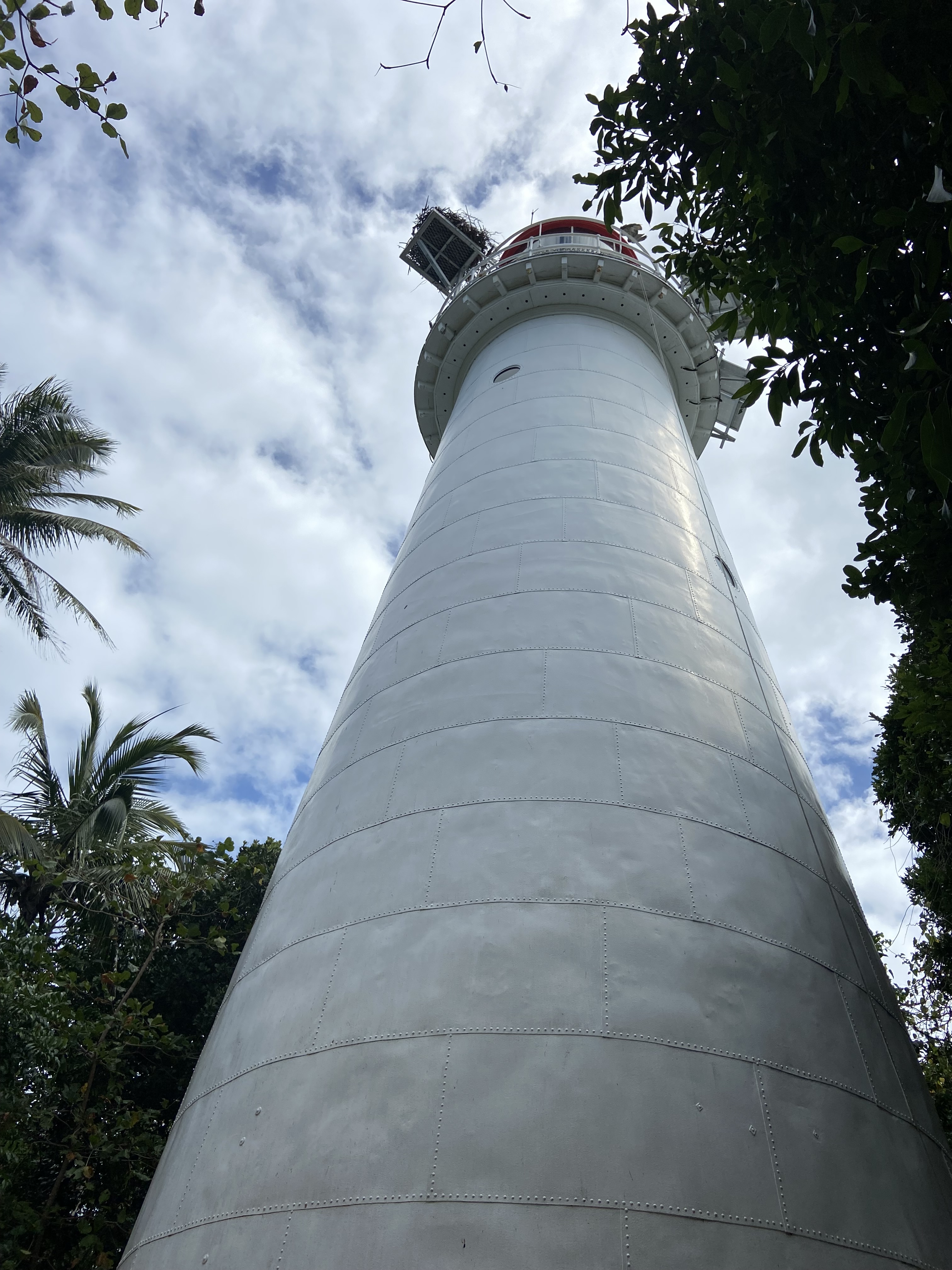
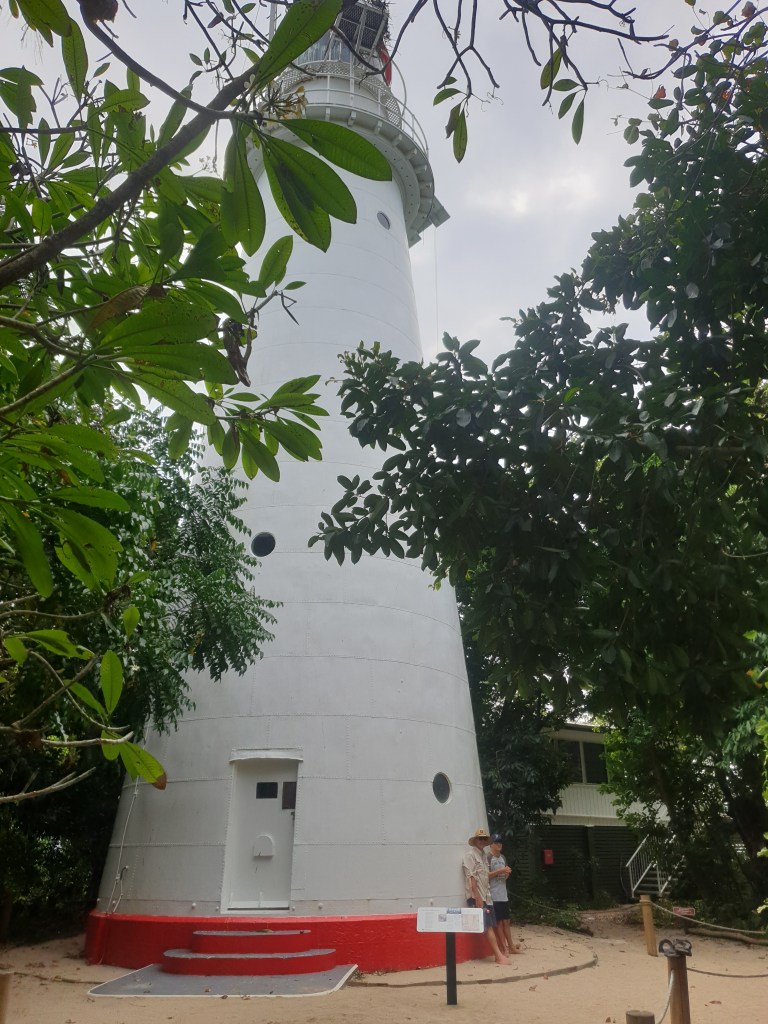
We spent the next few days at the Low Isles, exploring the small island with its picturesque lighthouse and well-kept pathways, snorkelling in the coral gardens and dinghying in the shallows to observe the many reef sharks and rays.  Mischief joined us the day after we arrived there, and we enjoyed spending time with them as we always do.

From the Low Isles, it was a quick trip to Port Douglas.  We were followed into the river by a Princess 60 motorboat called Yes Rhonda, which had come all the way down from Gove with friends of ours and Mischief’s (Heather and Steve) crewing. 

Symphony was shoehorned into the allocated berth at the marina.  Like most of the marinas we’d been to this trip, there was extremely limited space to accommodate visiting boats.  Mischief, however, managed to score a berth for a much larger boat, amongst the superyachts.

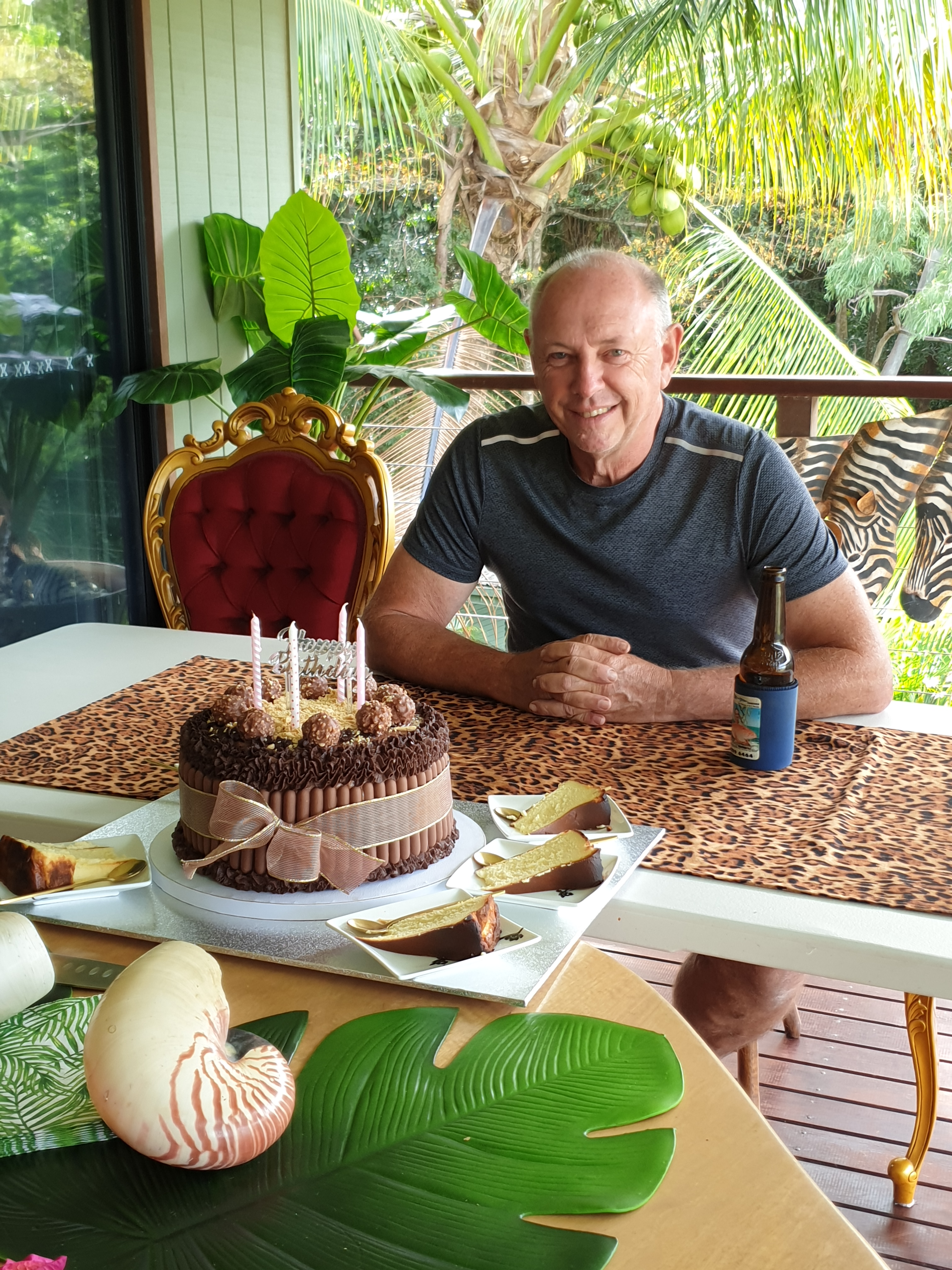
Love Port Douglas – and had a wonderful time there, with many evenings spent with friends, enjoying the local delights of Hemingways Brewery at the marina, Choo Choo Café, dinner out celebrating my birthday at a Thai restaurant ‘Sian by the Sea’, the markets, a walk to the lookout, breakfast out celebrating Father’s Day…  Another couple of birthday events… We were very fortunate to be offered the use of a car by Peter and Michelle, which allowed Jamie and I to get back down to Cairns for our time-sensitive second COVID shots, run some important boat errands, and the freedom to catch up with Geoff, (an old work mate of Graeme’s) and his wife Caroline, further north at Wonga Beach. 

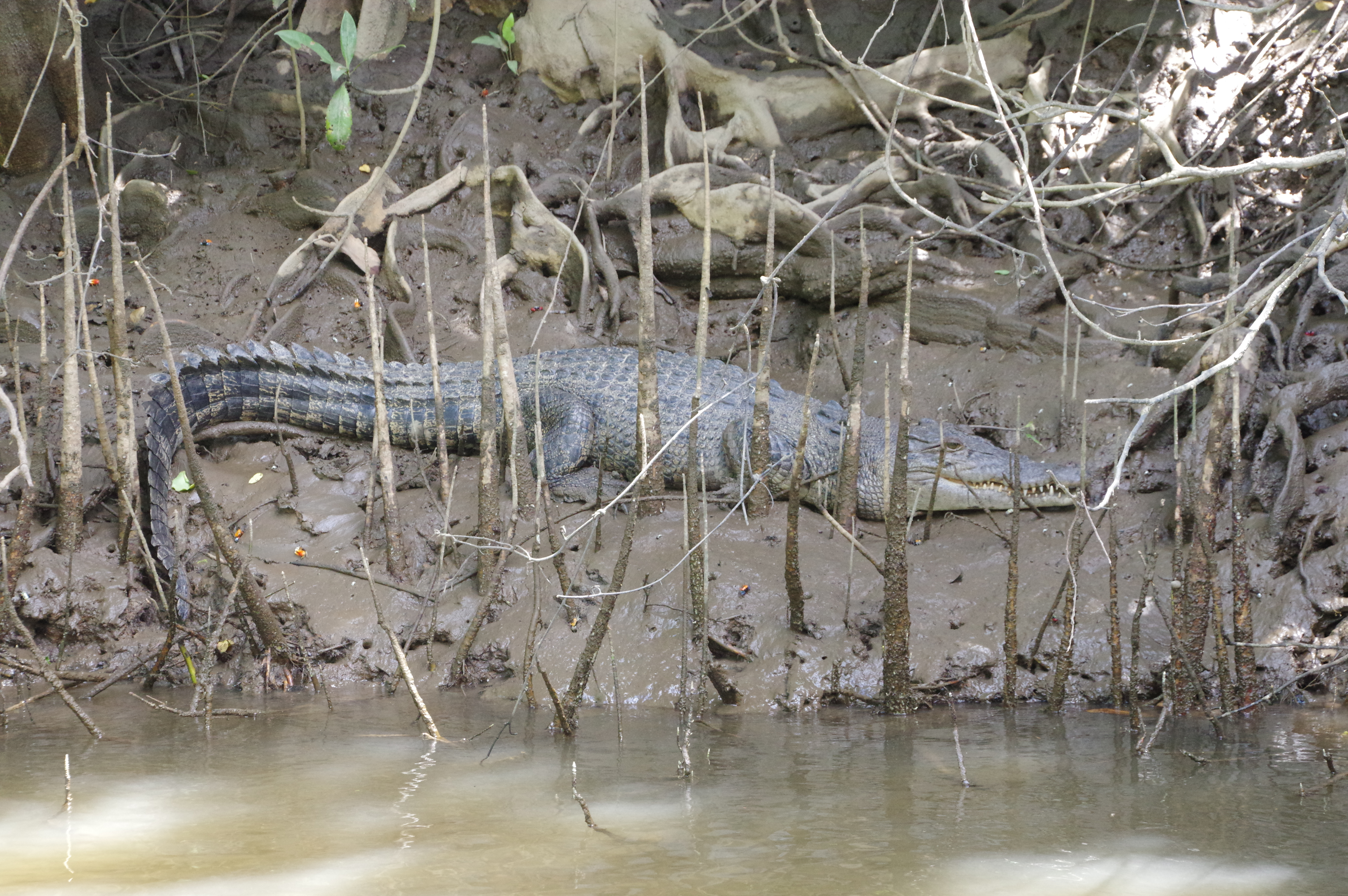
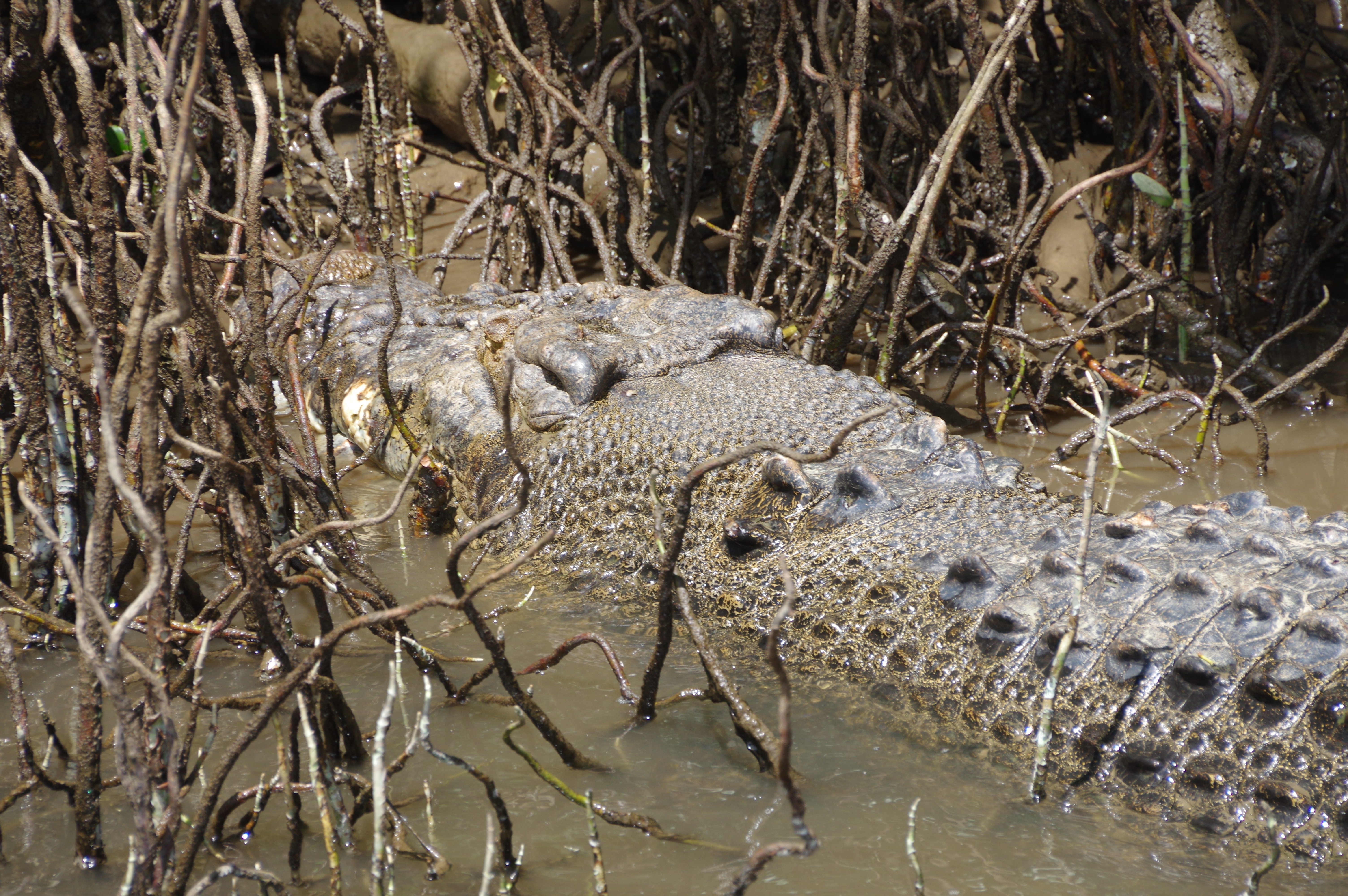
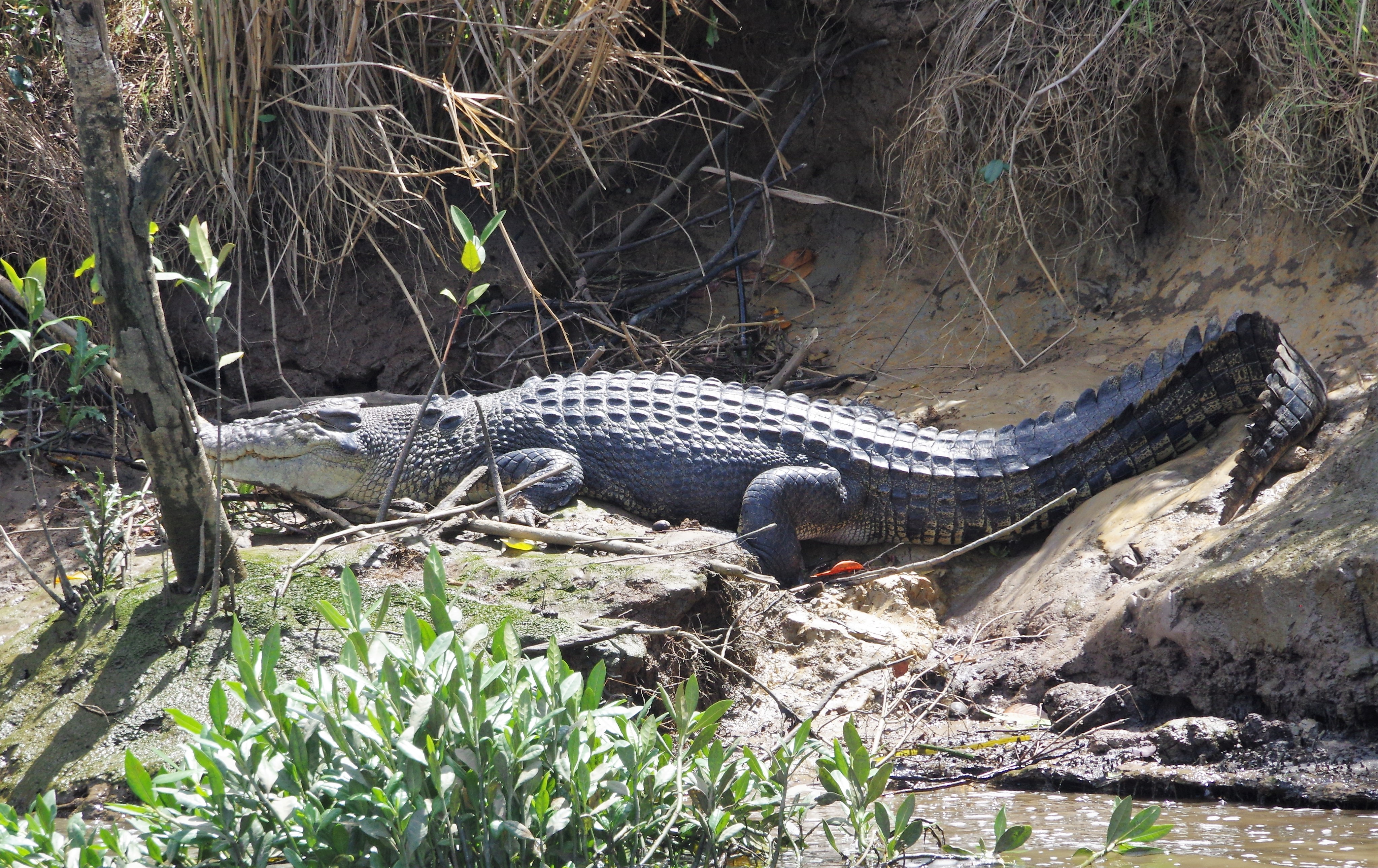
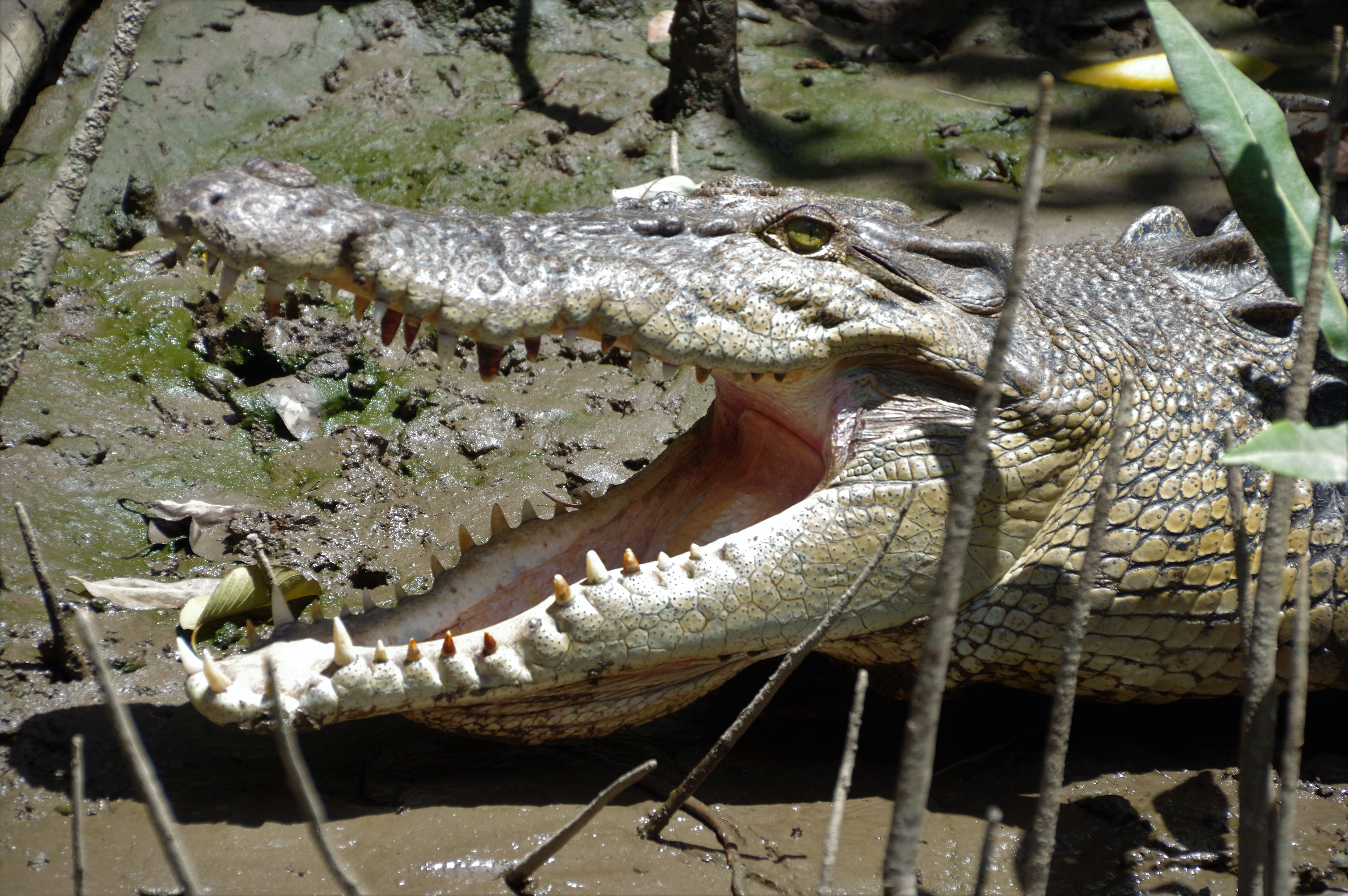
We also had a chance to explore the local area, so we went on a fabulous crocodile tour where we met Lizzie, Scarface, Scooter, an unnamed baby croc, and an unnamed female that had just arrived in the river.   Maybe ‘met’ is the wrong word.  ‘Watched respectfully from the safety of the boat’ might be more accurate. The tour operator was incredibly knowledgeable and passionate about his subject, which made the tour all that more worthwhile. We highly recommend Bruce Belcher’s Daintree River Tours.
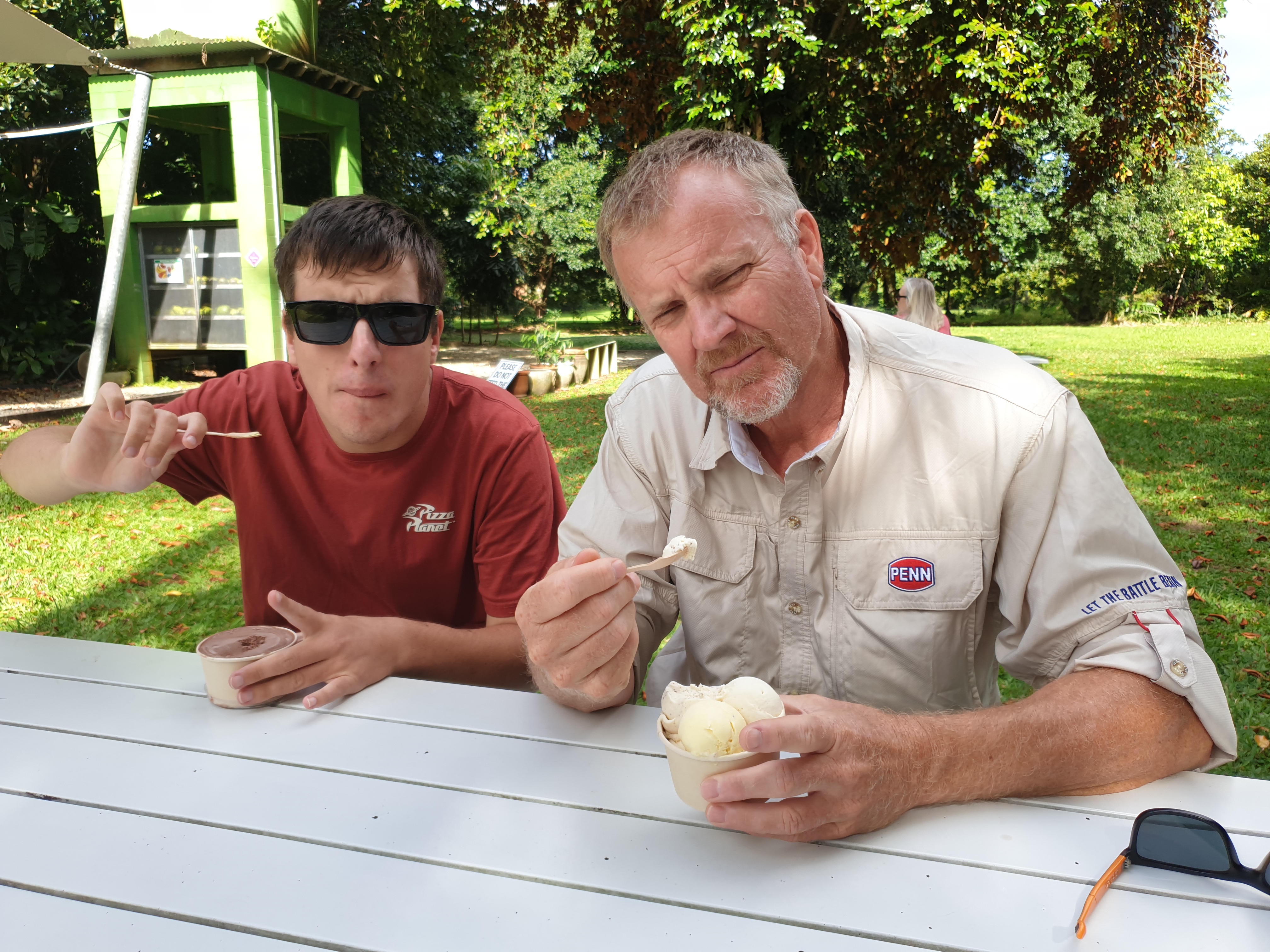
We headed deeper into the Daintree, taking in some views, a visit to a place that makes ice cream from the huge range of tropical and bush fruit it grows on site, (tasting new flavours is a very serious undertaking!) and finishing up with a boardwalk through a mangrove area that gave us an unexpected (but hoped for) sustained encounter with a cassowary.

Port Douglas was hard to leave.  Harder still was the decision of where to go next.  We had so many people saying we should continue on to Lizard Island, that Mecca for cruisers, and others saying we would find it really tough getting back south with the southerly trade winds….  We kept changing our minds from day to day, but we finally concluded that it would extend our overall trip by probably another six-weeks, and we didn’t feel we had the time, especially with vaccination rates starting to climb, and promises that the lockdowns in Sydney were coming to an end.  So, we finally reached a decision:  It was time to start heading south again.

Cairns, and a road trip to Atherton Tablelands

Cairns Marlin Marina is a funny sort of place.  Many other marinas along the coast are aimed at cruising boats, with well-thought-out facilities, friendly and available staff, and barbeque areas that yachties can gather for a drink and some salty stories.  The usual marina laundromat is a place of book swaps and notices of things for sale, upcoming events or ads for people looking to be crew or do boat deliveries.  The marina at Cairns isn’t anything like that.  It looks like it could be, but once you arrive it soon becomes clear they mainly cater to commercial boats and superyachts.   I could go on and on about all the differences and disappointments, (and I did, but I’ve deleted it) BUT, there were some pretty significant positives about being situated there:  It was great to almost be in the heart of town, the shops all within walking distance through a lovely tropical park with a big sand-bottom swimming pool. 

Right outside the marina was a fabulous little cafe/gelato shop with beanbags on the lawn – the best gelato.  We enjoyed walks, dinners out with cruising buddies, and did the touristy thing including a visit to the best aquarium we’ve ever seen.  Ever.  Really.  If you’re ever in Cairns, and you’re even slightly interested in the underwater world, you MUST visit this place.

And then COVID came to town, and we went into a 3-day lockdown, with mask wearing compulsory both indoors and out for a couple of weeks.  For two cases. Fortunately, it didn’t spread, and life soon returned to ‘normal’ in this part of the world.

The highlight of our time in Cairns was our road trip (via hire car) in company with Andrew and Lynne from Mischief, and Randall and Alison from Tregoning, to explore the Atherton Tablelands. 

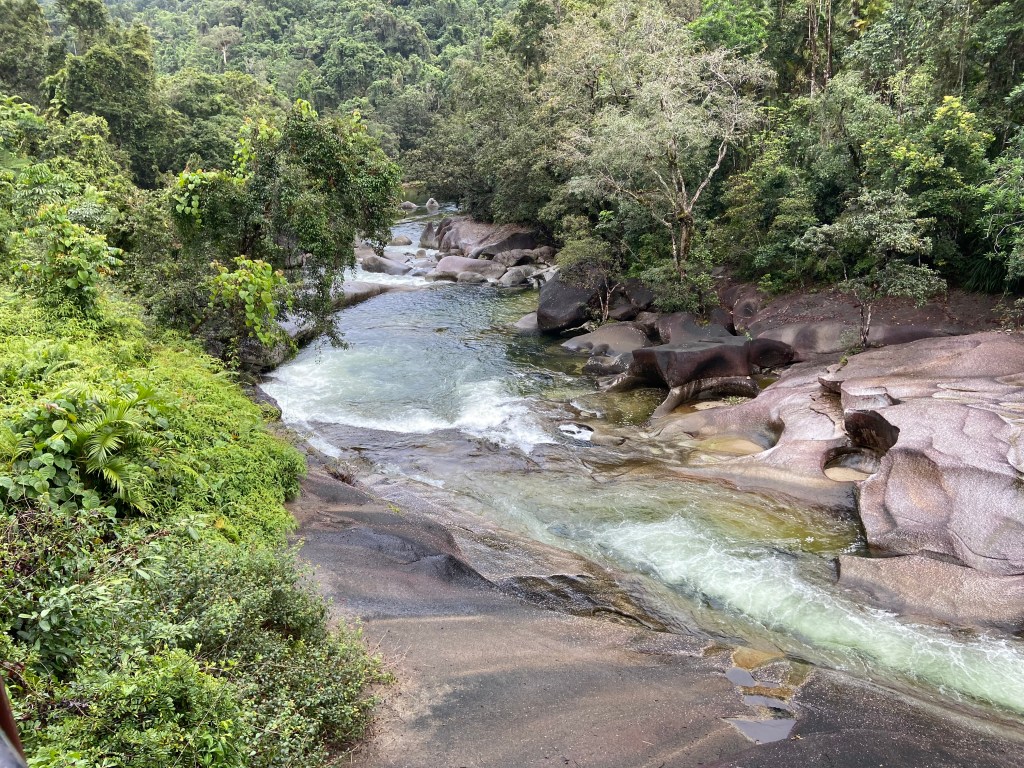
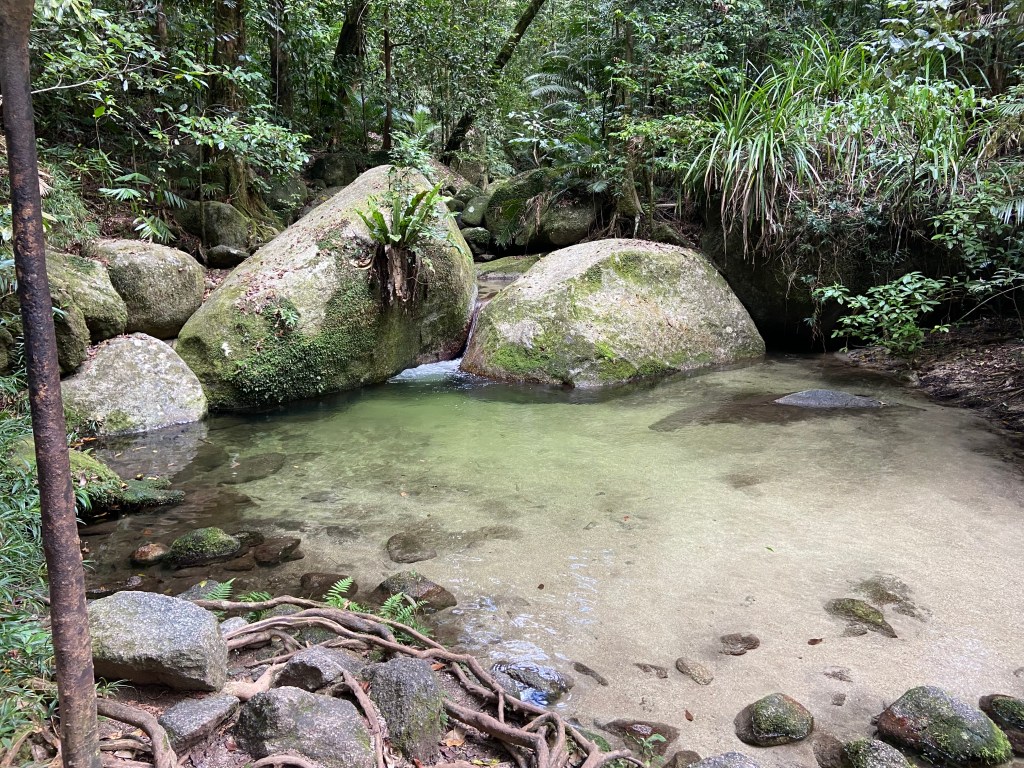
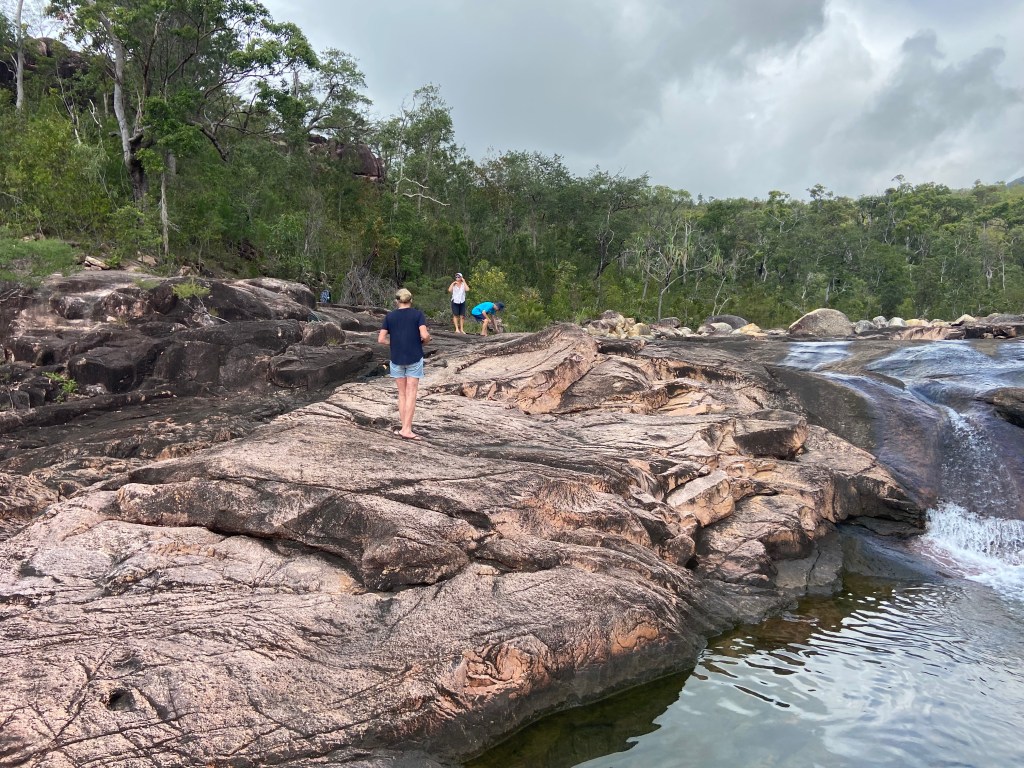
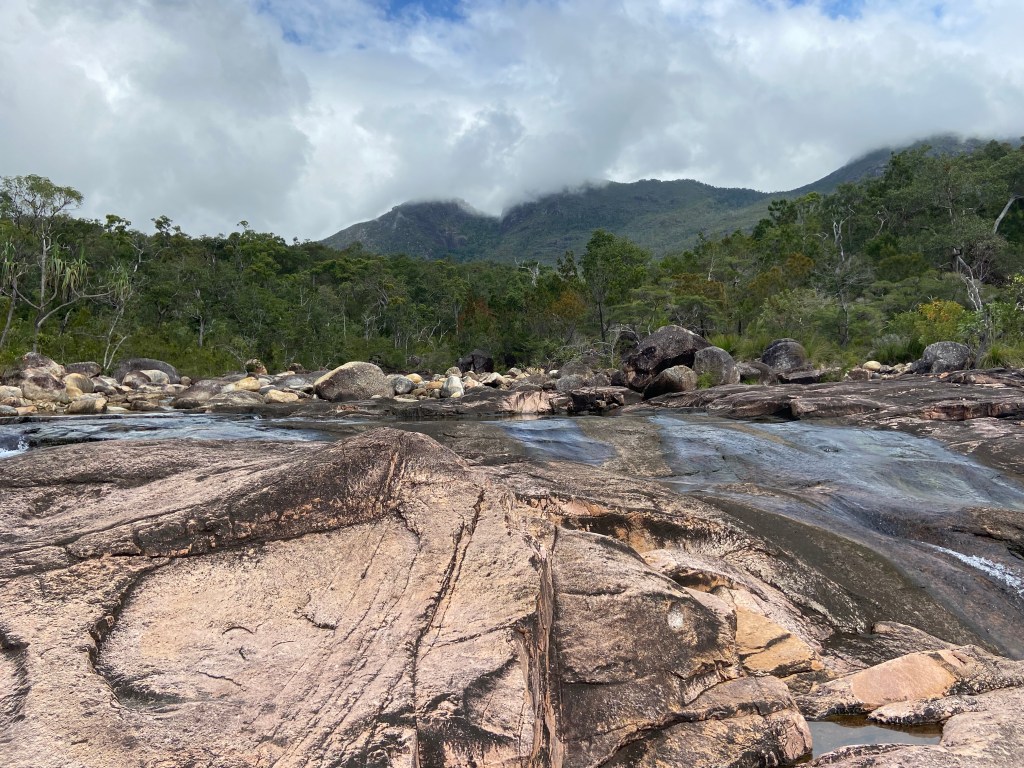
On our first day out of Cairns, we visited Babinda Boulders, enjoying the walk through lush rainforest to the picturesque site, where rushing water has worn away the rock to create interesting shapes and patterns . 

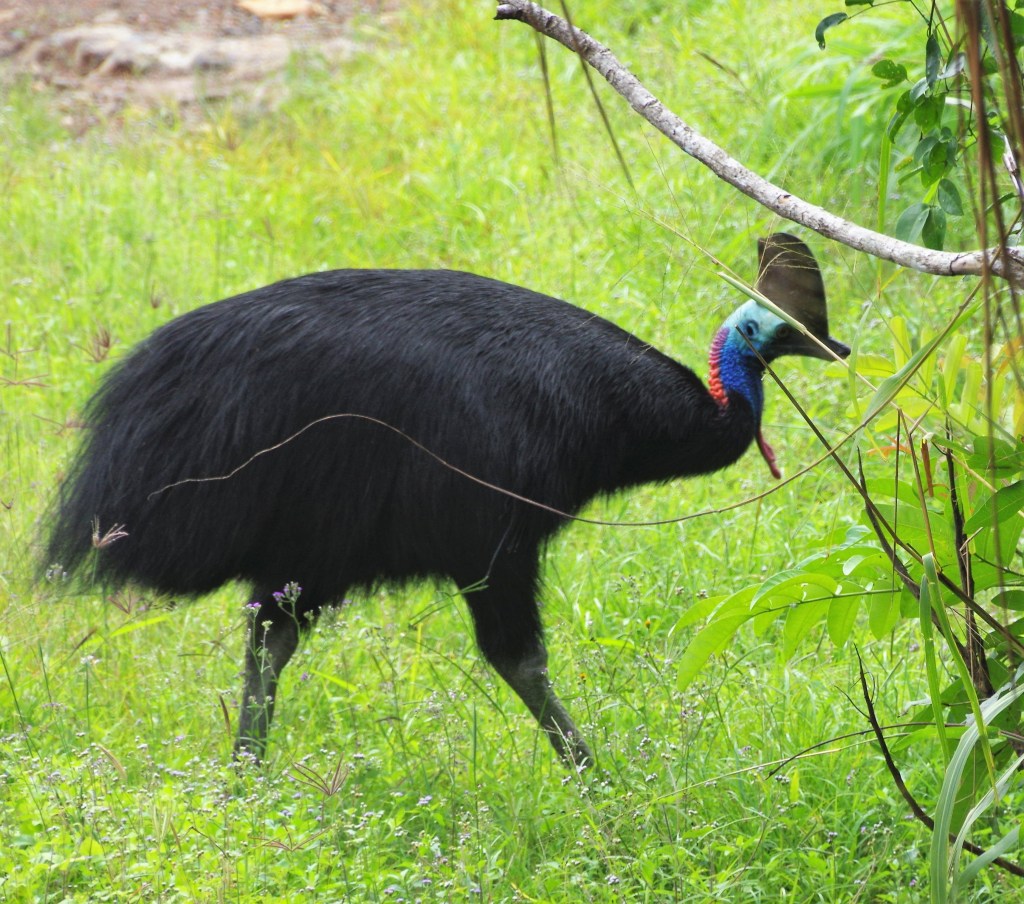
We were recommended to try Etty Bay for our best chance of spotting a cassowary.  Far North Queensland is home to the endangered Southern Cassowary, a bird we’ve always wanted to see in the wild.  Cassowaries, for those who may not know, are a big flightless bird a bit like an emu, with some remarkable differences.  They have huge claws like a velociraptor, capable of disembowelling a person. They have brightly coloured heads, necks and wattle, and a wedge-shaped casque (also called a helmet) which really adds to their prehistoric appearance.  The purpose of the casque has long been debated.  I’m not going to offer an opinion, but here are some of the things scientists have posited:

  • It might be a ‘helmet’ to protect the skull from the impact of falling objects or smashing into a tree in the rainforest
  • It might be a weapon or defence against predators
  • It might play a role in courtship
  • It might help the cassowary amplify its low frequency rumble
  • The latest studies seem to indicate it might be a thermoregulator.  If this turns out to be true, it may explain some of the similar protuberances found on dinosaurs.

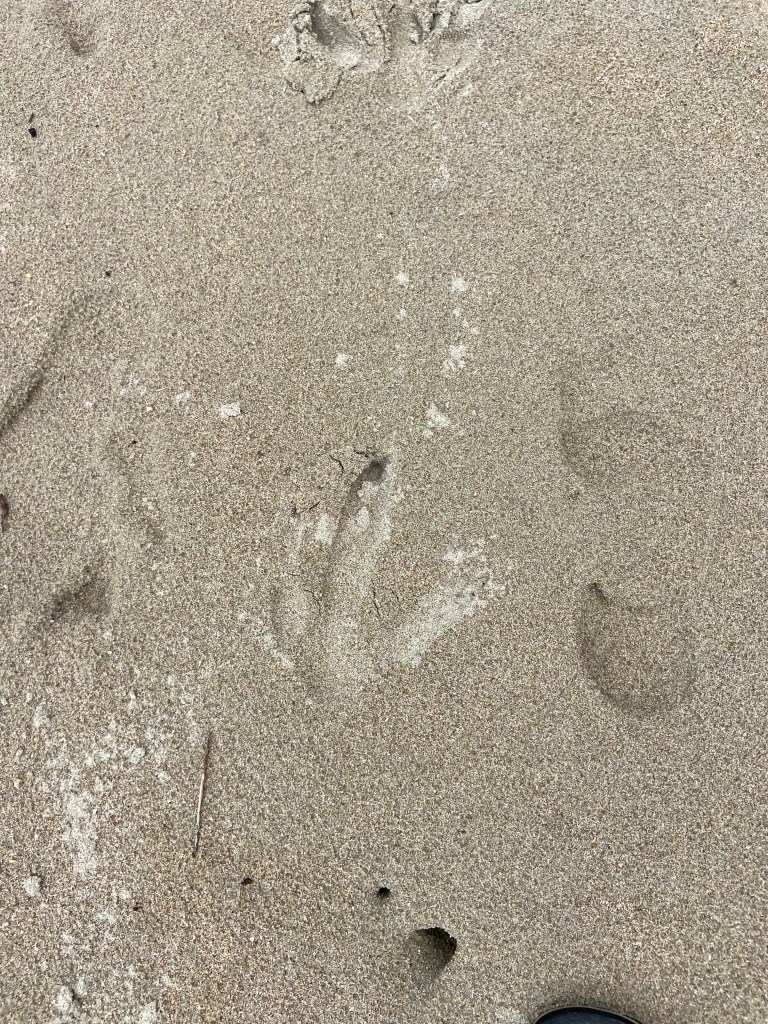
Regardless of their dangerous claws and their long-debated casques, we were very much hoping to spot a cassowary.  So off to Etty Beach we went.  They told us morning and late afternoon were the best times to see the cassowaries, so of course we arrived just after lunch.  We wandered around for a while and even found footprints on the beach, so that was kinda exciting, but of the birds, there was no other sign. 

We gave up and headed out of Etty Bay.  Ten minutes later, we spotted a cassowary wandering along the side of the road!

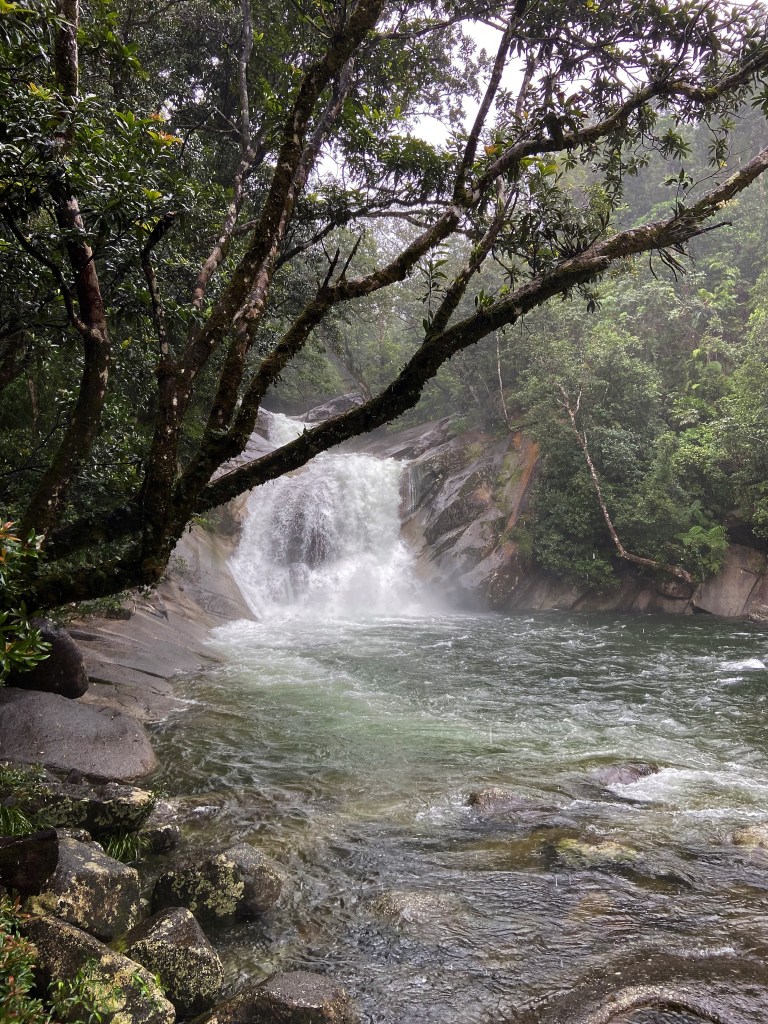
Once the excitement was over, we continued to Josephine Falls, walking through rainforest in torrential rain to see the thunder-rush of water pouring through the gorge. 

The swimming areas were closed due to the dangerous flood waters.  We hadn’t planned to swim, but we were all pretty saturated when we made it back to the cars – even with our raincoats!  Some of us were just a tiny bit hysterical to discover we’d picked up a leech.  I won’t mention any names, as I might incriminate myself, but I’m not the only one who has a bit of a leech phobia, am I, Lynne?

With enough excitement for one day, we headed to our accommodations.  We based ourselves at the family-run Malanda Manor Guesthouse (highly recommended) where we were well looked after.  (We had dinner there a couple of times and the food was sensational.)

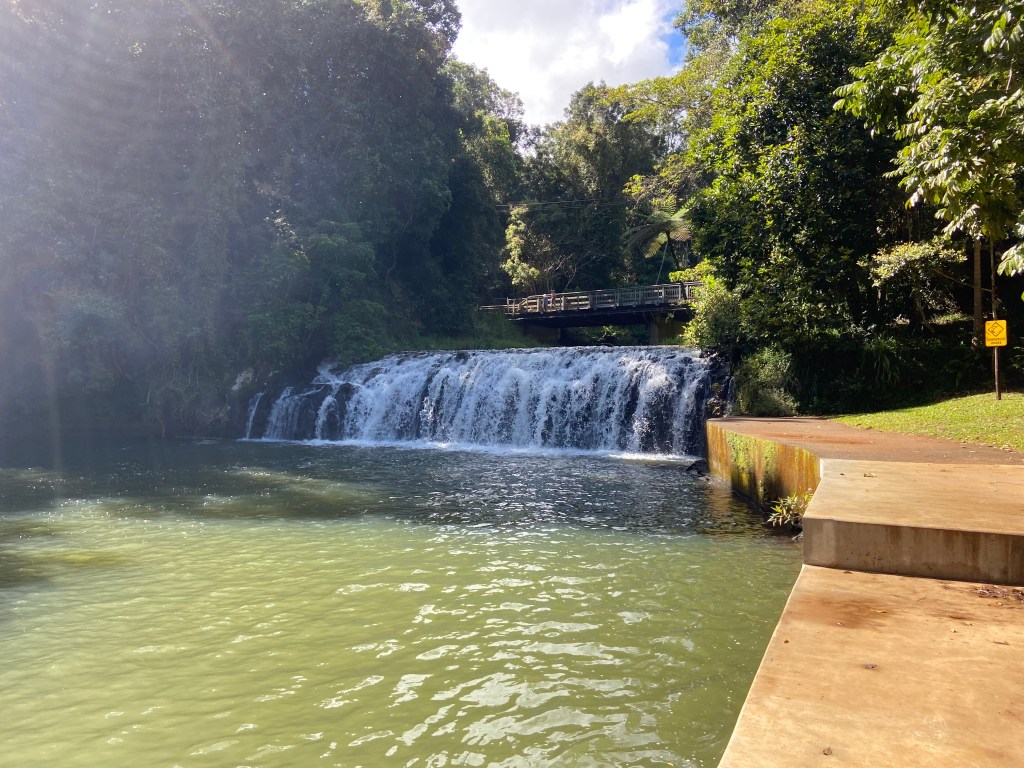
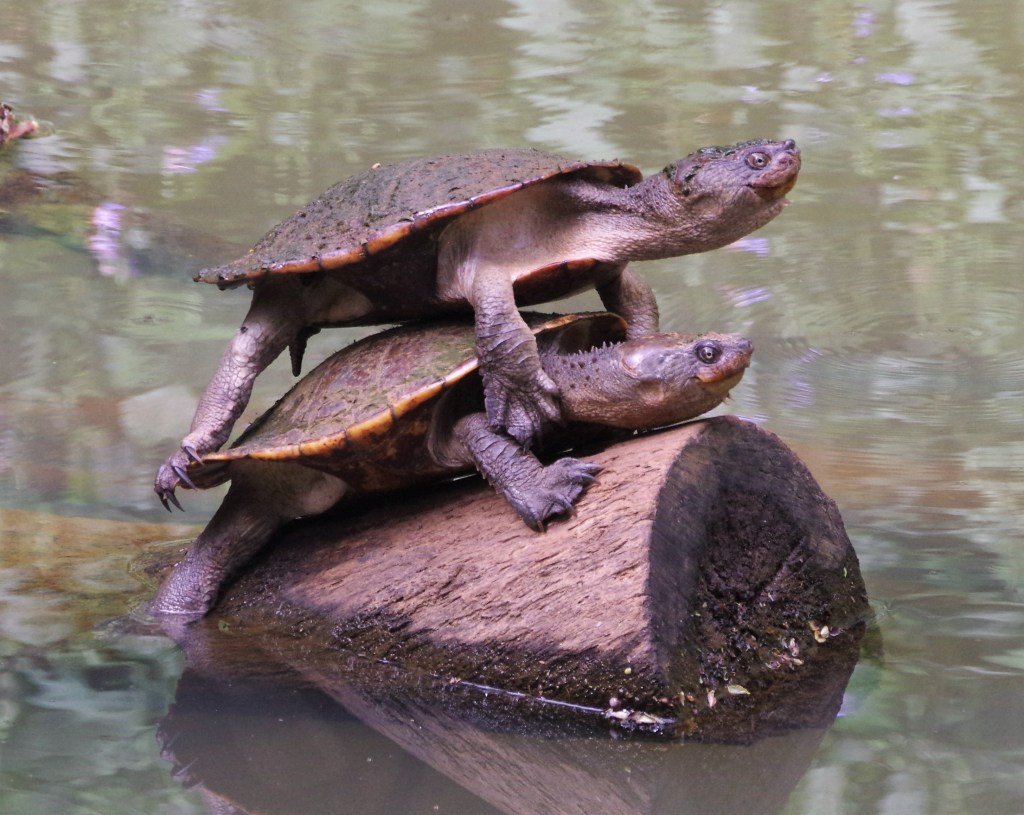
Next day, we meandered along winding country roads through fields washed verdant green in the sunlight.  Our first stop was Malanda Falls, which included a rainforest walk with tortoises, red-legged pademelons and the calls of catbirds, whipbirds and the wompoo fruit doves. 

We had lunch at Lake Barrine, where we discovered two enormous Australian Kauri trees. Well, we didn’t actually discover them. Someone had already done that before us, but we certainly marvelled at their height, girth and majesty.

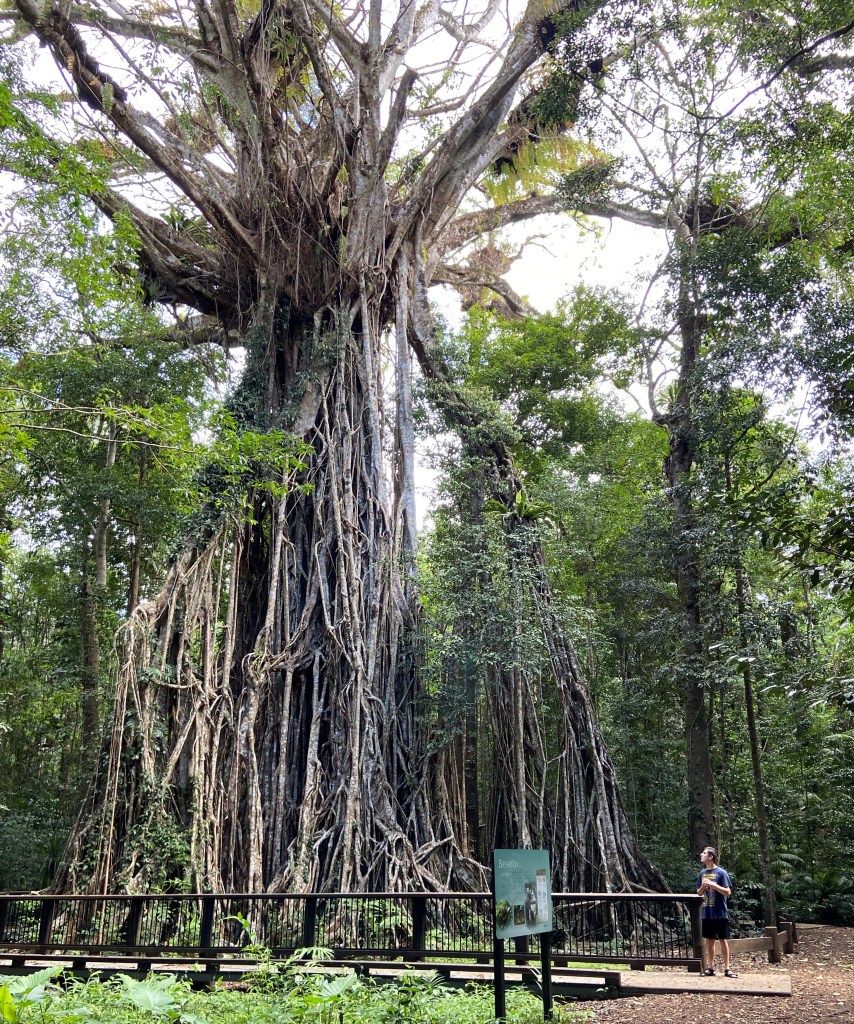
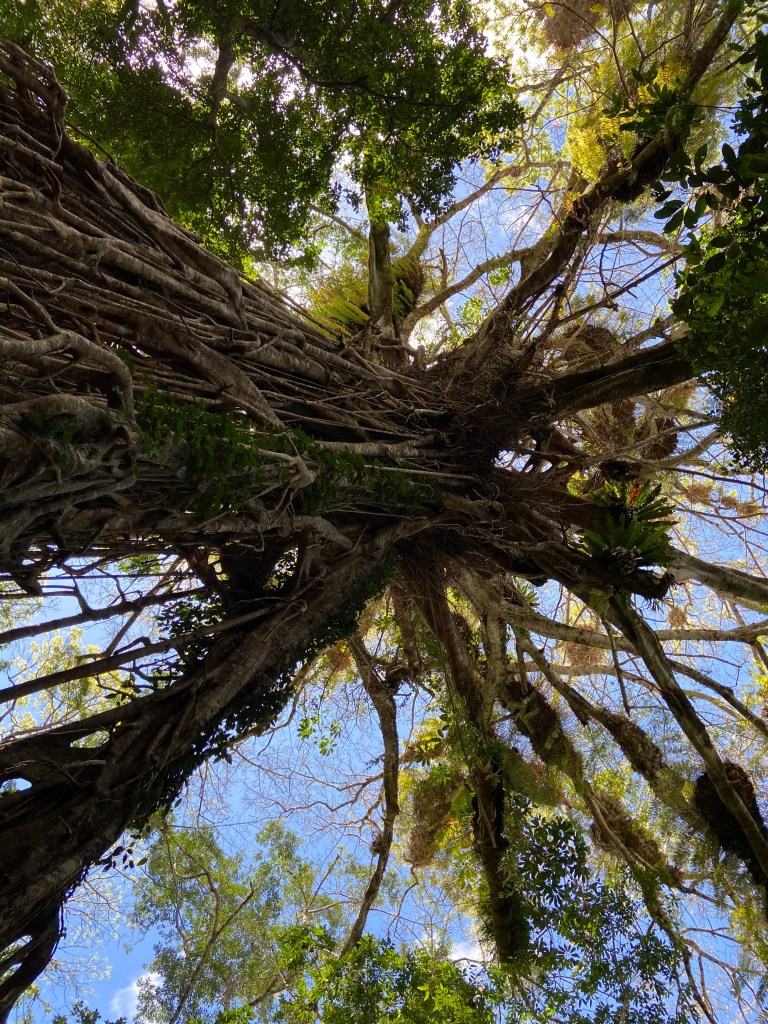
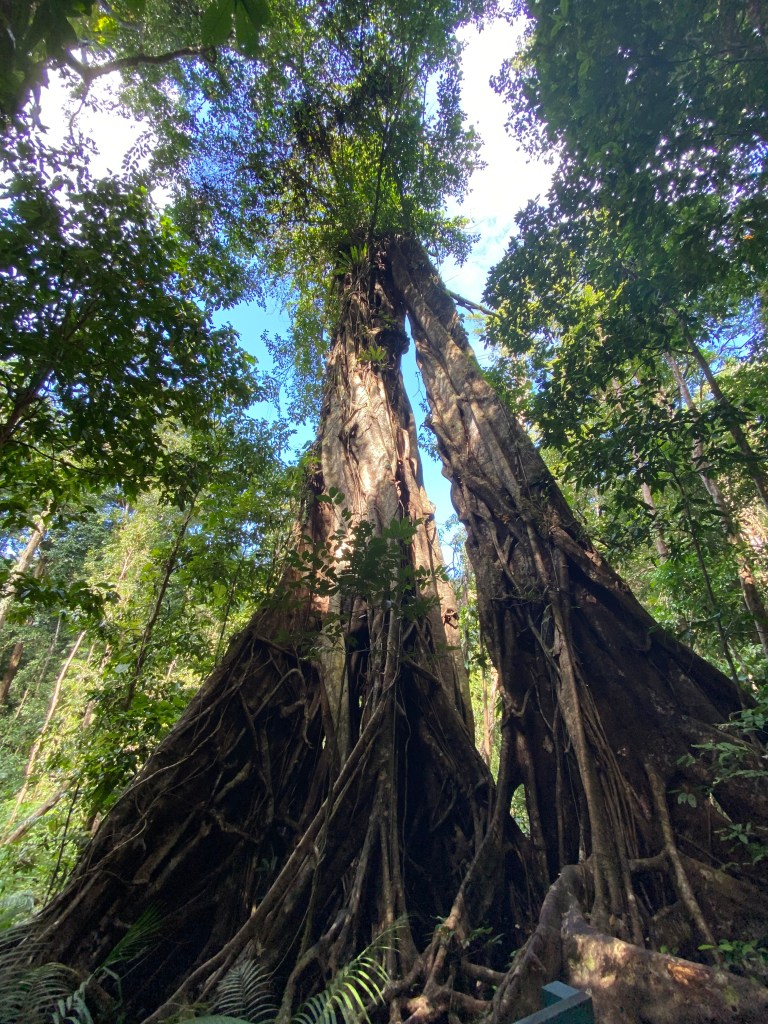
Then it was on to the impressive Cathedral Fig.  Who knew trees could be so fascinating? The ferns in the upper branches are often home to pythons, but no one volunteered to climb up and check for snakes.

At Yungaburra, we walked along the creek and eventually spotted the critter we had come looking for: the platypus, that shy and most unusual monotreme.  We were also fascinated by the antics of some of the other wildlife in the area….

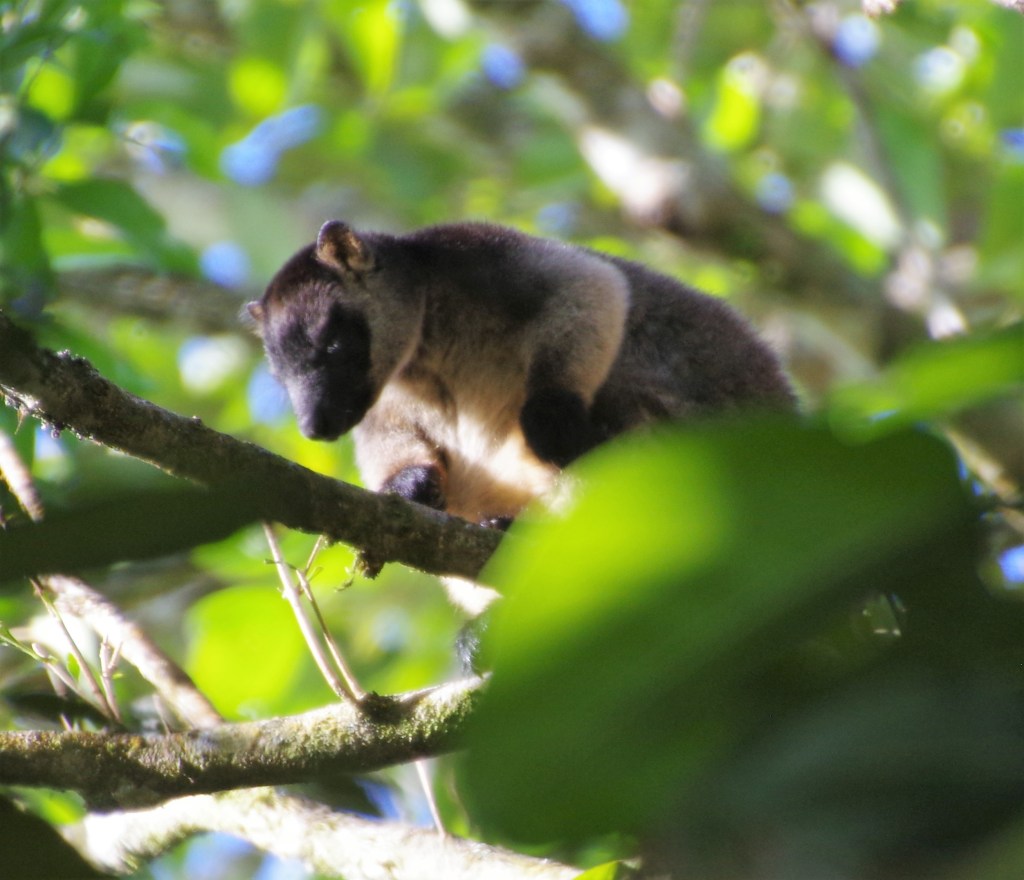
Our final stop for that day was the Nerada Tea Plantation.  We were more than happy to sit for a bit and look out over the tea plantation, enjoying cups of tea and scones with jam and clotted cream.  We also had an ulterior motive for being there – the tree-kangaroo (or mupee), another animal endemic to Far North Queensland, and listed as threatened.   One family of tree-kangaroo inhabit a small patch of forest next to the tea plantation, and we were lucky enough to have some very good eyes with us to spot one tucked up high in the foliage. 

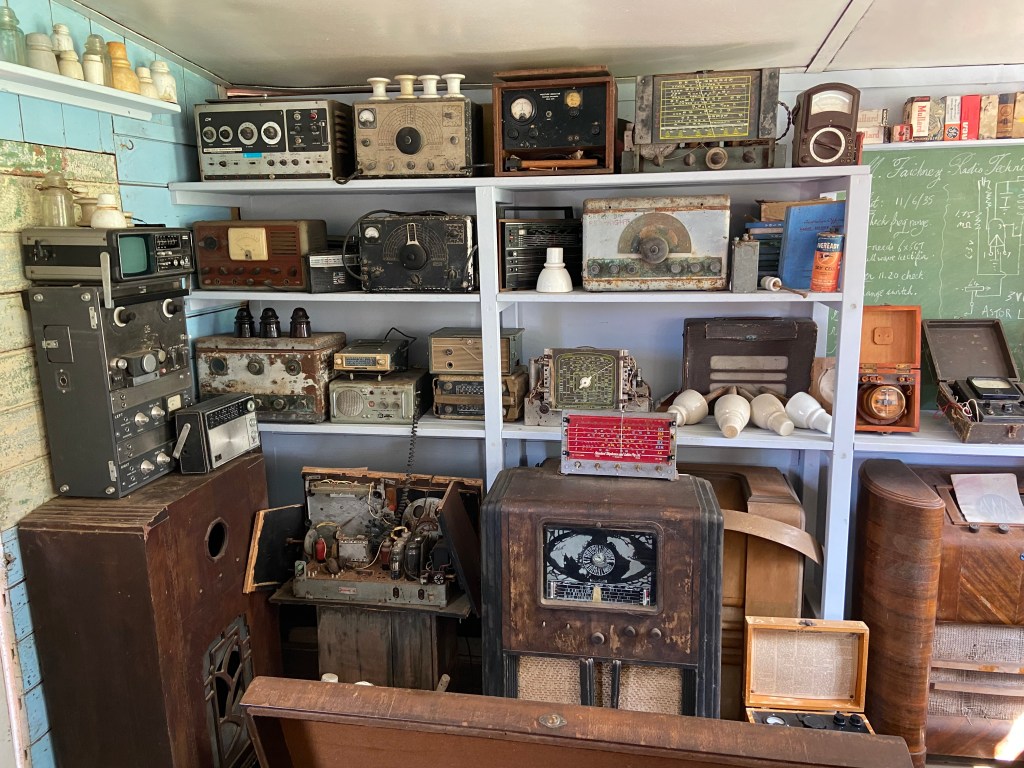
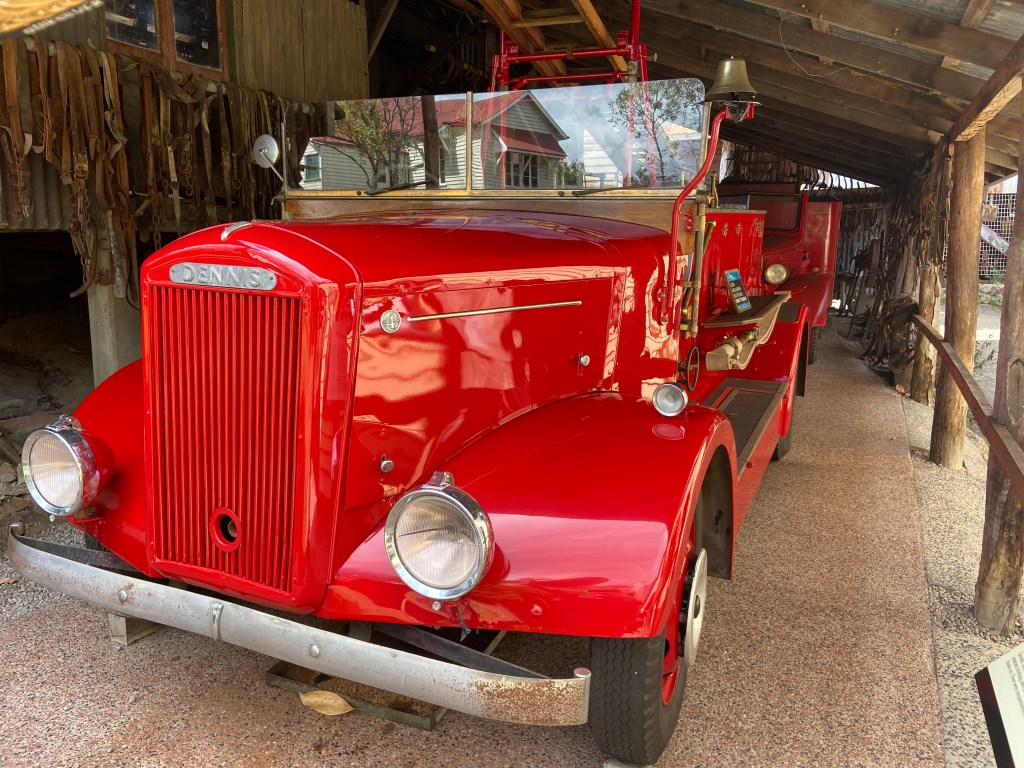
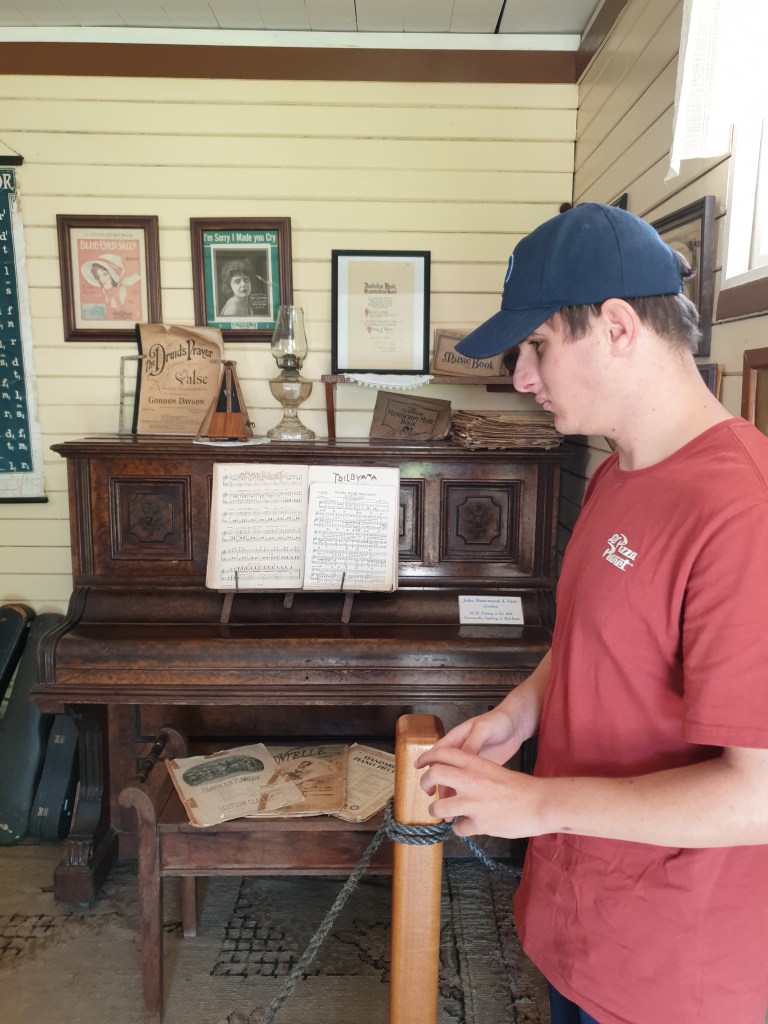
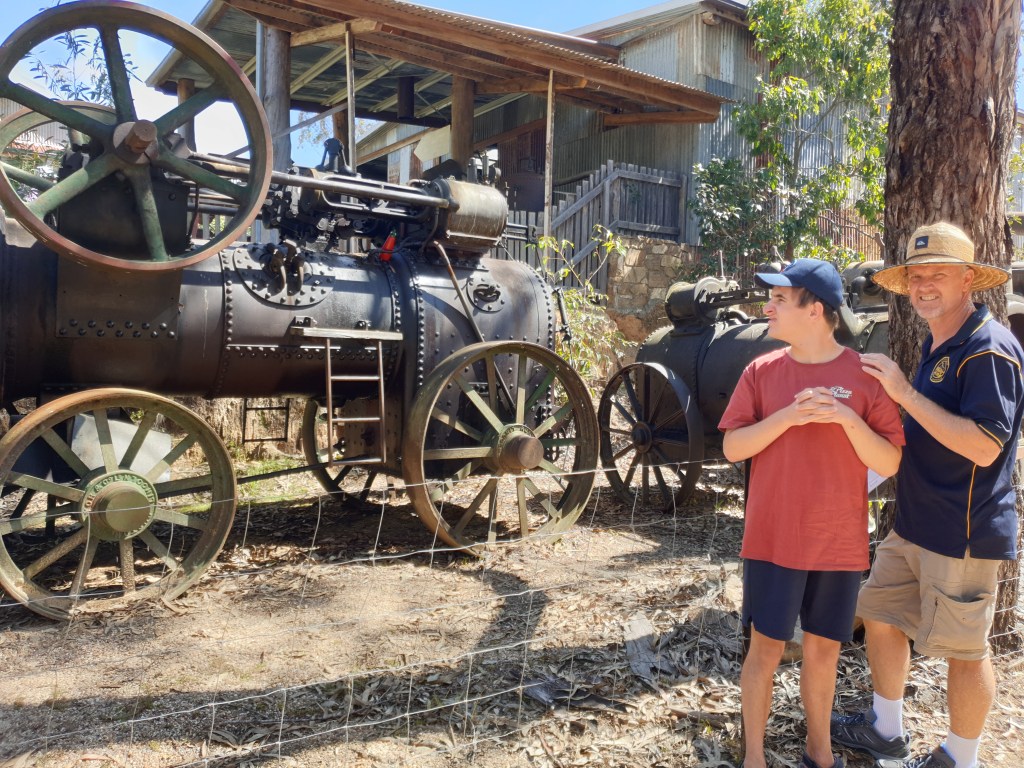
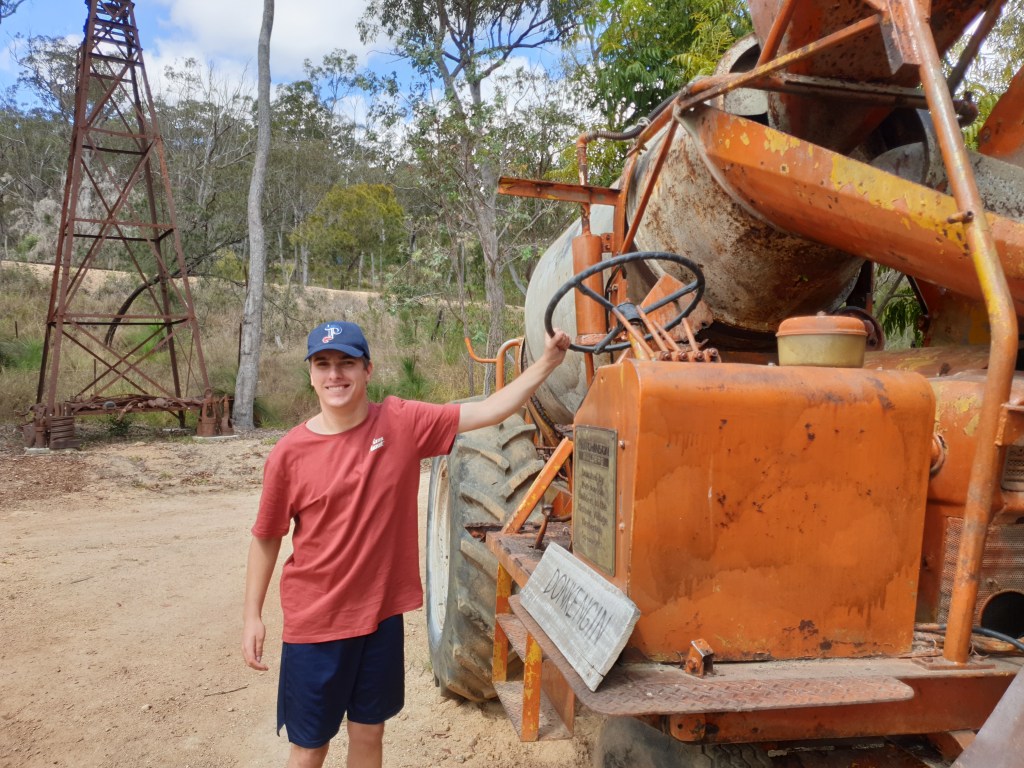
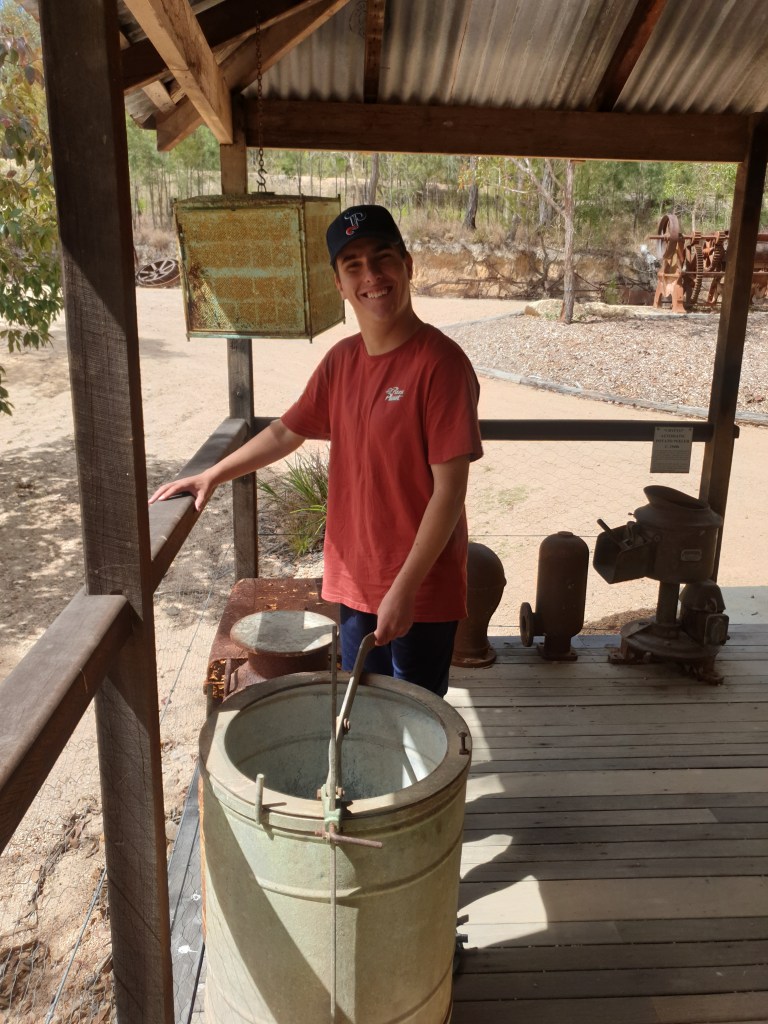
The next day we turned our focus to something we thought Jamie might enjoy, so we left our travelling buddies to do their own thing and headed off to the Herberton Historic Village.  Wow, what an incredible place.  I don’t think I can do it justice in words, but the place is laid out with dozens of buildings linked with pathways through neatly kept gardens, including an old school house, church, houses, gaol, printing shop, toy shop, dress shop, apothecary, smithy, garage complete with a huge collection of cars in working order including a Model T ford, a massive collection of farming equipment including meticulously restored John Deere tractors, a huge COMET windmill, pumps, fire trucks, a saw-mill, gun collections, military collections, dolls, ….. it just goes on and on.  Jamie loved the music room with its pianolas, the pub, the washing machine collection, the demonstrations of the working pumps.  It was a great day out and there was certainly something for everyone.

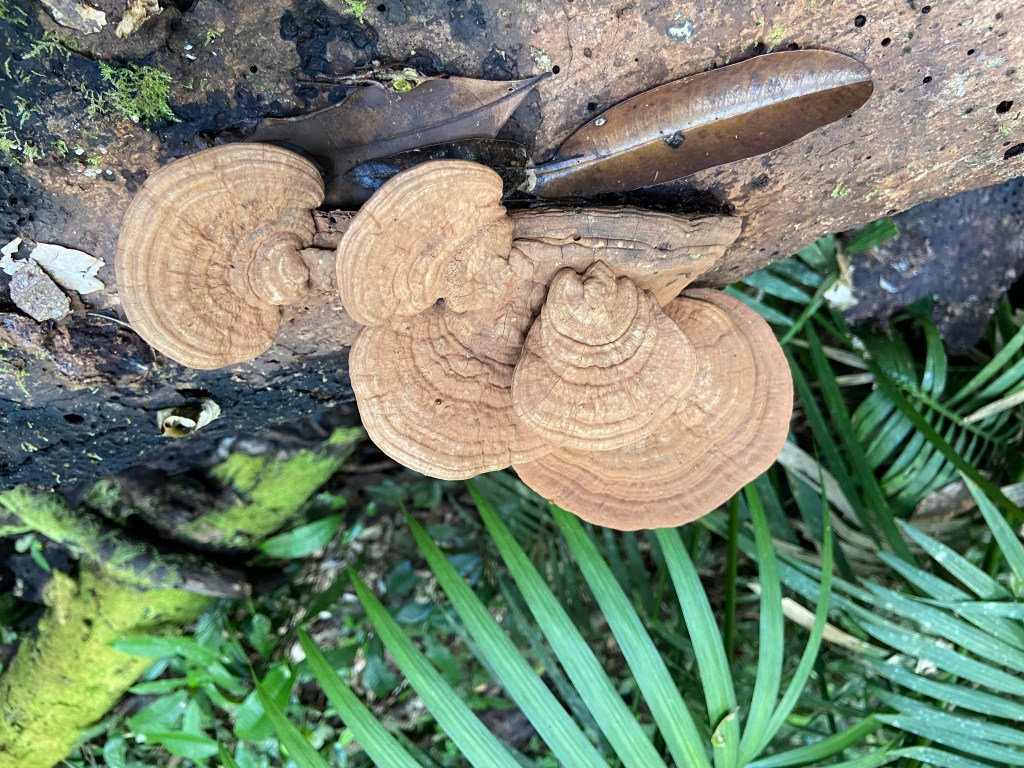
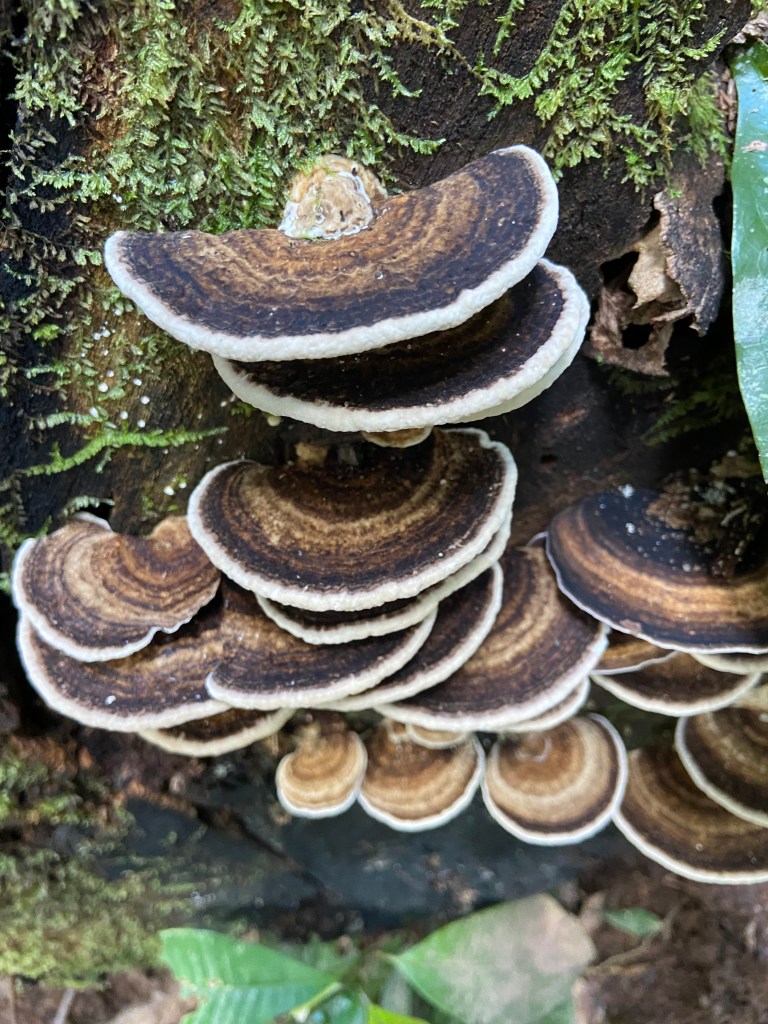
Our last day in the area was a (return) visit to Mossman Gorge with its pretty rainforest walks, and then we made our way back along the coastal road to Cairns. I was quite taken with the fungi!

Back in Cairns, the pressure was on to make a decision about where to go next.  The general opinion was to head in the northerly direction, so with lockdown still going strong in Sydney, the Queensland border closed, and no urgent reason to head towards home, we caved into peer pressure and decided to head just a little bit further north, again.
Reef Hopping on the Great Barrier Reef

One of the wonderful things about being up here at this time of year, with our renewed confidence in navigating reefs, is being able to go offshore and explore parts of the Great Barrier Reef from the comfort of our own boat, in our own time, and in the company of friends.  So, with weather looking pretty much perfect, we set off from Dunk and began a reef-hopping expedition.  Boats in company with us were Tregoning, Mischief (and Curried Oats for some of the time).  Our first stop was Beaver Reef, an easy sail of 20 NM in calm conditions.  There was a tiny sand cay that helped to provide a frame of reference.  (Which I explored later.)

We spent the afternoon snorkelling with Alison and Randall from Tregoning.  The bommie we chose was swarming with fish life – probably the most prolific we’ve seen on any of our snorkels so far.  So many fish and so hard to identify them all!  Also, we had whales pass us on the outside of the reef.  I think I can hear whale song in one of the videos, but maybe it’s just squeaky snorkel breathing… Turn your volume up in the second video below and see if you can hear it!

Lots of fishies
See if you can hear the whale song

Tregoning caught a spotted mackerel on their sail over and invited us all for dinner for crumbed fish and another sing-along, with the 2 guitars, a banjo, some percussion including a wooden frog, and some enthusiastic singers!

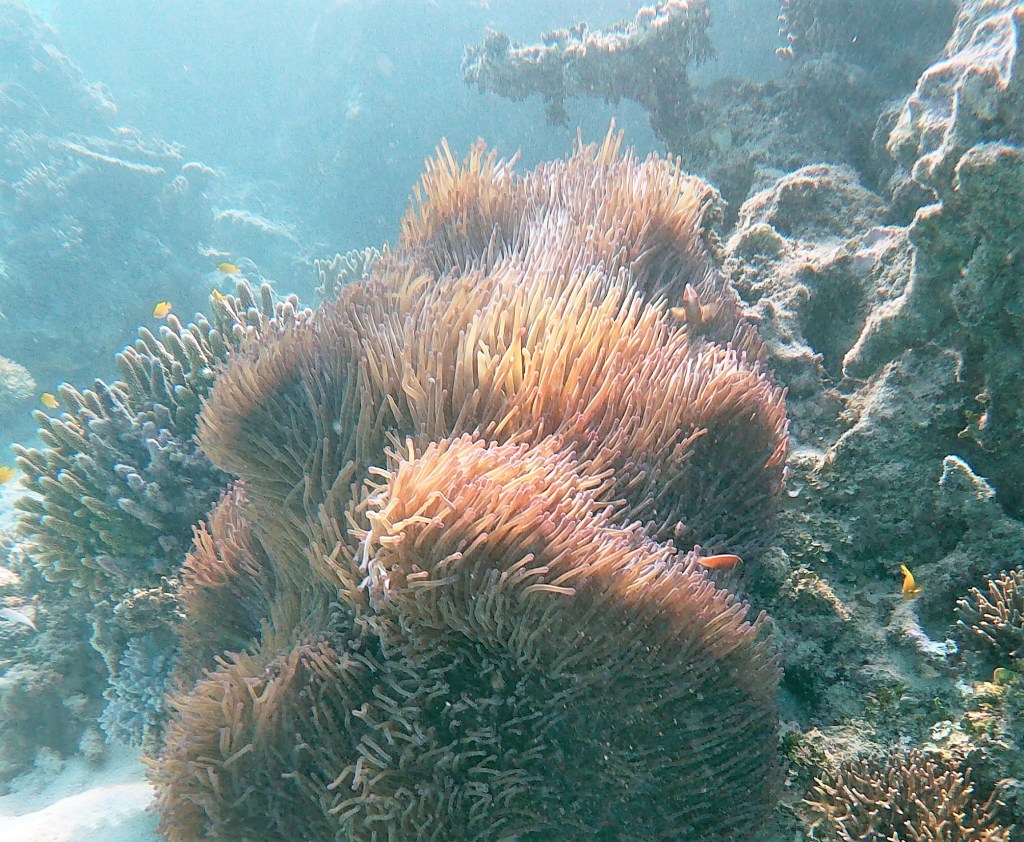
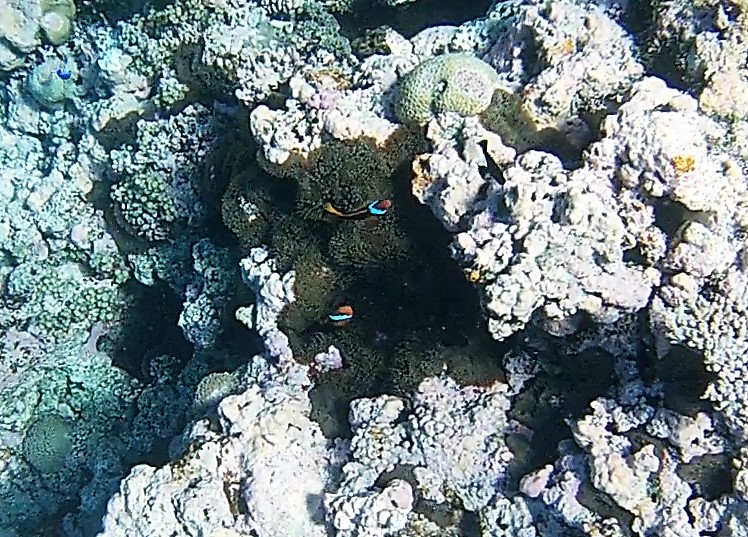
We had another snorkel the next morning before motoring through glassy seas just 4 NM to Taylor Reef.  The water was gin-clear, and we could see our anchor on the bottom. This reef has a larger sand cay with a cluster of birds vying for roosting space – mostly Black Noddys.  We snorkelled again after lunch . We didn’t see the prolific fish life of Beaver Reef, but it was still a good dive. Highlight was a huge anemone with resident Pink Anemone fish.

The next day, Tregoning left early to scope out the anchorage for our next reef destination, Eddy Reef.  We left with Mischief a little later.  Another easy, flat, glassy passage.  We spotted a couple of dolphins not far off our bow, but they didn’t join us.  Too busy catching their breakfast.

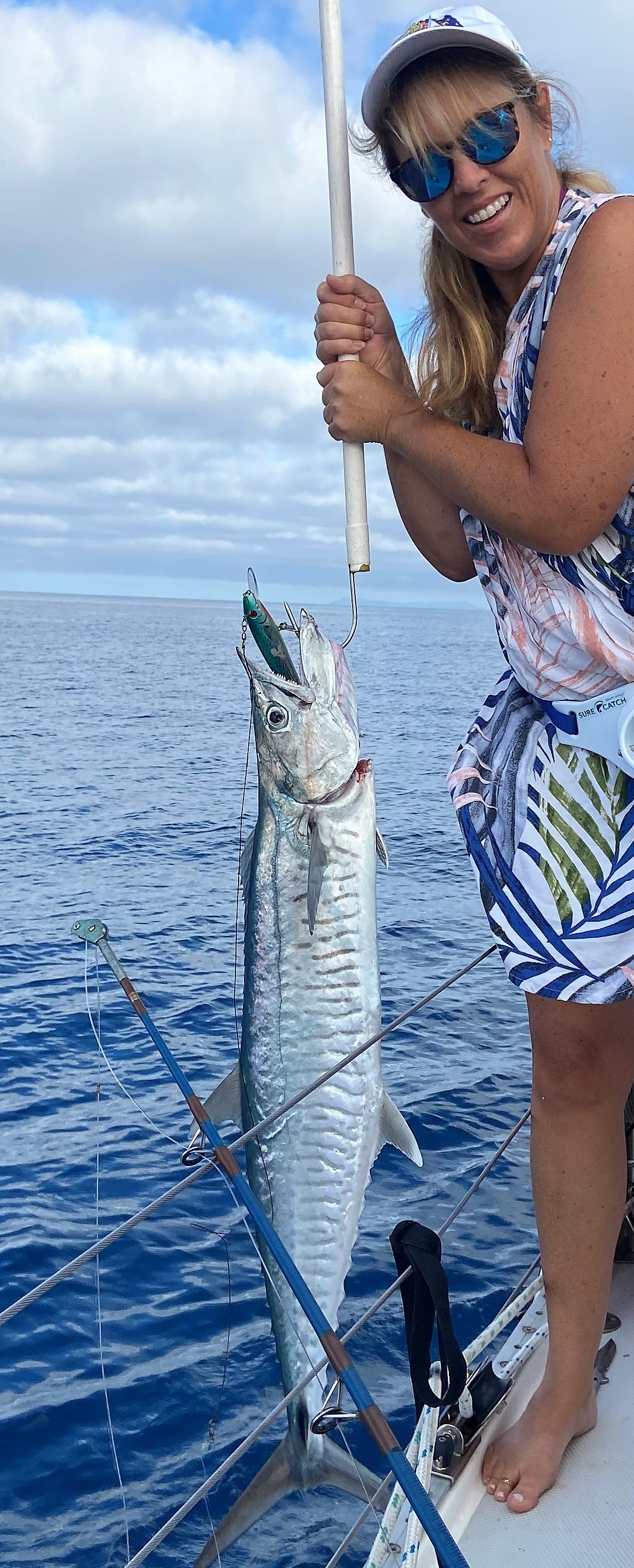
Once out of the Marina Park Zone, we let out the fishing line, and within about ten minutes the line went zing and we had a beautiful Spanish Mackerel, just over 1 metre long! 

We are pleased with our fishing set up.  We have a sturdy deep-sea rod sitting in a rod holder on the rear port rail.  We are using a TLD-25 overhead reel, 55-pound line, 80-pound trace, and a Halco Laser Pro lure that dives down to 2m.  A big thanks must go to Alan from Goolara who gave us some trace, and Forfar from Sarisha who rigged up the line for us. We haven’t had to rig it up since! We have a homemade gaff to get the fish on board. All of our fish this trip have been caught on that exact same lure (and yes, we’ve tried other ones). Our biggest problem is what to do with the darn fish once we get it aboard.  A couple of the fish have flipped at the worst time, spraying blood all over the cockpit.  Not fun to clean up!  We do have a cunning plan of how to land the fish on the back platform, but we haven’t tried it yet…. The line doesn’t go out in messy seas… (When I’m already feeling a shade green, reckon dealing with a fish might just push me over the edge.)

Once we arrived in the lovely anchorage at Eddy Reef, I cooked up a small portion of fish (just pan fried in butter) and ate it.  I was the guinea pig testing for ciguatera.  It was delicious. A couple of hours later, I was still feeling pretty good, so we decided to invite everyone over for dinner that night.  The guys from Tregoning and Mischief joined us for an early dinner of Thai Fish Curry, which went down very well.  (We all like to be back on our own boats before full dark.  It’s a safety thing.)  Alison from Tregoning made a yummy raspberry oat crumble slice for dessert.

One of our now-infamous music nights, and Jamie’s favourite song…

Rather than continue with the blow-by-blow account, I’ll just cover the highlights (or lowlights?) of the next few reefs.   

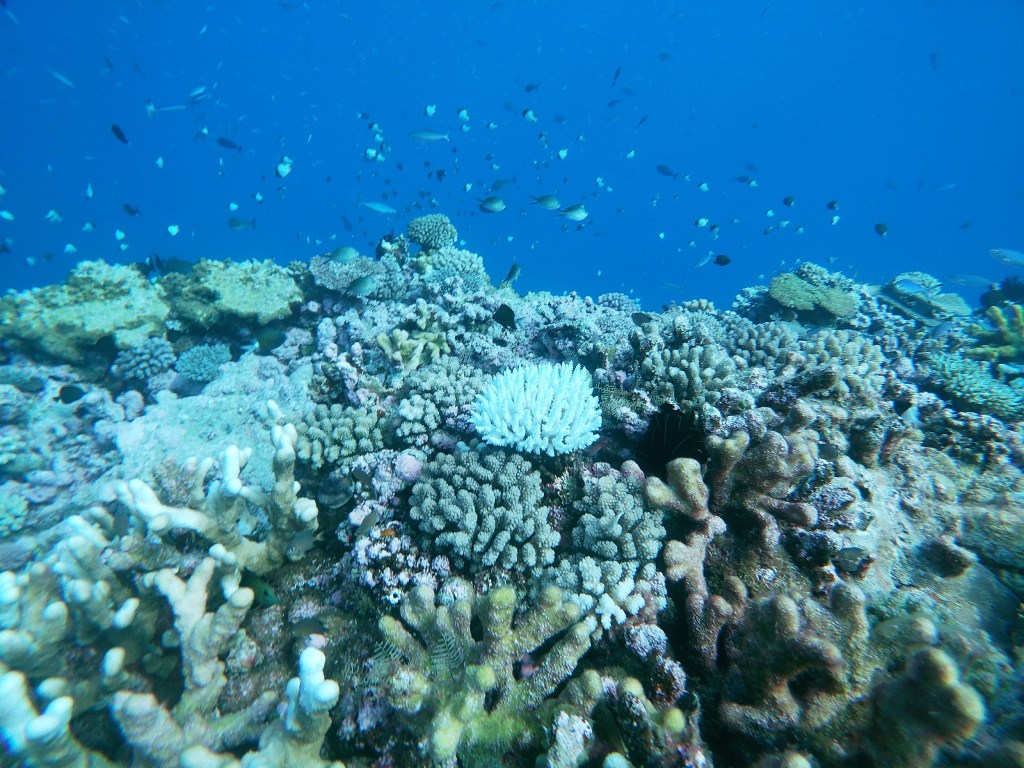
Eddy Reef: proved a little disappointing, with poor visibility and lots of damaged coral (especially staghorn coral).  Highlights were sharks, a large turtle, many Christmas Tree worms, giant clams and some pretty coral.

Howie Reef: We anchored at Howie in 19-metres of water.  The reef is quite a distance away from the anchorage area, but a minefield of pinnacle-like bommies rise up almost to the surface from depths of 20-metres or more, so none of us were keen to go further in.  We decided not to snorkel this reef (after reports from Tregoning that it was disappointing), but even without the delights of the underwater world, the reef is still a beautiful place to be – you’re in gorgeous clear blue water, surrounded by ocean, with no land in sight…  Oven-baked mackerel parcels for dinner with broccoli and mash. Yum.  And we still had another 2 packages in the freezer.  This lifestyle is hard work, but someone has to do it.

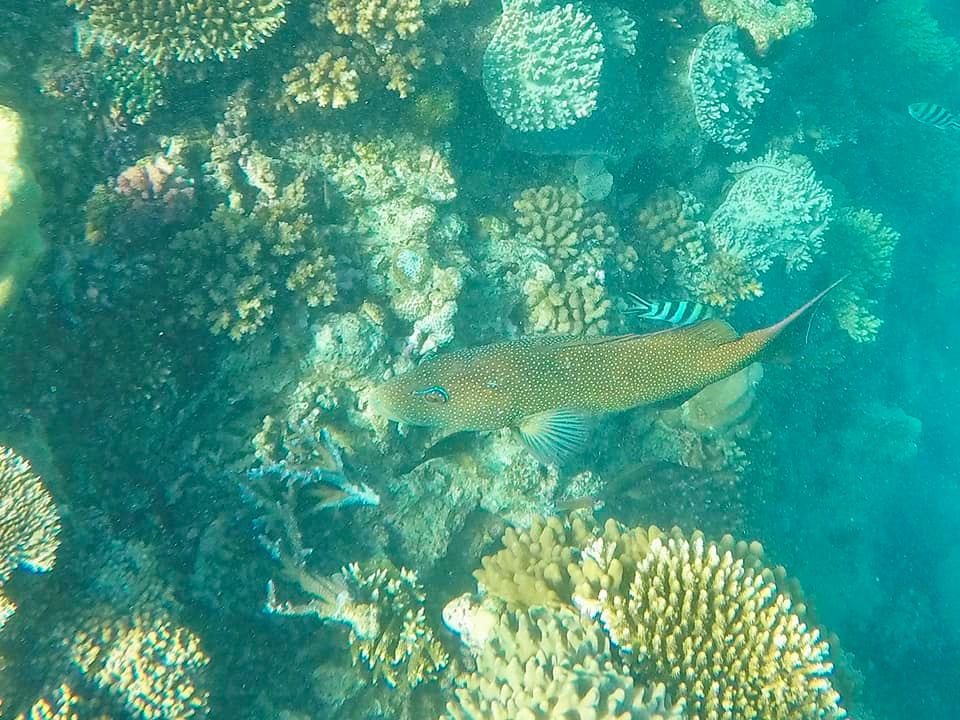
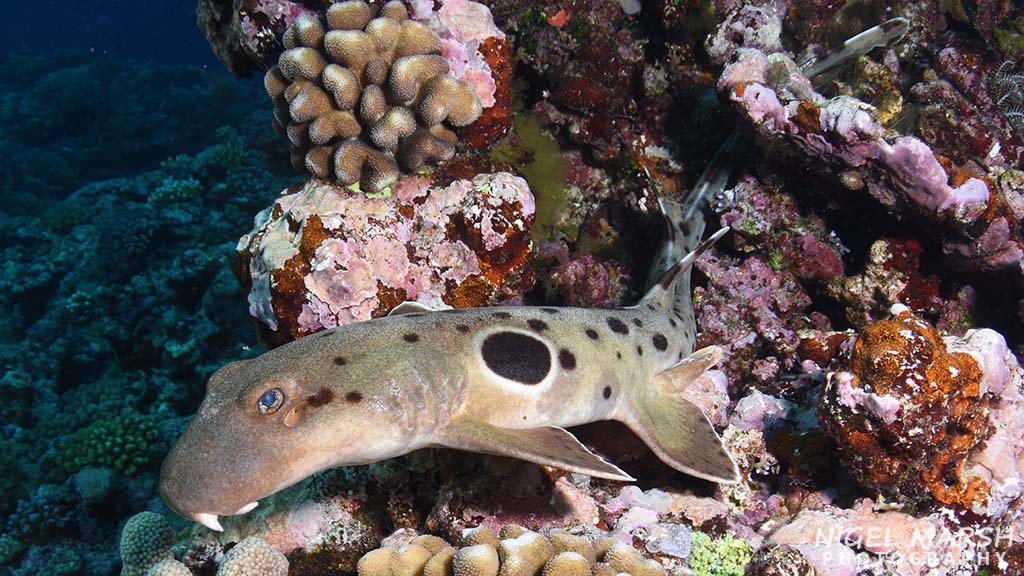
Flora Reef: We anchored in about 6.5-metres.  Jamie had a short snorkel before trying to inhale some water when he was talking.  Yep, he can talk underwater too…  Jamie sat in the dinghy while Graeme and I continued snorkelling together.  I discovered it’s also possible to scream with a snorkel, when a 4-foot shark suddenly appeared swimming right under me.  Graeme reckons he could see the shark giggling to itself as it went on its way. We joined Andrew and Lynne on another bommie with a giant clam that appeared to change colour from emerald to topaz to amethyst, depending on the angle.  We saw a huge Coral Trout, and – a first for us –an Epaulette Shark (or Speckled Carpet Shark).

Sudberry Reef:  We had heard great things about this spot, including reports from Tregoning who were here last season.  We must have just had a bad day or picked a bad spot, because visibility was pretty bad.  Also, the water was chopping, making snorkelling quite difficult for those of us who spend more time on the surface than at depth.  Gorgeous sand cay, though.

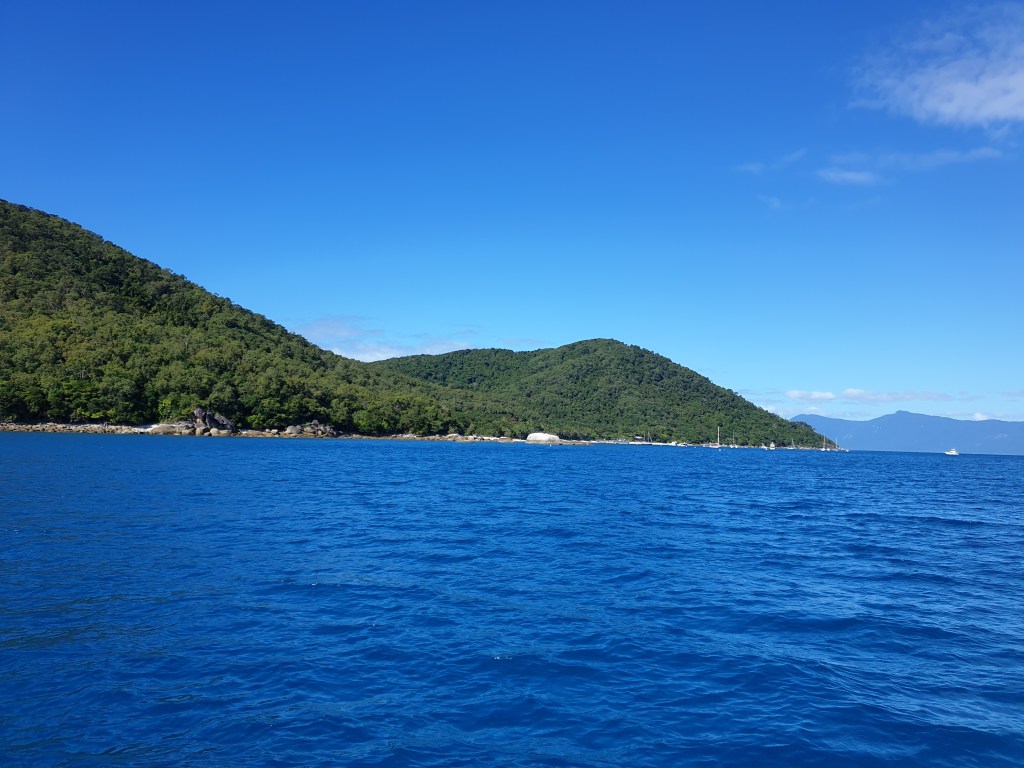
From Sudberry Reef we headed back towards the mainland.  Next stop was Fitzroy Island, just south of Cairns – an actual island, not a reef!  Great lunch spot (Foxy’s Bar and Café) where we enjoyed lunch and several jugs of a delicious ice-cold alcoholic cocktail.   The resort wasn’t busy, but just seeing groups of people after being away from land for a while with no one but our little group took a little getting used to.   There’s some pretty walks around Fitzroy Island.  We tried the Secret Garden walk, a short track through rainforest.  We discovered the Wompoo Fruit Dove with its distinctive warbling call, as identified by avid birdwatchers, Alison and Randall.

 From Fitzroy Island, it wasn’t far to Cairns.  We booked a berth in the marina, and looked forward to the simple joys of clean clothes, clean hair, and long showers.  Oh, and ice-cream.

The Delights of Hinchinbrook & Dunk Islands

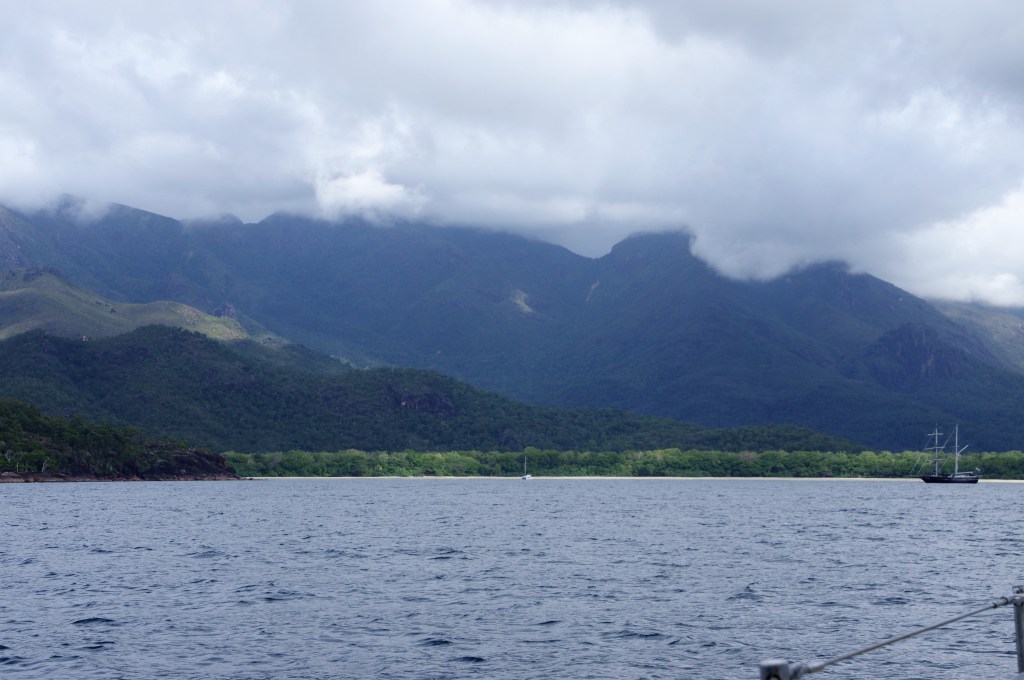
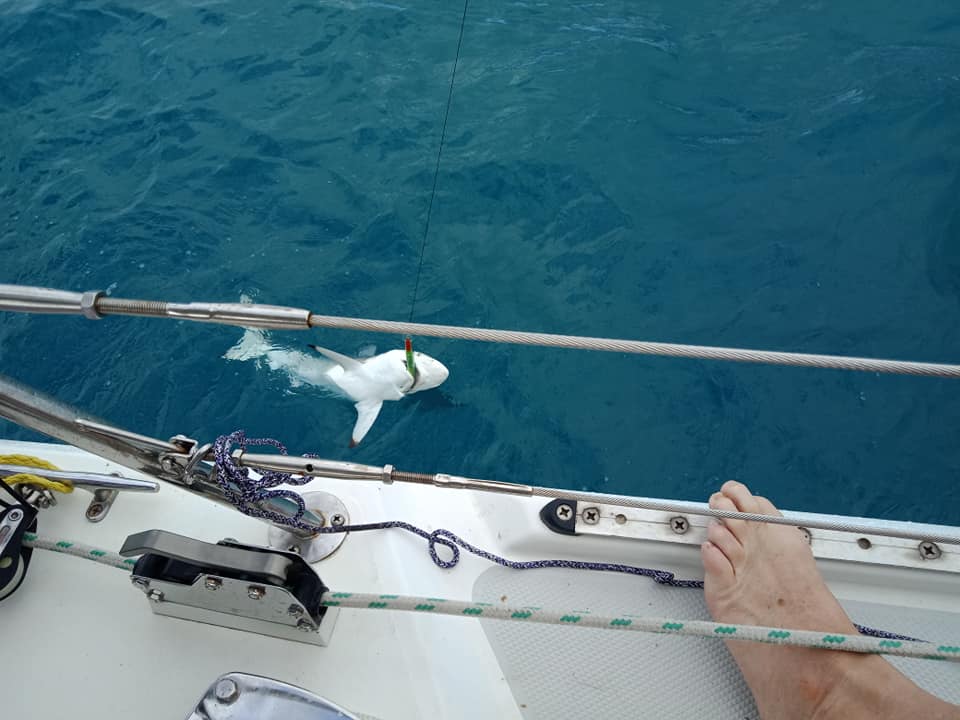
We left Orpheus Island at approximately 0700 and headed the 15-ish NM to Hinchinbrook Island.  As pictured in the previous blog, we hooked up a shark on the way, so that was quite enough excitement for the morning!  Our first stop was Zoe Bay.  For those of you unfamiliar with the area, picture a mountainous island with its peaks shrouded in cloud, craggy and old and jagged against the sky, and cloaked in rainforest.  You half expect to see the trees trembling from the footfalls of a T-Rex, or a leathery-winged Pteranodon riding the air currents…

Tucked in the eastern side of the island, there’s a gorgeous bay with a stretch of yellow sand lined with palms, and the rugged mountains a grey-blue backdrop rising beyond.  Being open to the sea, and with south-east trade winds dominant at this time of year, Zoe is tenable in only the calmest conditions.  We braved the somewhat less-than-calm conditions (rolly and bouncy) for the rewards to be found on land. We weren’t the only ones in the anchorage.  The Young Endeavour was also there, (running a youth development and sail training program) ferrying young people to shore.  Shortly after anchoring, we dinghied our way in, making use of the southern creek to get us close to the walking track. The tide was quite low and still going out, which left a wide beach with soft sand that would create difficulties for launching the dinghy later. 

As we were disembarking the dinghy, we noticed a lionfish (butterfly cod) in the shallows, right where we were stepping into the water.  Lionfish have long feathery barbs which are venomous and, as warned by the 100 Magic Miles book, cause a ‘severely distressing sting … which can last for several days’.  Glad we didn’t step on the bugger! 

Hinchinbrook Island is a National/Marine Park, and its overnight visitors are restricted to those (only 40 people at time) who have organised a permit to hike the Throsborne Trail.  Hikers walk from campsite to campsite, so it’s never very busy and low numbers limit the environmental impact.  We moved through a campsite to get to the walking track and ended up chatting to the women who were camped there.  They told tales of giant mosquitoes, swarms of midges, steep and treacherous climbs, and the threat of crocodiles, and said they’d had to book their permit about a year in advance.  And, in spite of all that, they were having the time of their lives. We coated ourselves liberally with insect repellent before continuing on… They didn’t have any croc repellent…

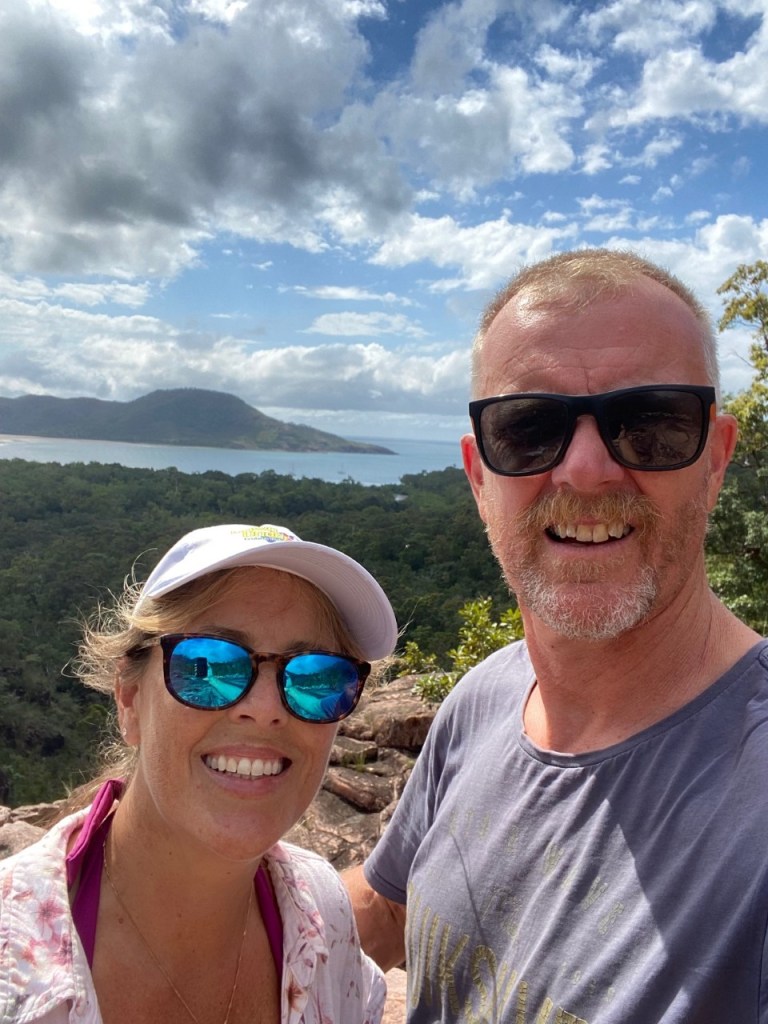
The track to the waterfall is through patches of rainforest and eucalypt.  We found that the young people from the Young Endeavour had taken up residence at the waterfall/swimming hole, so we decided to continue up to the lookout.  There’s a treacherous bit of rock towards the top, where you use a long, knotted rope to help you climb up through the steep boulders.  Some of the crew of the YE were just ahead of us, and happily assisted Jamie with the climb.  The views from the top are spectacular and worth the effort. (By the way, you can click on the photos to make them larger, and scroll through with the arrow on the right side of the page.)

Going back down was another story.  Jamie baulked at climbing down the steep section using the rope.  The Young Endeavour guys were long gone.  After several failed attempts to get Jamie down, Alison discovered an alternate route and Jamie was able to shuffle down on his bottom.  Scary situation averted! My heart rate eventually returned to normal…

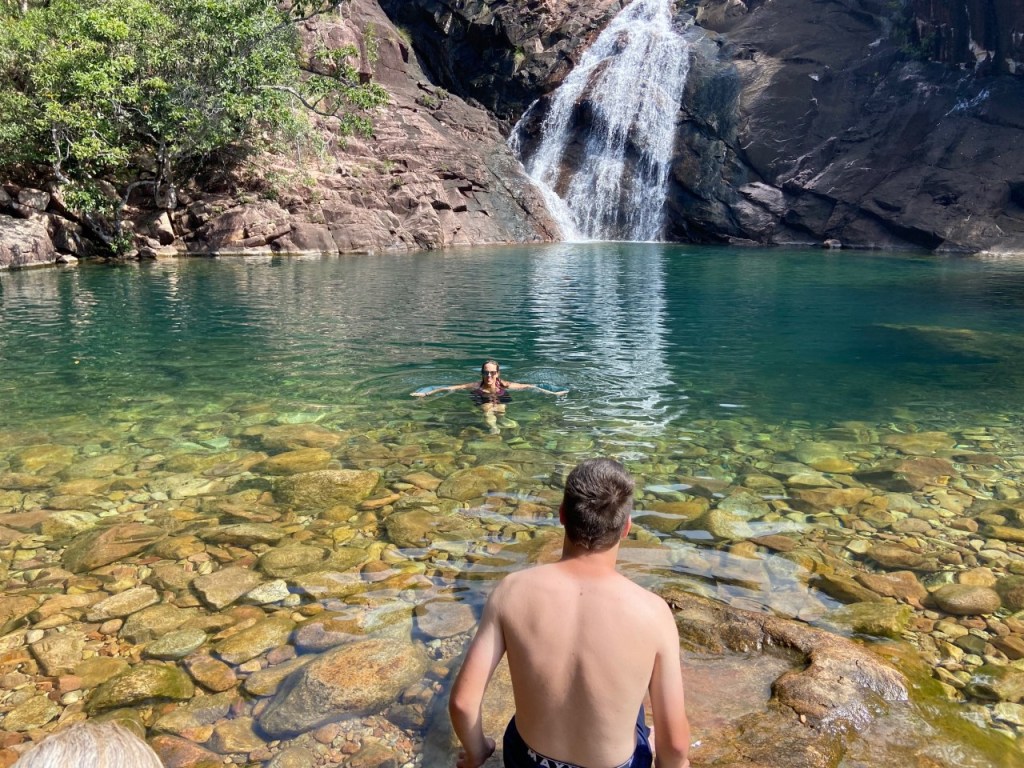
After all the excitement, there was nothing better than hopping into the clear water that pools under the waterfall.  It wasn’t as cold as I remember, but the spotted perch were still there, keen to have a nibble on anything resembling an extremity! We all swam right over to the waterfall through the clear green water. This is a beautiful, special place, that feels somehow lost in time, and we were so glad we could visit it again and share it with family. 

Back in the bay, we discovered Goolara and Mischief had anchored.  As much as we would have enjoyed catching up with them again, we had done what we’d come here to do, and we were less than keen to spend the night here, so we headed out and north to Shepherd Bay, which proved flat and comfortably protected from the SE wind and swell.

We enjoyed the next couple of days around Hinchinbrook before making our way over the top and down the channel a ways to Cardwell.  We dropped Dave and Al at the bus station and said our goodbyes.  It was great having them aboard, and sad to see them go, but they were keen to get back to their caravan in Townsville and continue on their Top End trip. 

After a little shopping at the Iocal IGA, we were underway again, motor-sailing through a glorious glass-out to Dunk Island.  It was here that we caught up with Mischief, Indigo, Tamanu and Tregonning again.
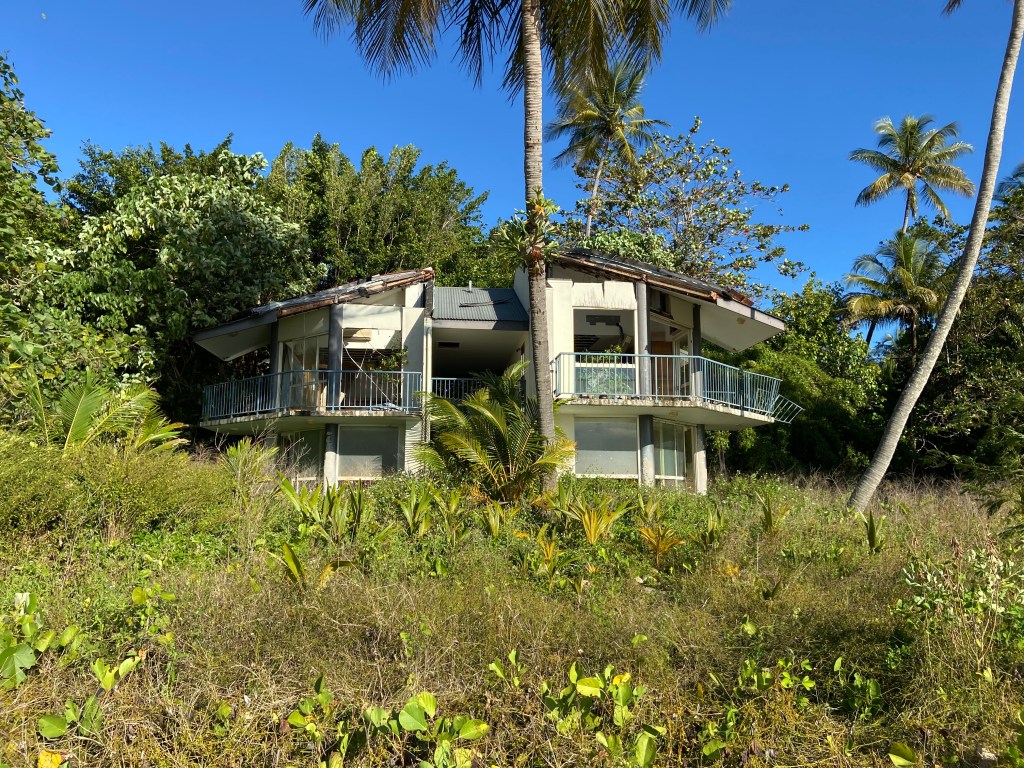
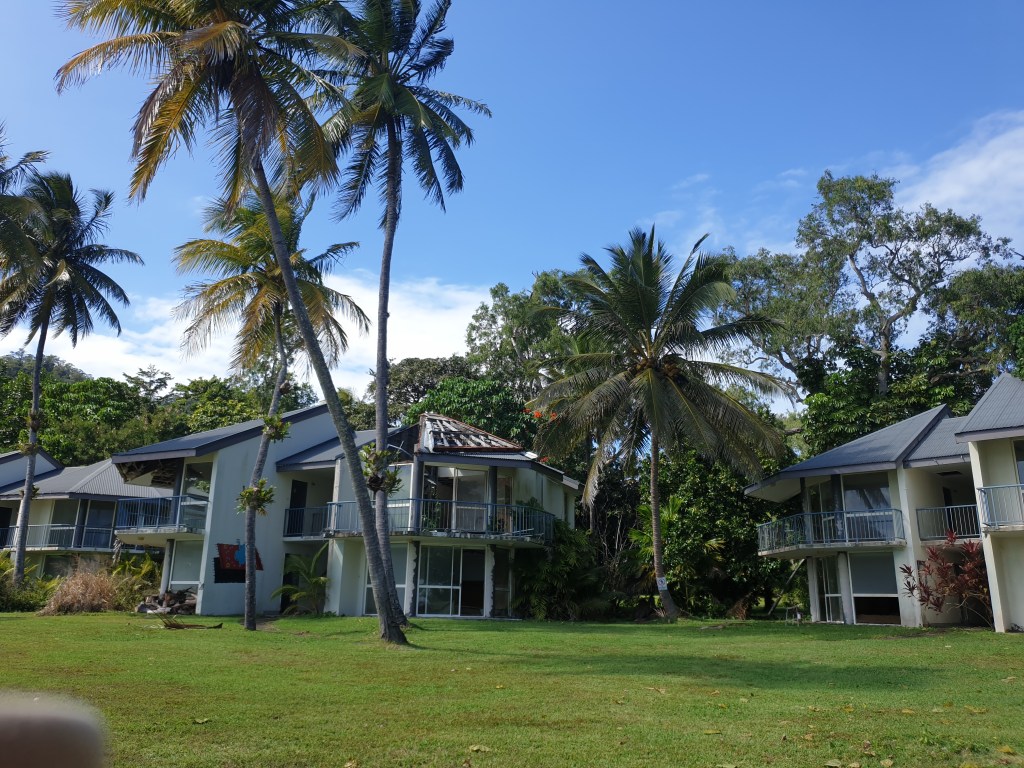
Dunk is a beautiful island with a camping area, great walks, and the ever-present reminder that island resorts are not good investments.   For years now, the resort has stood derelict after a cyclone caused massive damage.  I did some googling and discovered it sold again in 2019, (after then-owners defaulted on loan repayments) with the new owner pumped about redevelopment plans.  Then COVID struck, and it appears nothing has happened.

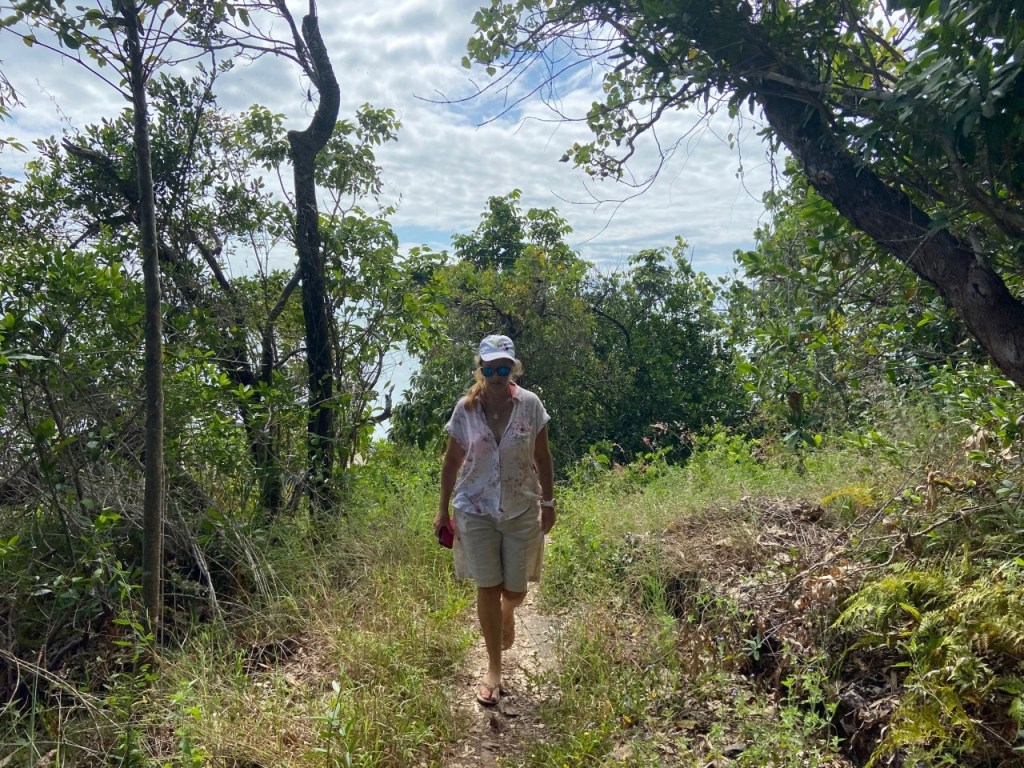
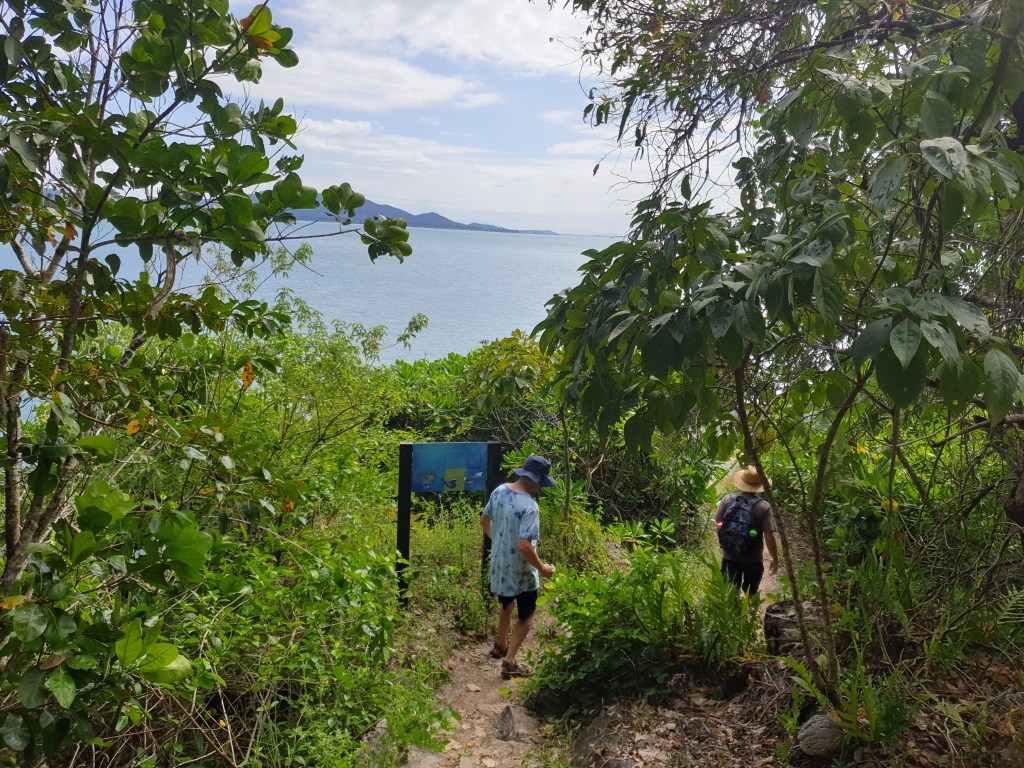
Still, we enjoyed our time there, catching up with friends, wanders along the beach, doing some of the walking tracks, a safari over to South Mission Beach for re-provisioning, and a music night (which was the highlight for Jamie).

If you’ve enjoyed reading this blog, please look for the ‘like’ button. Also, if you want to make sure you don’t miss out on the next one, please subscribe and you’ll receive an email notification of new posts.

John Brewer and Orpheus Island


We set sail to John Brewer Reef from Horseshoe Bay, Magnetic Island, at about 0700.  We had David and Al on board, and the boat well stocked with all our food and beverages for the next 10 days. Mischief kept us company on the calm 30NM sail out to the reef.  Along the way, we hooked up three mackerel tuna.  Lots of fun to catch, and big, but not so much fun to eat, so they were given a kiss and released.  

Looking at a navigation app, John Brewer Reef is shaped a bit like an ear, or a capital G.  It would have been nice to make our way into the spiral, but the lagoon is full of bommies and must be navigated with the utmost care.  There are two public moorings out there, but both were taken, so we had little choice but to anchor about halfway along the northern edge of the reef in 24 metres of water.  Fortunately, that depth doesn’t worry us too much as we have our trusty Rocna anchor.  A couple of other Rally boats were out there, including Goolara, Dignity and Walden.

David, Graeme and I headed out for a snorkel that afternoon, while Alison generously offered to stay back and hang with Jamie. 

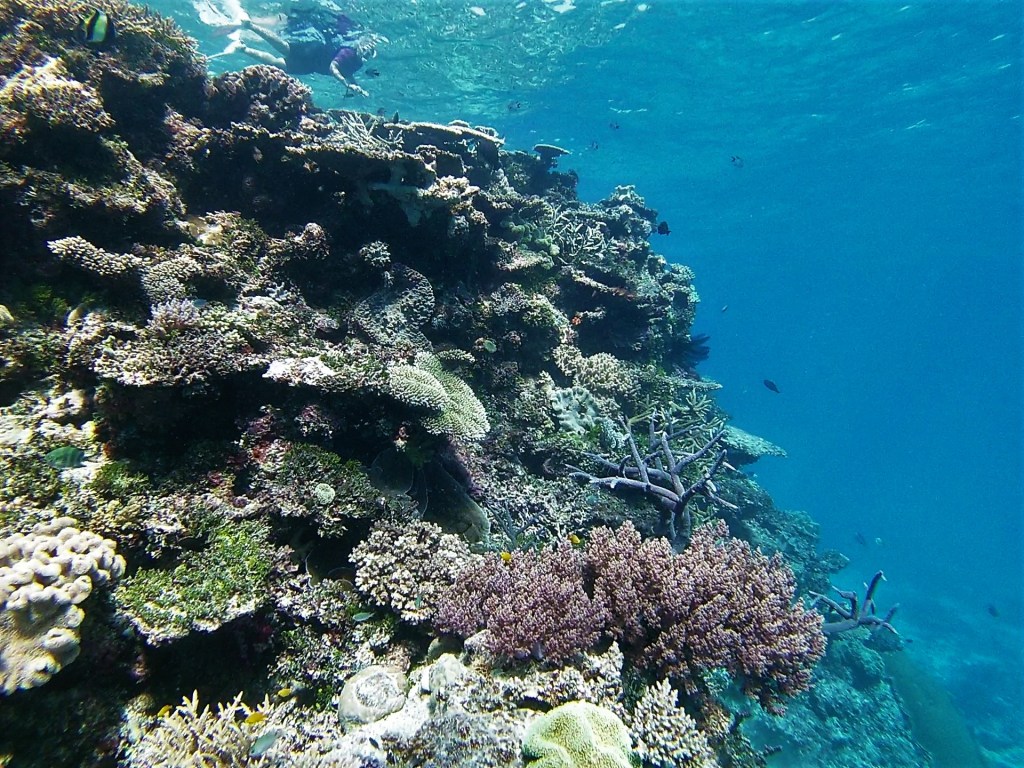
We chose a broad, round bommie and jumped in.  Straight away, we were thrilled by the beauty and colour.  The photos and videos are unlikely to do it justice, but here goes…

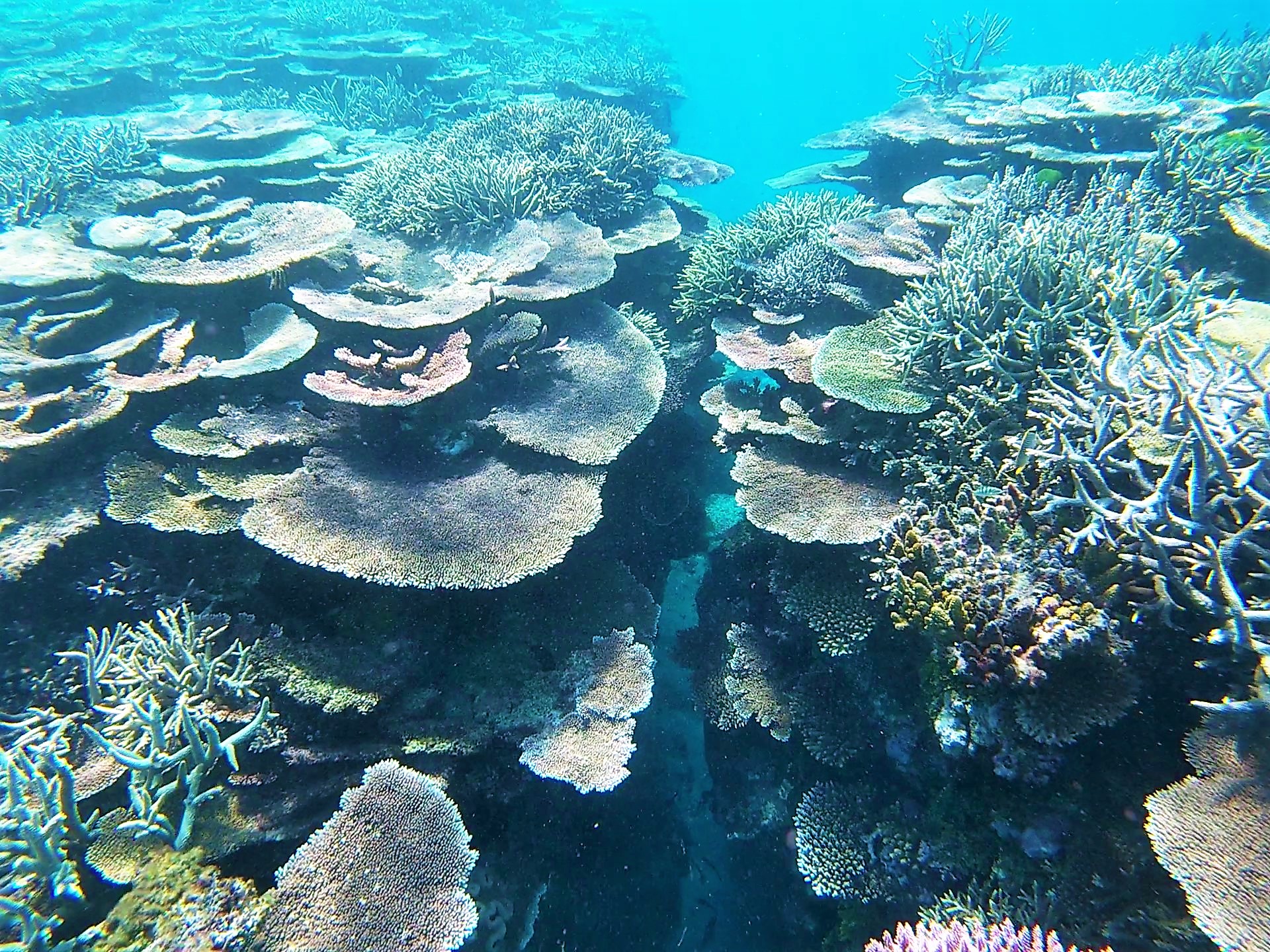
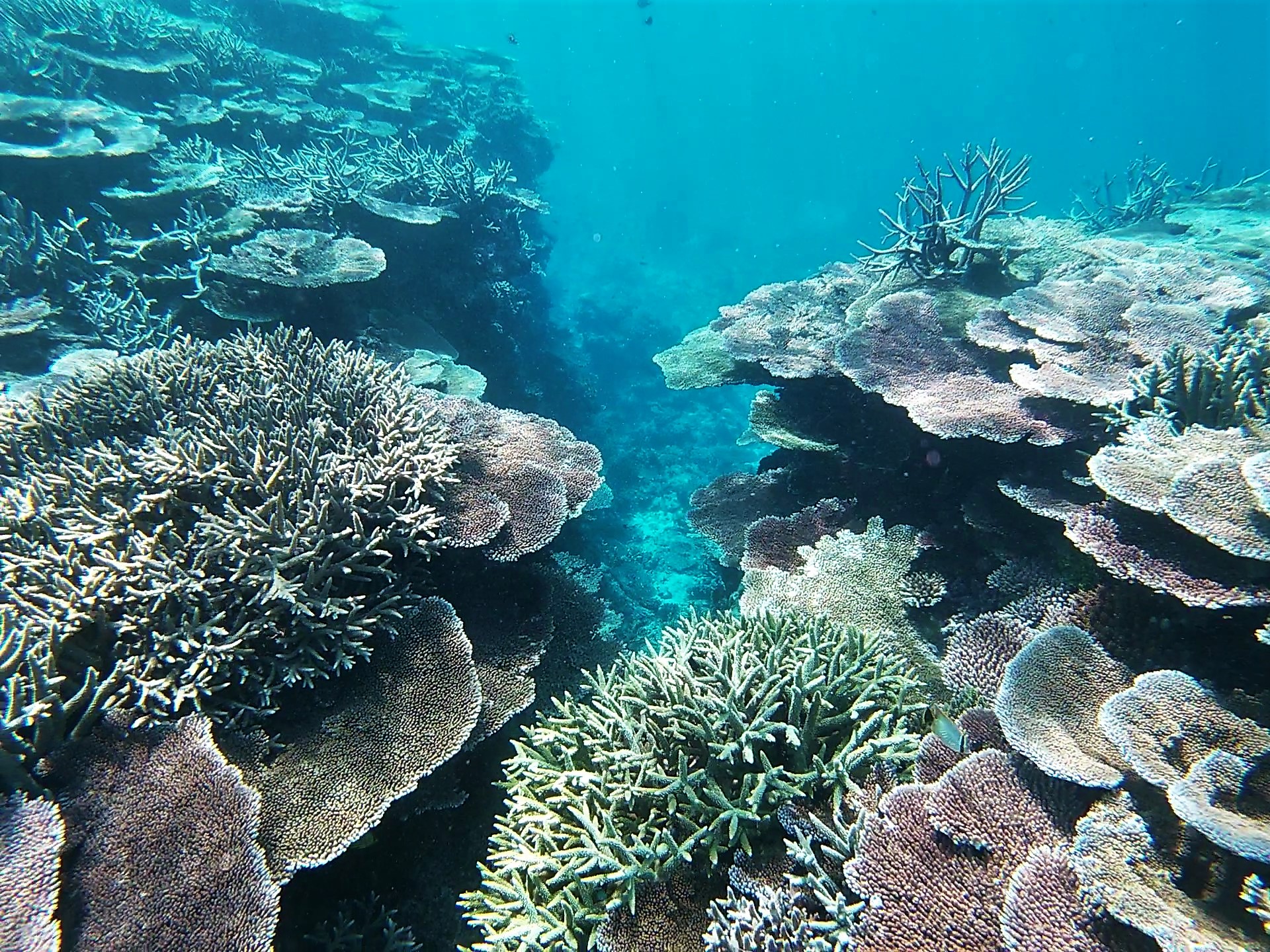
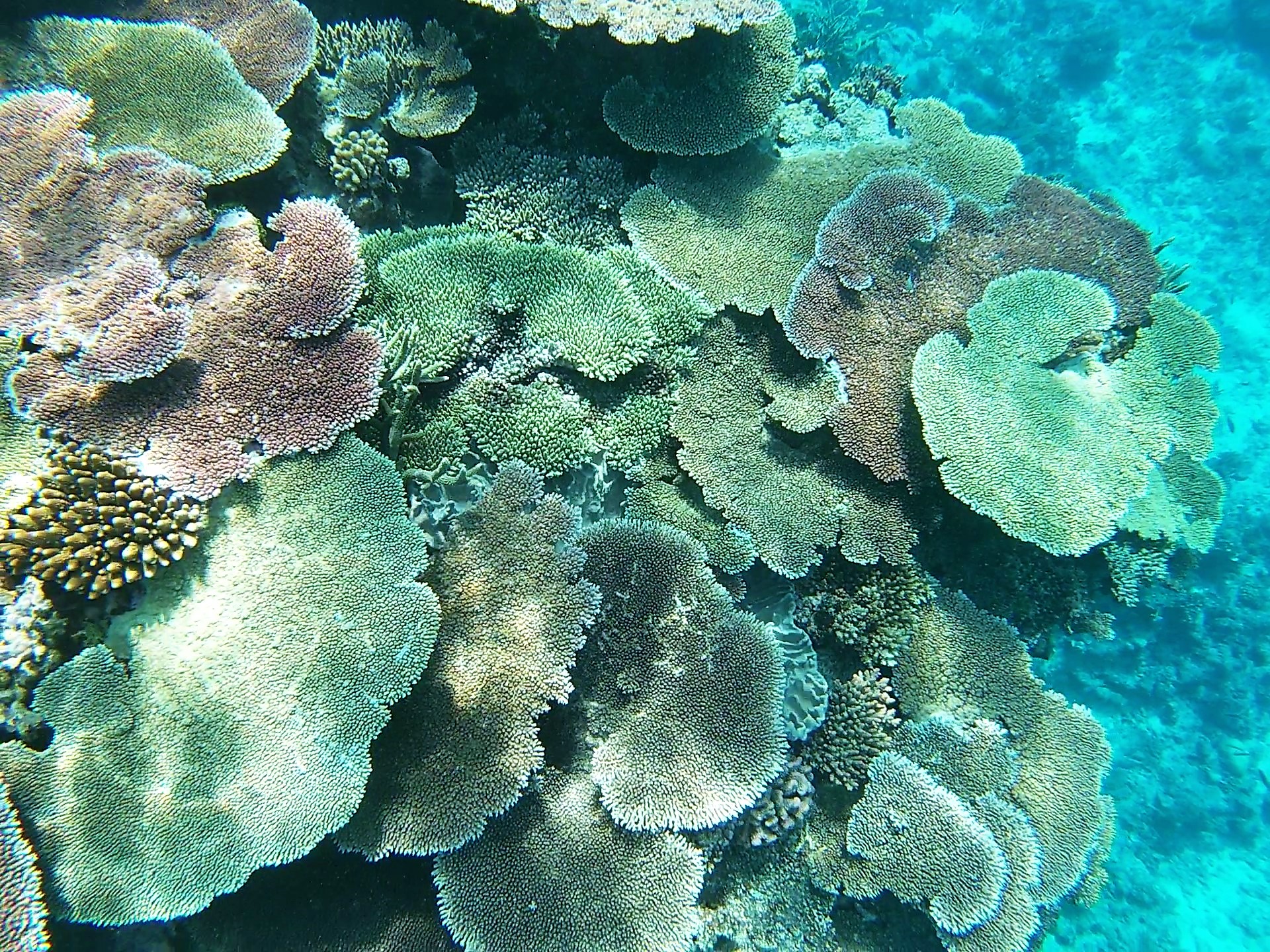
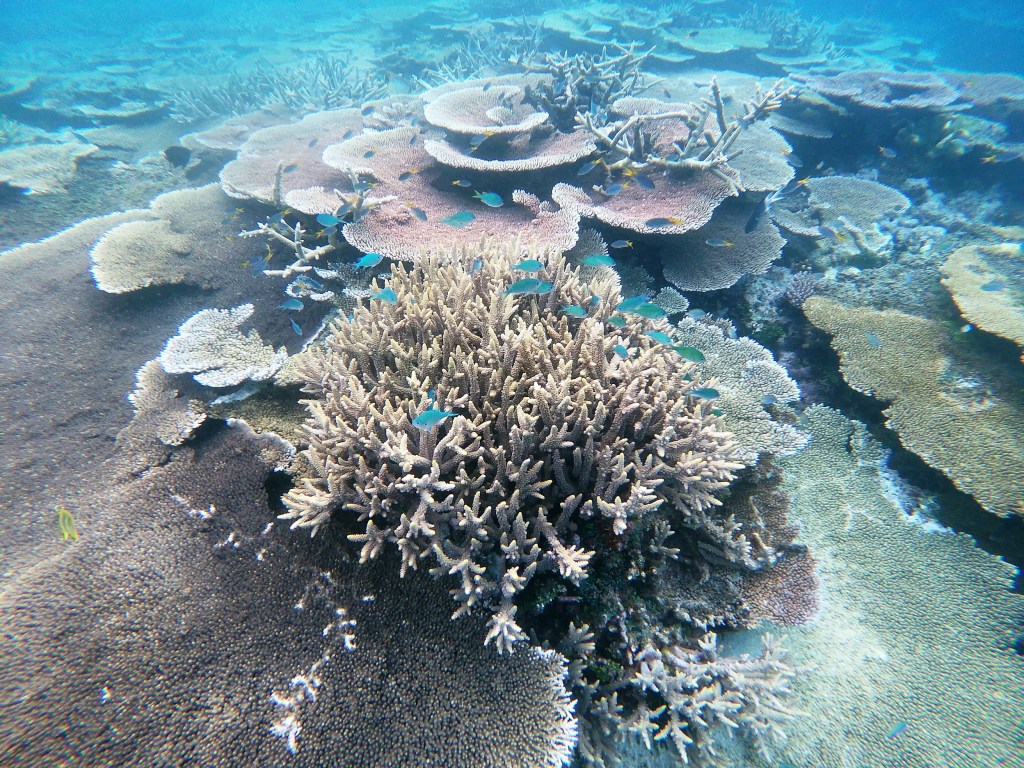
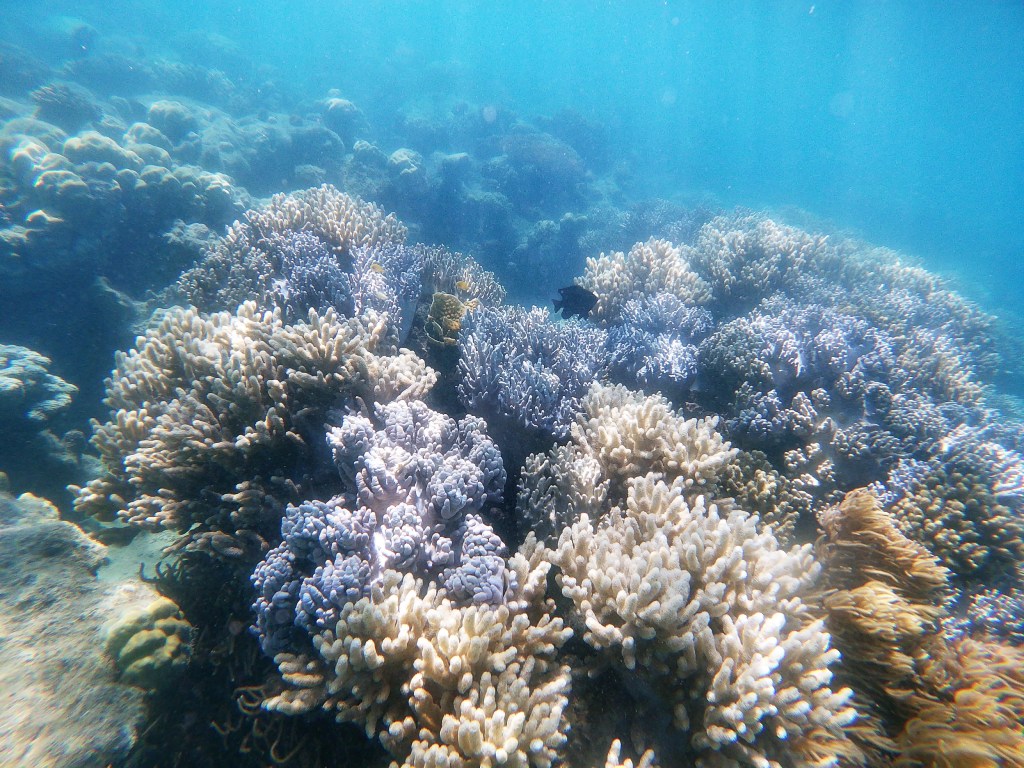
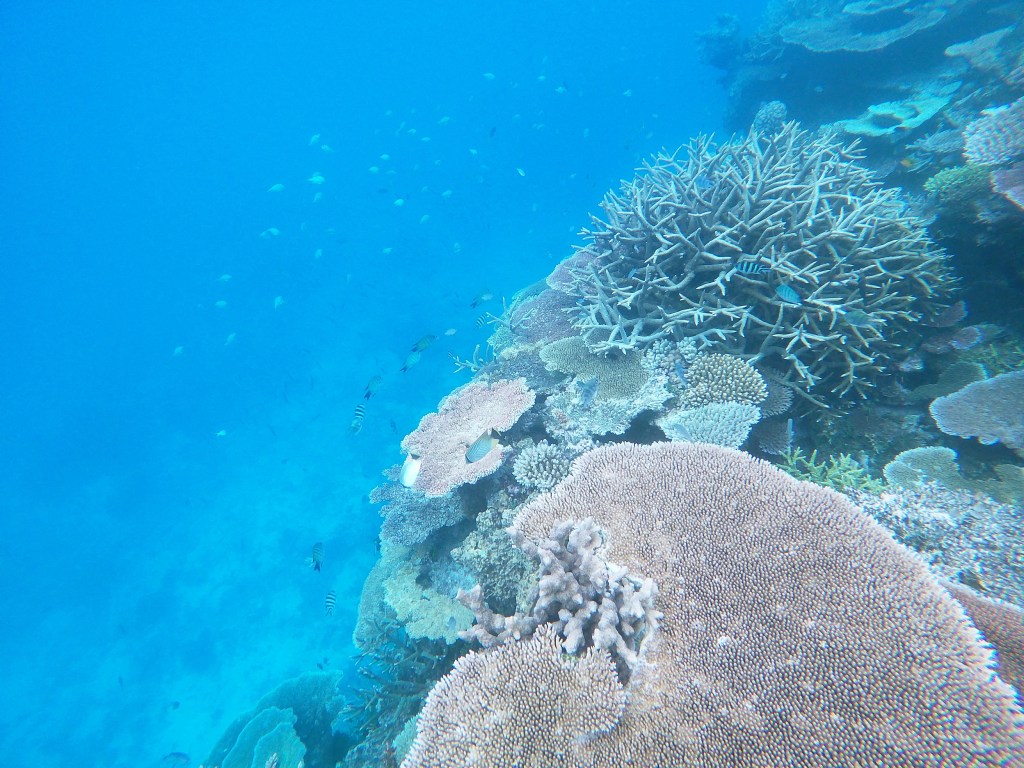
The coral out there was some of the best we’ve seen the whole trip, with plate after plate of overlapping table coral in the pastel colours of an ice-cream shop; strawberry, peach, lemon, apricot, lime, caramel and vanilla.  

Table corals certainly dominate, but they were interspersed with other hard corals such as staghorns, finger, lobed, bolder brain, cauliflower, and tiered coral.  There were also soft corals, such as tree corals and a coral that looks like dense clusters of tiny flowers. 

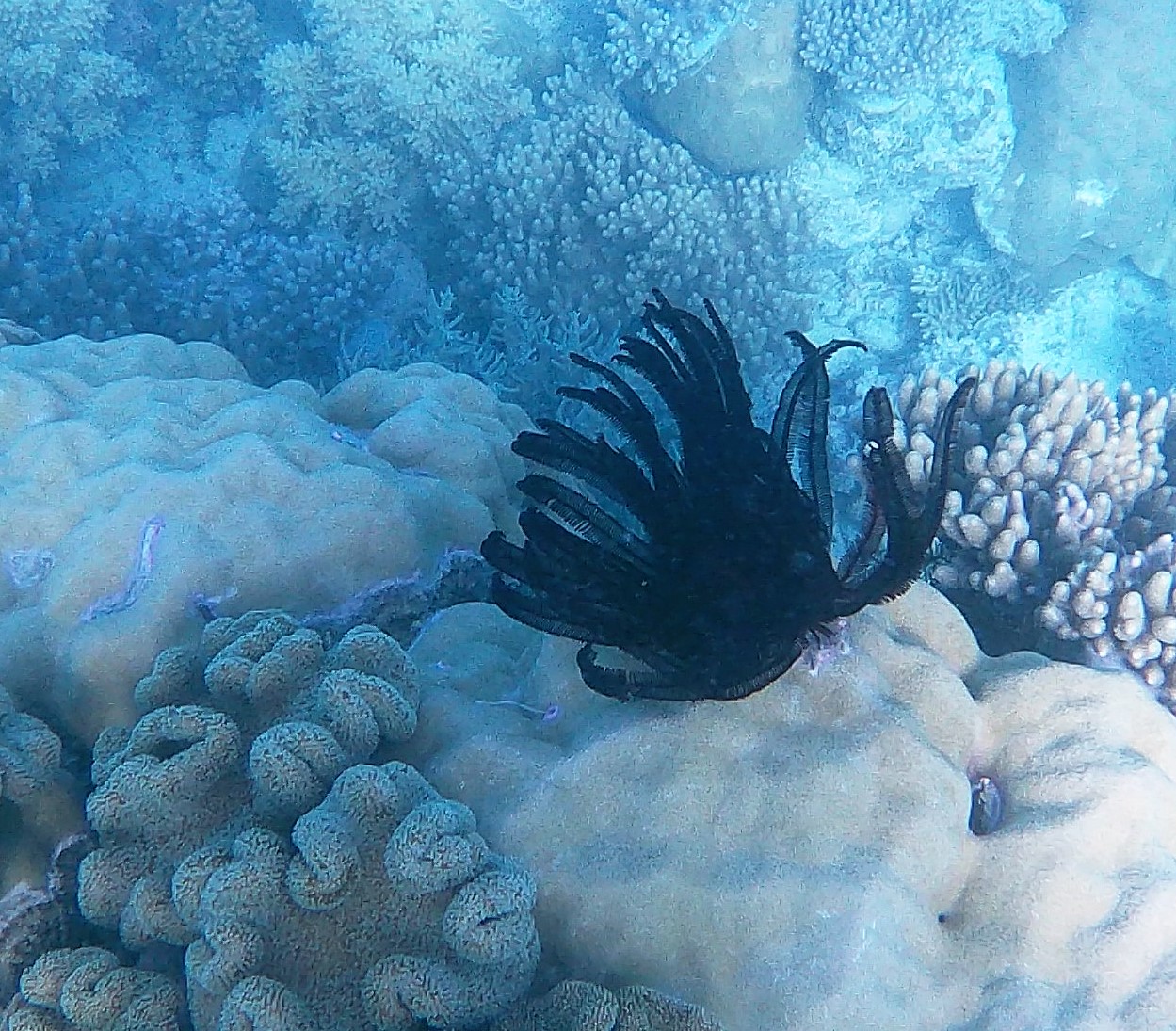
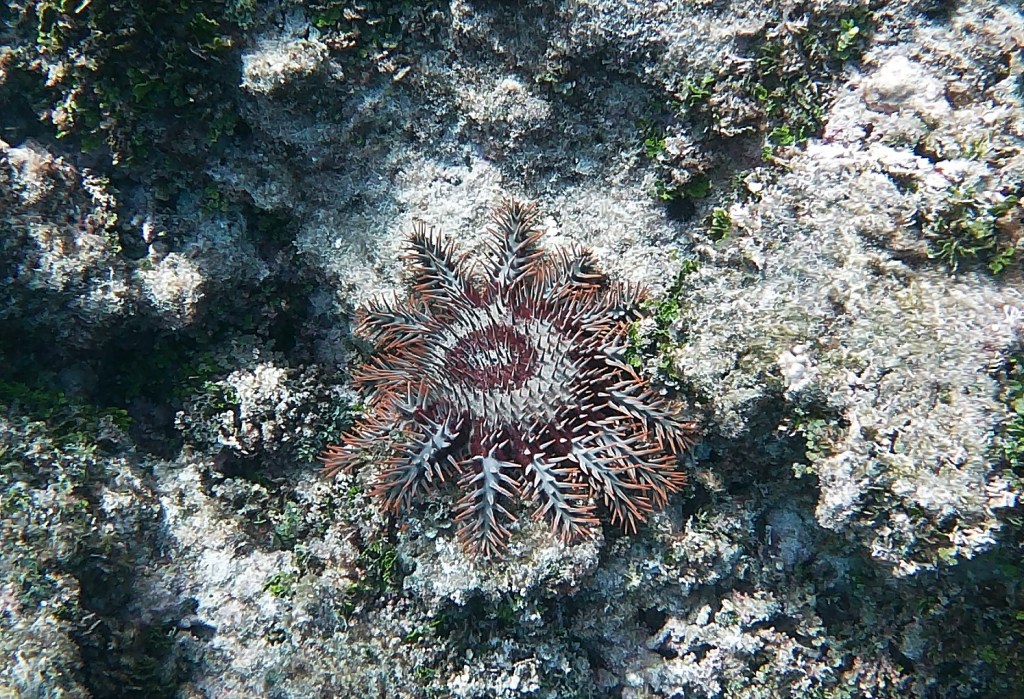
Amongst it all, we could find burrowing (giant) clams, clown fish (cinnamon anemone), butterfly fish, blue-green chromis (those little fish that thread themselves through the coral fingers) bannerfish and many others.  (Oh yes, and unfortunately the dreaded crown-of-thorns starfish. Not many, thankfully.) At times, it felt like we were swimming in a giant aquarium, with fish all around us and the aqua blue water beyond.

The first night out at John Brewer we started to bounce and roll a bit, although the wind was from the SE and the anchorage Is protected SE-SW. It’s always a little strange, maybe even unnerving, out at the reef with no land in sight, especially once the sun sets.  Around 2300, the boat began to jerk quite badly, which led us to discover the anchor chain was caught under rock and going straight down from the bow, putting a lot of strain on the chain and the bow roller as there was no give.  Graeme already had a fair bit of chain out, and he let out quite a bit more to resolve the situation.   We were wondering what was going to happen when we tried to get the anchor up later on…

The next morning, we were back in the water in our snorkel gear to show Jamie and Al and Andrew and Lynne the amazing underwater gardens. 

Museum of Underwater Art – John Brewer Installation

The following day, Graeme, David and I dinghied to the northern end of John Brewer and dived the MOUA installation, called The Coral Greenhouse.  The Museum of Underwater Art is, according to its website, ‘a series of globally significant artworks located on the Great Barrier Reef [near] Townsville’.  A talented fellow by the name of Jason de Caires Taylor has created the installations (of which only two have been completed so far), that are not just novelties or art for art’s sake, but rather, ‘share a message of reef conservation and restoration’. 

Set up like a plant greenhouse, The Coral Greenhouse has sculptures of people pottering about and tending to coral ‘seedlings’.  It’s best to see by scuba, but David snorkelled above and with the visibility very good, he could see a lot from the surface.

Anyway, Graeme and I loved it.  It had an atmosphere I can’t describe.  Perhaps the video will help…

It was rough and rolly out at John Brewer that night, after the wind changed, going NE, N and NW, with waves roaring outside and breaking against the side of the boat.  It was probably one of the roughest, scariest-sounding nights we’ve ever experienced. I don’t think anyone got much sleep and I think Dave and Al were wondering what they’d got themselves into!  But we all survived, and the anchor came up OK the next day.

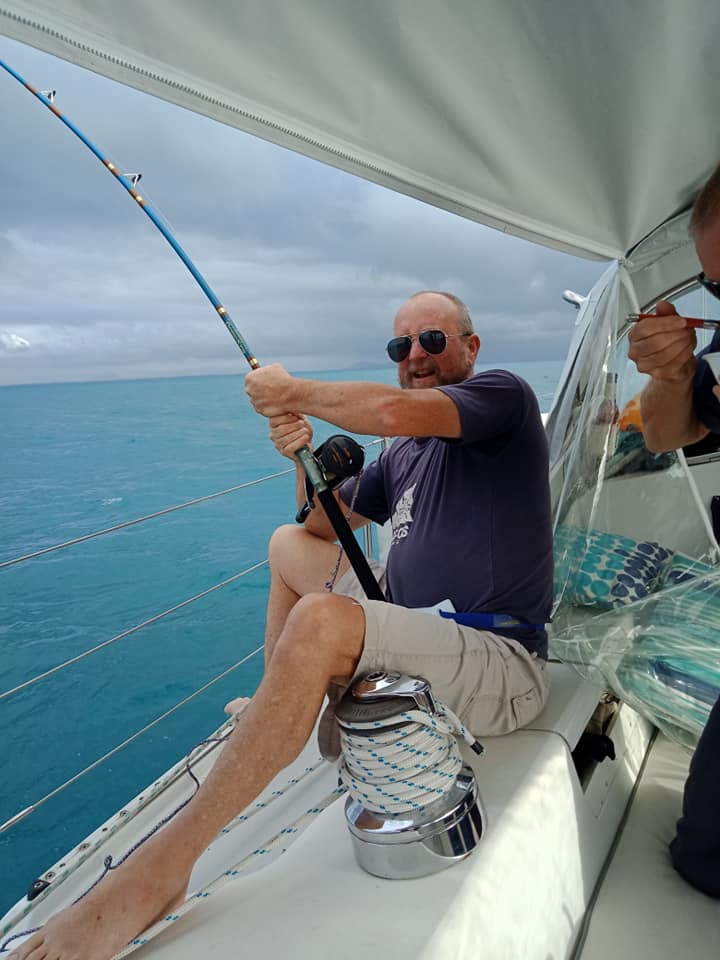
We left at about 0700 in company with Mischief, and had a very quick sail over to Orpheus Island, a journey of some 38 miles heading west back towards the mainland, with winds ranging from 4-23 knots during the morning.  We trolled a line again, and while we didn’t catch anything we thought was edible, David had a great time landing a shark.  Well, he didn’t actually land it – no one wanted it thrashing around on the boat!  The guys managed to get it to spit out the lure and it lived to fight another day. 

Orpheus is part of the Palm Island Group, which is made up of Great Palm Island, Orpheus, Fantome, Pelorus, Havannah, Curacoa and a cluster of islets in the South-west.  Orpheus has a couple of lovely bays on its western side, and we went into the very pretty and sheltered Little Pioneer Bay.

We spent a couple of days at Orpheus.  A research station belonging to James Cook University sits in the southern part of Pioneer Bay.  Back in the 1980s, a project was undertaken to farm giant clams.  It was so successful that giant clams were relocated all over the place, including Magnetic Island and some of the inner reefs.  There is still a clam garden in the bay, with dozens of the giant clams now decades old.  We snorkelled over them when the tide was in, and went to have a look at them spurting at low tide.  A snorkel in another part of the bay revealed hundreds of colourful burrowing clams amongst some surprisingly good coral.  We also wandered over to the research station, where we were very fortunate to be offered a tour through the facility. 

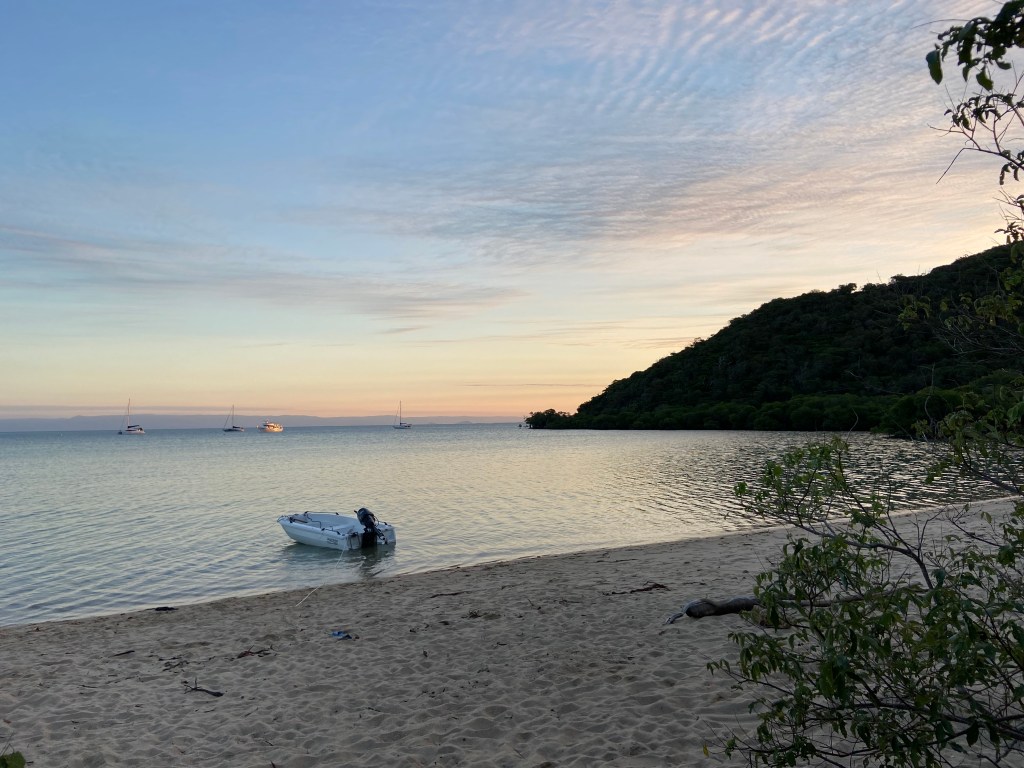
After tough days of snorkelling, we spent the evenings on the beach watching the sun go down with the guys from Mischief, Dignity, Goolara, Indigo and Tamanu.  It was tough to take, but someone had to do it, right?

It was hard to tear ourselves away from such a wonderful spot, but we had things to do and places to explore.  Next stop: Hinchinbrook Island.

Beyond the Rally

Or… What should we do now?

It was a strange feeling, a sense of emptiness, knowing that the Rally was over.  It was way back in January when we had first said ‘What the heck, sounds like fun’, and committed to going. From then on, we dedicated all our spare time to preparing for the Rally.  If you go back to the first blog for this trip, you’ll see a list of some of the things we did as part of the preparation, and there were myriad things that didn’t make it on that list that had to be done nonetheless.  So, from January until the of June, our energies were directed to one purpose… and then it was over.

There were lots of discussions going on amongst the Rally participants who didn’t have to rush home – about where to go next.  Some were keen, with a new sense of confidence, to head back out to the Coral Sea Marine Park and continue exploring wild, remote places.  Others were going to head south to the Whitsunday’s playground, and others had their eyes on Cairns and beyond.  We were keen to explore the nearer reefs of the Barrier Reef, and found there were others of like mind. 

First stop after Magnetic Island was Townsville, where we planned to do a full restock, refuel and deep clean.  We were warmly welcomed by the Breakwater Marina – who had been prewarned a bunch of Rally boats might be coming in.  I’ve said before that some places can be ‘sticky’ – you become attached to them for their beauty, their isolation, their access to life’s little luxuries, and they’re hard to leave…  Well, Breakwater Marina proved to be more like super glue…

To begin with, it was great to be able to continue spending time with many of our new friends from the Rally (and some old friends).  Breakwater Marina has a fabulous, grassed BBQ area where cruisers regularly gather, so we appropriated that on our first night.  The next day, a bunch of us walked up to the Flinders Street Markets to buy fresh produce, and enjoyed refreshments at the Rambutan Bar on the way back. The evening saw us on Goolara for drinks and State of Origin.

The next day, it was announced that a young woman with COVID (Delta variant) had travelled up from Brisbane and gone all over Magnetic Island and Townsville, including the Flinders Street Markets.  Those of us who had gone up to the markets discovered we were considered ‘close contacts’, and ordered to get tested and quarantine for 14 days.  Some of our friends were also considered close contacts due to their movements on Magnetic Island.  So, we raced off for COVID tests – us and half of Townsville.  That was fun, as I’m sure most of you know.  All our tests came back negative.  Graeme and Jamie managed to avoid quarantine as they had come to the market later than me. Townsville went into a 3-day lockdown.  Of course, there was the panic buying right before we went into lockdown…

Quarantine would not have been half so bad if my neck hadn’t also decided it was time to develop a herniated disk (or impingement at the very least), causing significant nerve pain in my left arm and making it painful to be in any position other than standing up with my left hand positioned comically on my head.  The kind of medical assistance I needed was impossible to get under quarantine.  After several days of trying to deal with it, Qld Health sent an ambulance for me, with the paramedics dressed head to toe in PPE, to take me to hospital.  In the hospital, I was made to stand in a marked-out square, then moved to an isolation room.   Part of the process was another COVID test.  The doctor finally decided I needed an MRI, but they wouldn’t give me one because it wasn’t an ‘emergency’.  The best thing I could get for my trouble was a script for good painkillers, but I was told I couldn’t fill the script as I couldn’t go to a chemist!  When I was discharged, I asked the doctor how I was supposed to get back to the boat.  She told me to catch a taxi, and if I didn’t have a phone I was welcome to use the payphone in the Emergency waiting room.  So much for policies and procedures…

Two weeks dragged by… Graeme and Jamie kept busy with visits to museums, amusement arcades, water parks and places that sold pizza and ice-cream.  Graeme knocked over a few boat jobs and used the Marina car to get parts and fishing gear.  He got the TV working and we watched Australia’s Ash Barty win Wimbleton. 

Quarantine finally ended, and we had a ‘coming out’ party at the BBQ area with about 20 attendees.  Here’s the rub.  Turns out the COVID-infected girl who visited from Brisbane had simply crossed the road in the vicinity of the markets, to catch a bus to the airport.  We were barely even casual contacts.  By some stroke of luck, NOT ONE case of COVID came about from her naughty little holiday. I was finally allowed to get some physio for my neck, and discovered on the 2km walk to the physio that the best pain relief was walking.

David and Al (Graeme’s brother and his wife), who had been ‘land cruising’ (and had managed to get into Queensland before the borders clanged shut) moved aboard on the weekend of Graeme’s birthday.  We enjoyed Graeme’s birthday at Longboards, followed by birthday cake. 

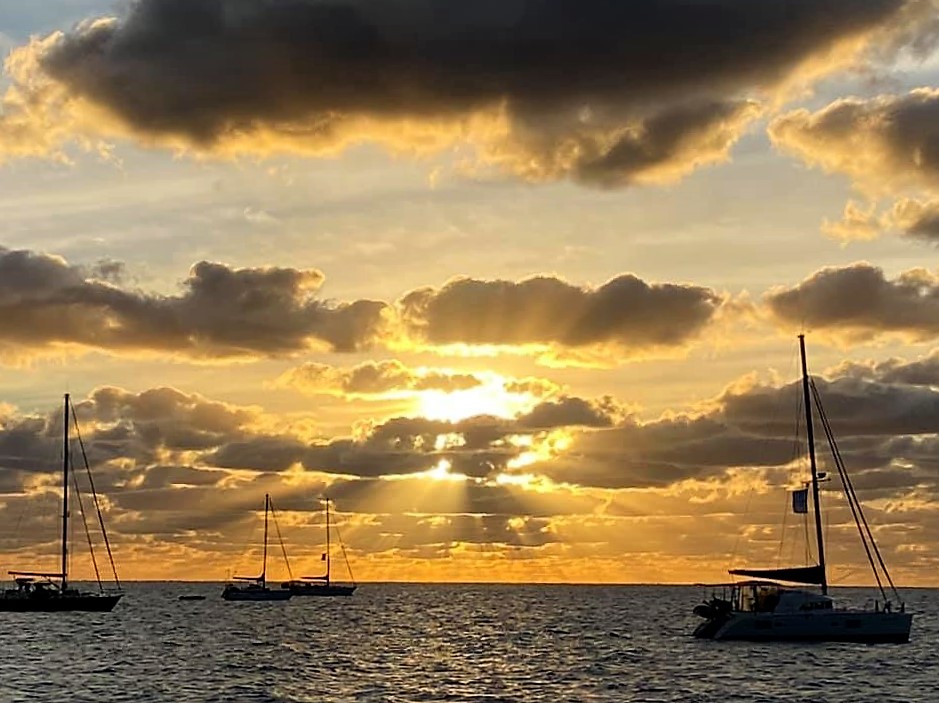
We finally unglued ourselves from Townsville, first stop, Horseshoe Bay.  Sally and Forfar from Sarisha joined us one orange-sunset evening for drinks.

Our next stop was John Brewer Reef, which is only 30nm from Horseshoe Bay.  It was here that we found one of the best snorkelling areas of our trip.  The coral bommies at John Brewer are thick with table coral, stacked on top of each other in various shades of pink, salmon and yellow. And there’s a fabulous underwater art installation… Here’s a little teaser, with more to come in the next blog:

Beyond the Barrier Rally – Part 4

Flinders Reefs

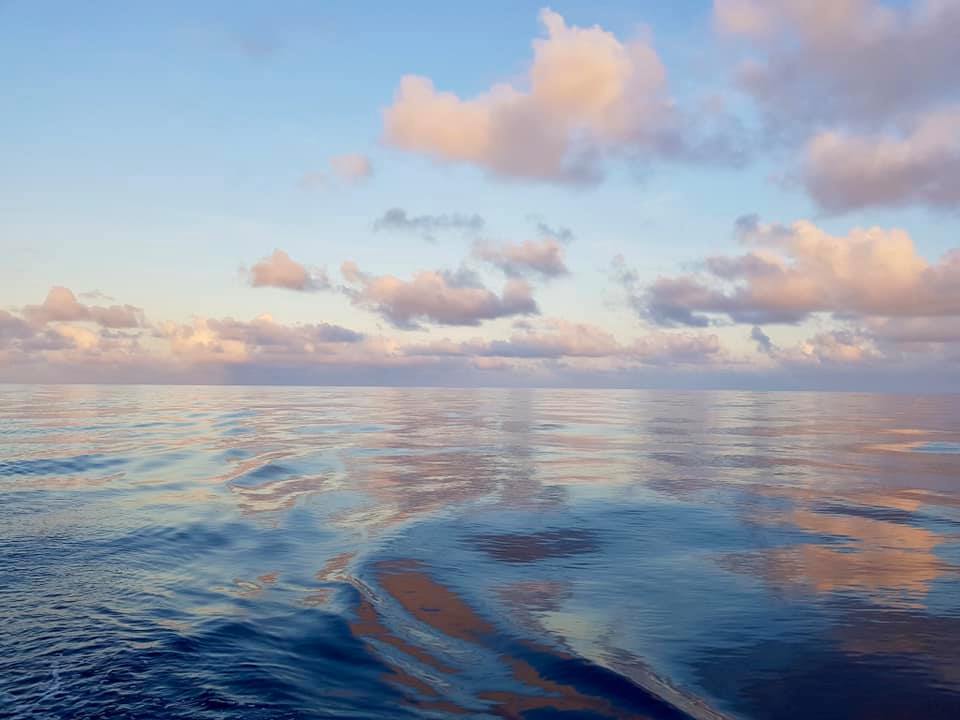
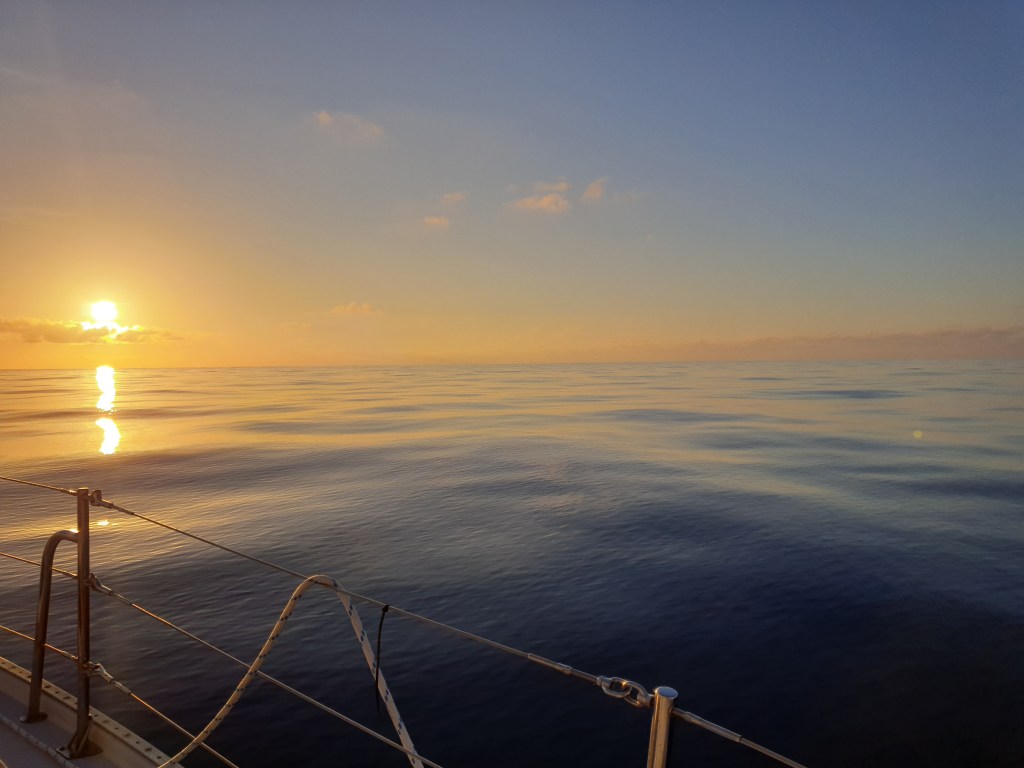
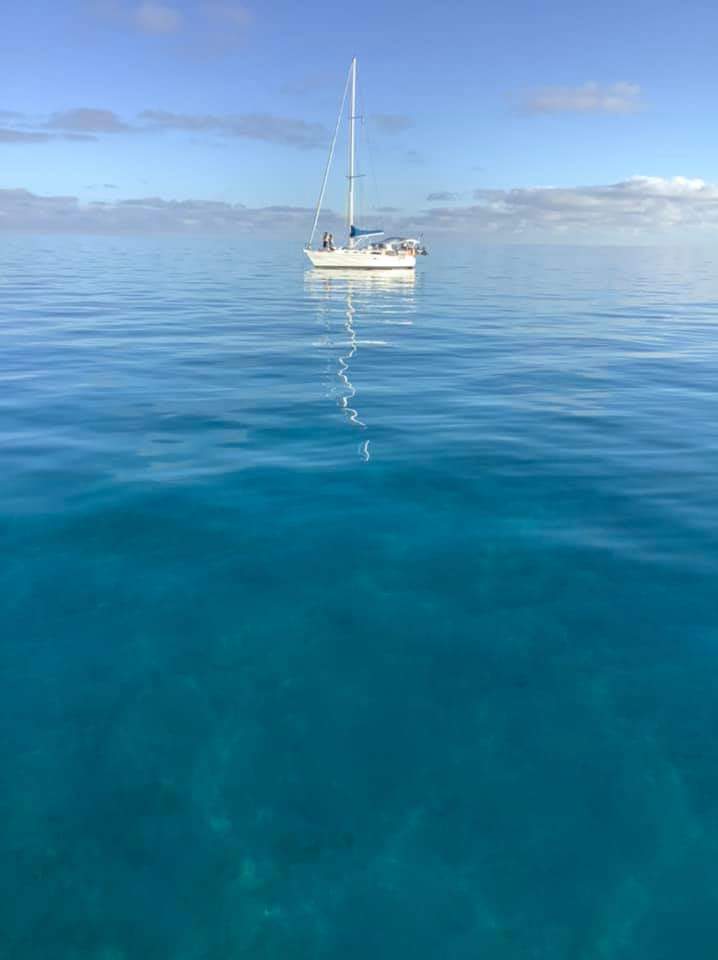
Our trip to Flinders Reefs was a surreal passage, with a perfect play of light and colour on sleek-as-satin waters.  

At times, it felt like we were inside a blue pearl. The sea merged with the sky and it seemed we were floating in nothing.  With very little wind, we motored all the way, enjoying the calmest passage of the trip. 

We caught a lovely schooling mackerel that was so silvery it appeared white.  We also caught another mackerel tuna – fun to catch but not to eat, so he went back in to fight another day.  Something big took our line for a run – zzzzzzzing! — and we lost it and the lure before we could wind the thing in. Many others reported over the radio their various catches, edible and not-so-edible, and tackle lost with big hits.

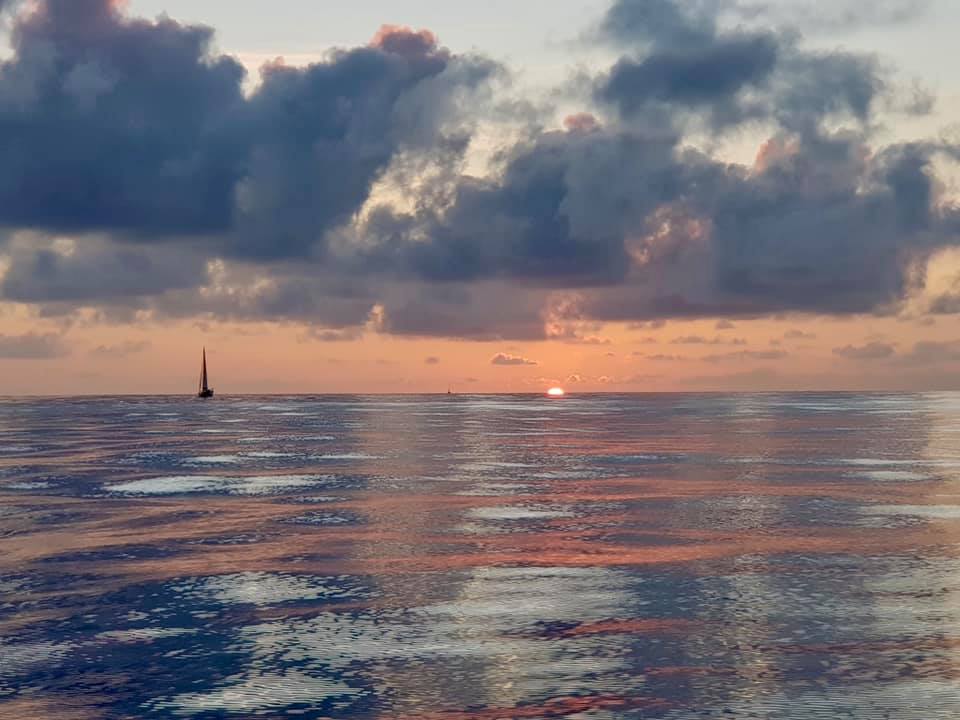
If the day was calm and faultless, the evening was even better.  With the lowering sun behind, the clouds turned pink and purple, edged in orange and gold.  The sea became a pale blue satin sheet reflecting the colours of the sky, rising and falling like someone turning in their sleep. 

After an uneventful night, with the seas remaining flat and calm and the sky full of stars, the sun rose and we entered Flinders around 1000 as a conga line of boats. 

Flinders Reefs are 130NM North-east of Townsville, to give you some idea of where in the world we were.  Peter Sayre’s book describes the location as a horseshoe-shaped submerged atoll laying upon the Coral Sea plateau, covering an area of about 200 square miles.  We anchored at the southern end of the horseshoe, near Main Cay.  This is the closest we’ve been able to anchor to a sand cay this trip, in only about 8m of diamond-clear water. 

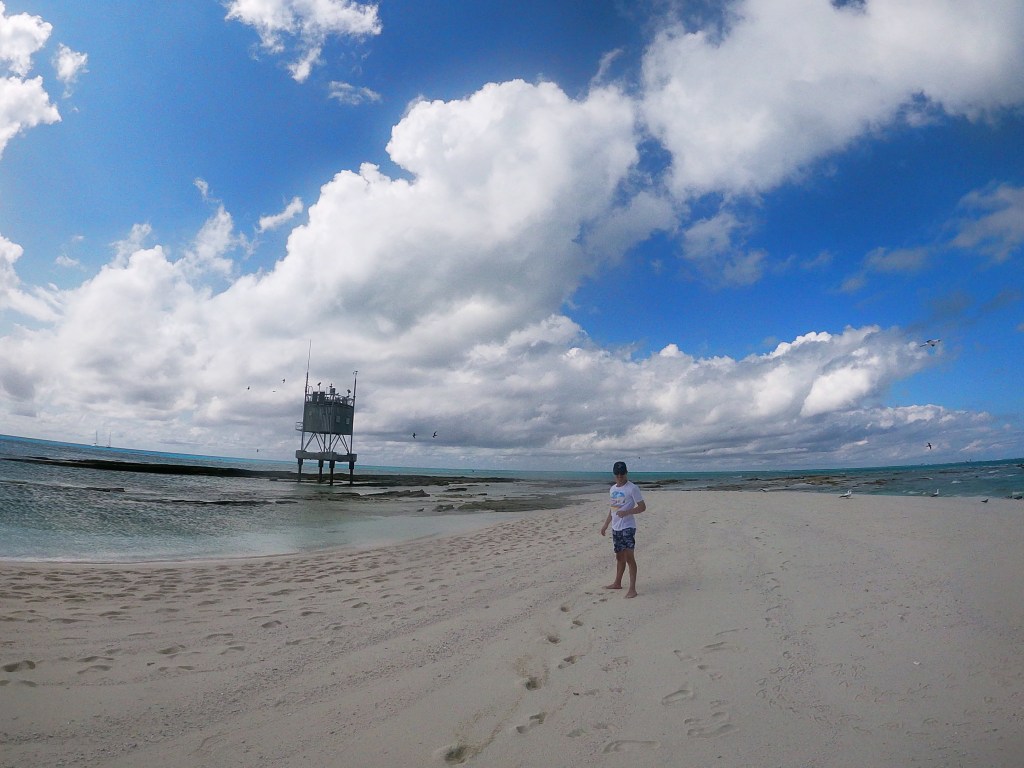
Once anchored, we swam.  Graeme took some photos of the anchor for John, as Rocna is one of the rally partners, then we flew into the shore to get in a stroll and a chat before the predicted southerly got stronger. Jamie and I wandered up the shoreline to the (unmanned/unpersoned?) weather station with the guys from Passion.  Main Cay is a long but very narrow cay, and many birds vie for roosting space when the tide comes in and covers most of the cay. 

Back on the boat, the southerly came in with ferocity, and we found ourselves rocking and rolling madly.  The grass always looks greener, and in this case, the anchorage looked calmer a little further east, so  after a few others moved and reported better conditions, we did the same thing.  We were glad we moved, even though we lost our lovely shallow spot close to the beach.  It was still a very bouncy night, but the other spot would have been worse as the swell curled in from the south-west, especially with the second high of the diurnal tides.

The following day, I snorkelled with the guys from Mischief and Indigo.  Disappointing in shore but we found a good bommie out the back of the anchorage, with a huge garden of anemone fish.  Hard to get good footage as I was only snorkelling and they were pretty deep…

Together with the Walden’s (as we affectionately call them), we enjoyed drinks on Indigo and lamented the fact that the rally was coming to an end.  Later in the afternoon, we had our final coral cay sundowner event.  With our tribe the last to leave the beach, we discovered the tide was coming in fast and we had very little sand left, and the Walden’s needed some heavy duty bailing help as their dinghy had been swamped and wasn’t going anywhere.

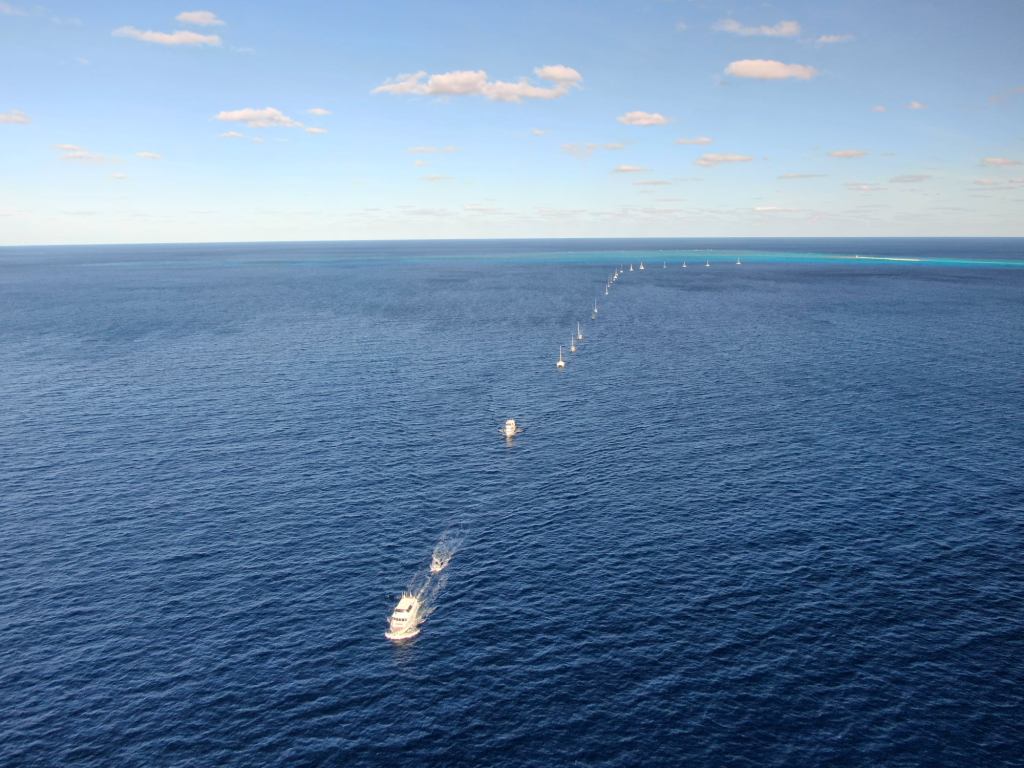
We experienced another rocky night, though not as bad as the previous night.  The next morning, Graeme went for an exploratory scuba dive with Peter and Michelle. He forgot to take the camera but ended up having one of the best dives of the trip, with a highlight being a pristine giant coral fan probably twice as big as the one pictured in the previous blog. Later, Michelle turned up with a leftover tub of ice-cream (which we managed to squeeze in the freezer) and before we knew it, we were preparing to leave.  Departure was a little different from all the other times.  Each time previous, we had set sail (allowing for visibility) mainly to ensure we reached our next destination in the right conditions for visually navigating the reef.  This time, we were heading for an anchorage that was clear of bommies and could be entered at any time.  In addition to this, Peter, our guide on Phoenix, was planning to lead us out of our anchorage on a route he had not taken before, so we were all to follow him.  At around 3pm, the boats started heading out, one falling in behind another, creating a conga line across a calm reef. 

Once safely out of the reef, the line broke up as we adjusted to our own cruising speeds and plotted our own courses back to the mainland. Our last passage gifted us good conditions with a gentle rolling swell, and we motored on into the night.  We came in through Palm Passage and arrived in Horseshoe Bay, Magnetic Island, around 3pm the next day, so a 24-hour run for us.  We sailed all the way from Palm Passage, but on reflection, we probably should have been sailing through the night instead of motoring…

It felt a little strange to be back in civilisation.  The locals must have been shocked to see such a sudden influx of boats filling their pretty bay.  Once anchored securely, we flew in to shore to find ICE-CREAM.  (I know, I know, Michelle had already given us a tub only the day before!  What can I say?)  Well, we ended up at the local pub, the Marlin Bar, celebrating with all those who had arrived before us or around the same time.  (There were still quite a few boats out at sea, making their way in.)  We ended up getting dinner at the pub, and stumbling back to the boat quite a bit later than planned.

Our time at Magnetic Island was taken up with much socialising.  We spent some time on Phoenix the next day getting the ‘tour’, and Jamie got served up the promised bowl of ice-cream.  Yeah, there’s a theme here… and they have a HUGE freezer with endless supplies of ice-cream, it seems. 

That night we had a potluck dinner in the Horseshoe Bay Sailing Club (a shelter shed in the waterfront park) and most rally people turned up to share fish curries and other culinary delights, as the curlews cried their haunting, evocative cries in the shadows, and waves lapped the shore.

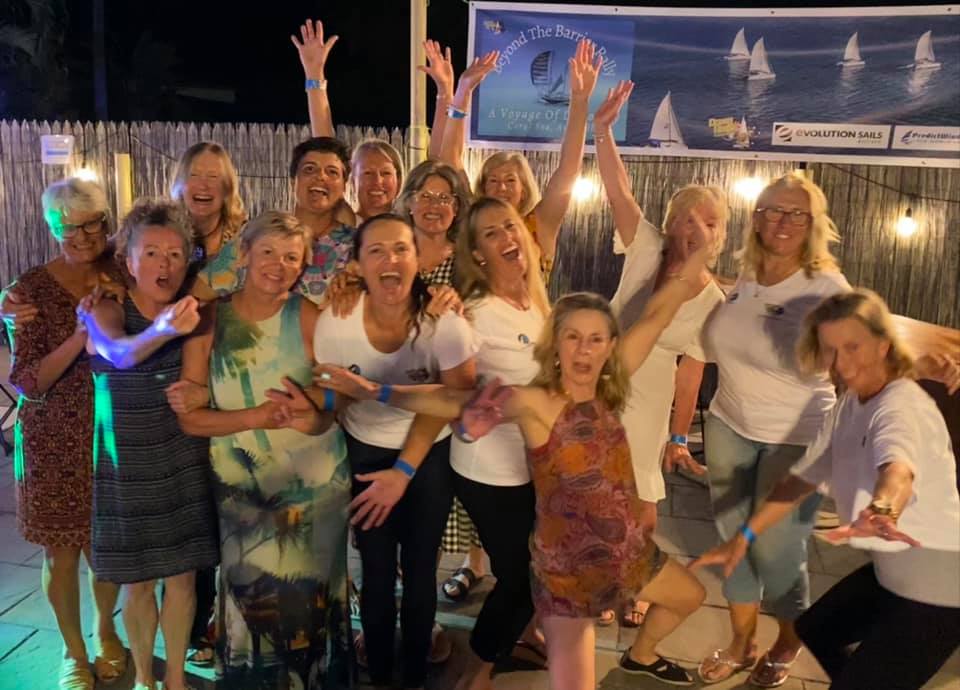
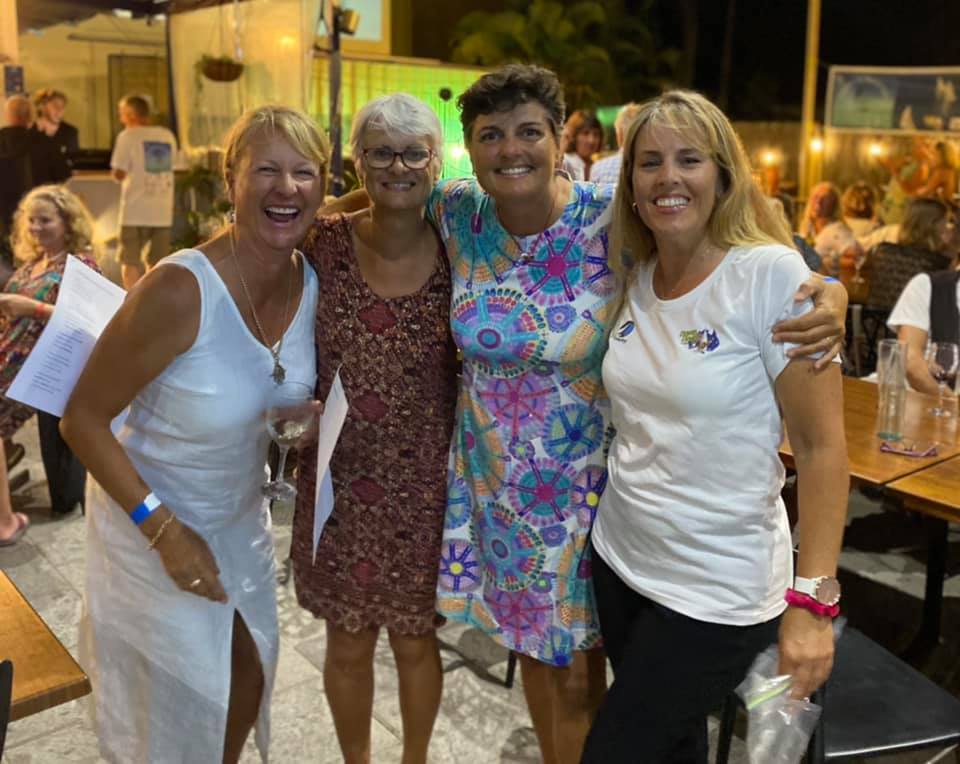
The next night it was PARTY NIGHT, with our final rally party at Sandi’s.  We had a band playing all the old songs that get you on your feet, and most people were up dancing and having a grand old time.  Photos from the rally scrolled by on big screens. I was asked to read my poem and the copies I’d printed were hot property. 

The following evening, we were back in the shelter shed Sailing Club, and we were able to observe a huge barge with a house and 2 semi-trailers aboard.  They eventually brought the house in to shore and manoeuvred it onto land, then took it away to its final resting place.  It was quite an operation.  Unfortunately, the night didn’t end well for Lynne from Mischief, who tripped on a tree root in the dark and badly twisted her ankle.  (I can report that after all this time, she is ALMOST better.  She did a hellava job on it!)

We spent some time with the guys from Indigo, bussing around the island and checking out the sights.  We wandered around Nelly Bay, Alma Bay and Arcadia.  There is definitely a lot more to see there, and some walks we are saving for our trip south.

By now, the rally was well and truly over.  Some people had already departed, heading north or south, onwards for more adventures, or homewards bound.  We found ourselves starting to say goodbye to new friends, as a chapter ended, and a new chapter of our cruising adventure began.

Beyond the Barrier Rally – Part 3

Diamond Islets

Hello all!  I write this from Cairns, where we are at in the midst of a 3-day lockdown due to ONE case of COVID-19. 

No more excuses.  Here’s the next blog.

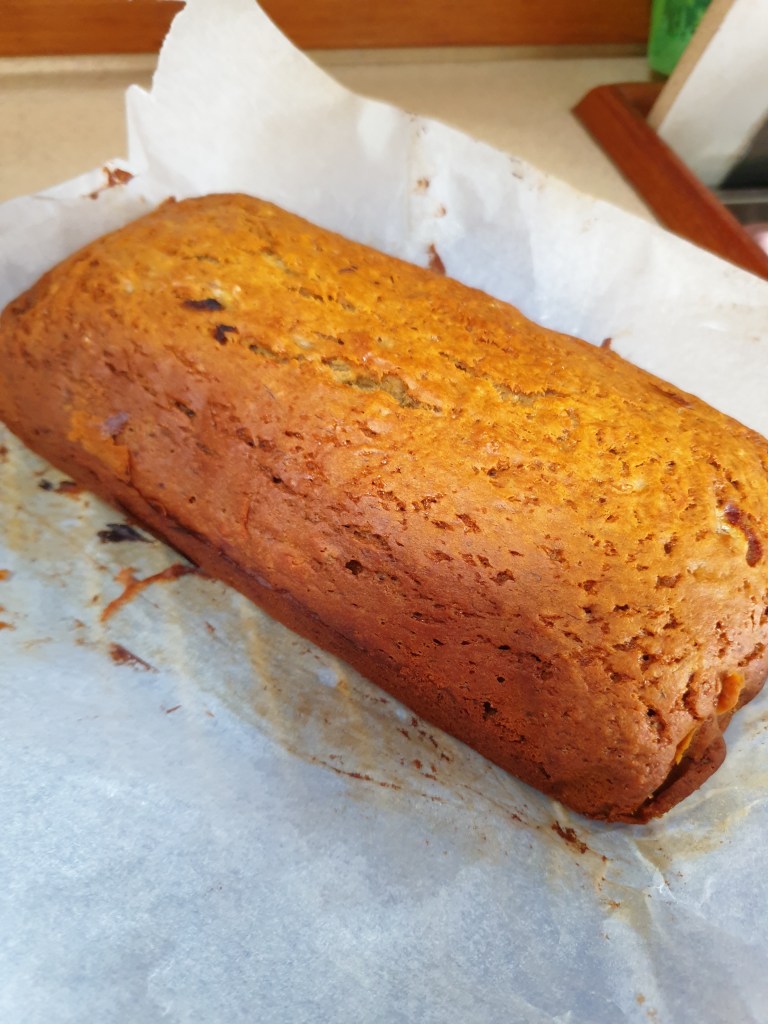
We left you in the beautiful surrounds of the Marion Reefs.  The next morning, we departed Carola Cay across placid waters and into a fairly calm day.  I made banana bread on passage, which was delicious eaten warm and smothered with melting butter. We settled in for what would be a 24-hour run.

In the early evening, we had (unexpected) squalls and a thunderstorm cross our rhumb line, with many of the boats experiencing heavy downpours and lightening uncomfortably close by.   We don’t have radar so couldn’t see the path of the storm, although we were listening to radio updates from those ahead and behind us, and planning accordingly.  One thing we always do when there’s electrical storm activity is to put portable electronics and devices in the oven, which acts as a Faraday cage and would hopefully preserve them if Symphony gets a lightning strike. Sarisha, not far from us, had a ‘near miss’, with some disruption to their electronics, but Mint, a new, very high spec catamaran, was struck (indirectly) and lost all electrical systems.  Being a ‘speccy’ boat, this meant they lost pretty much everything.  They had no lights, no autopilot, no navigation, no radar, no AIS (position reporting), no communications. They also lost control of their engines (a completely electronic system).  The rally organiser and a very persistent rally friend continued to call them over the radio and try to determine their position and status, after they went ‘dark’. Finally (poor) communications were re-established with their hand-held radio.  Fortunately, the very experienced family (2 adults and their 15-year-old son) were all OK.  They had to hand-steer and follow the navigation lights of another boat to maintain course and reach our next destination. 

Most of the fleet arrived too early at our next destination, with people having to slow their boats to allow for safe visual navigation (although some chanced it and went on in to the anchorage anyway).  We came in at the back of the pack, and whilst visually navigating and looking for a spot to anchor, the clouds decided to dump their load, and we were saturated within a couple of minutes. However, it wasn’t long ‘til the sky cleared, and we could get a good look at the slice of Paradise we had found.

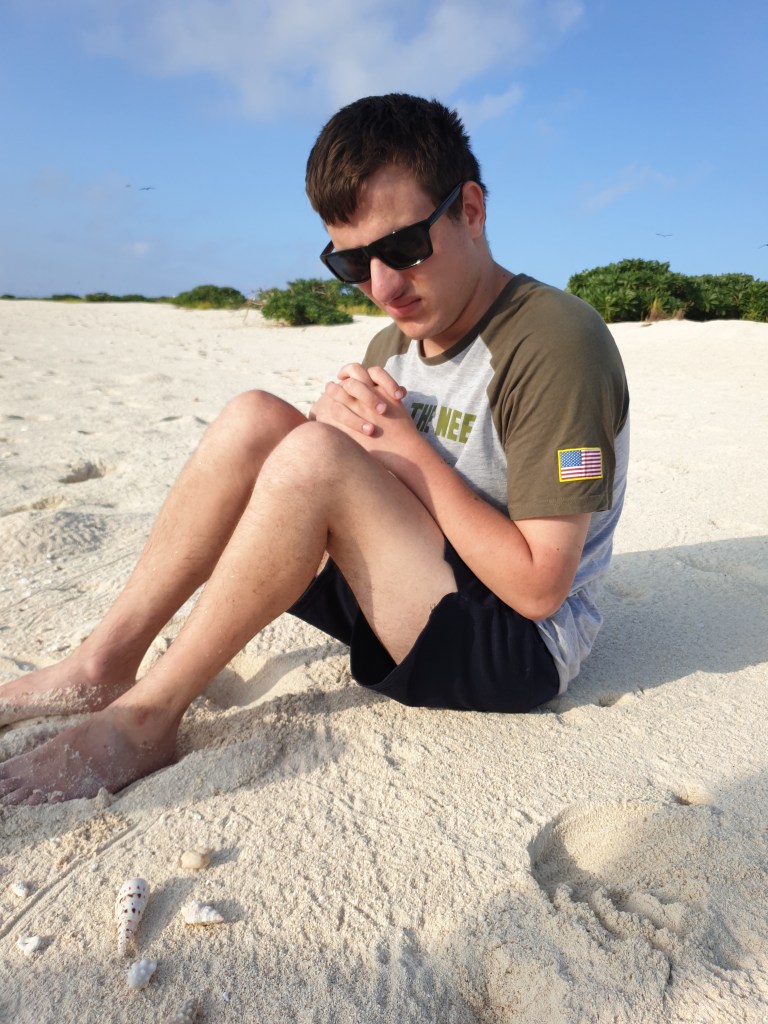
East Diamond Islet is truly a diamond in the crown of the surrounding reef.  It is an islet rather than a sand cay because it has vegetation and is a permanent landmass.  The surrounding water has the clarity of gemstones; topaz, emerald and aquamarine, through to sapphire.  We went to shore to the northern end of the islet soon after anchoring. Ours were the only footprints.  It is fair to say we were in awe at the pristine, wild beauty of the place, with its white sand scattered with coral and shells. 

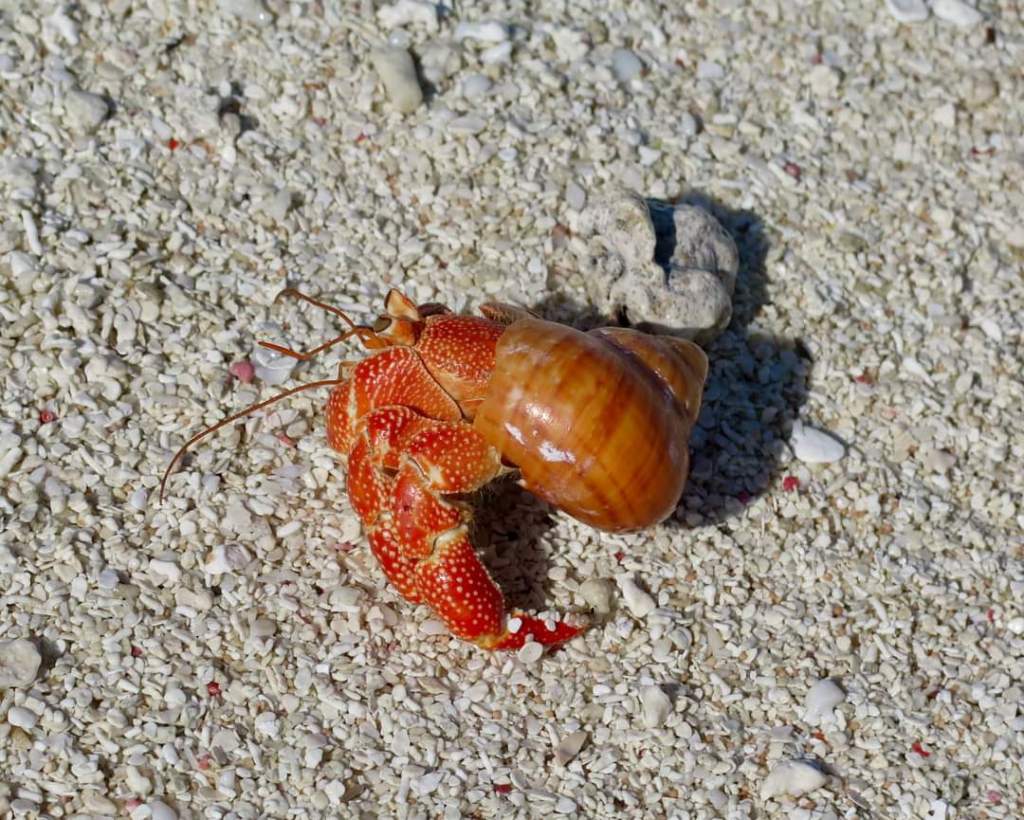
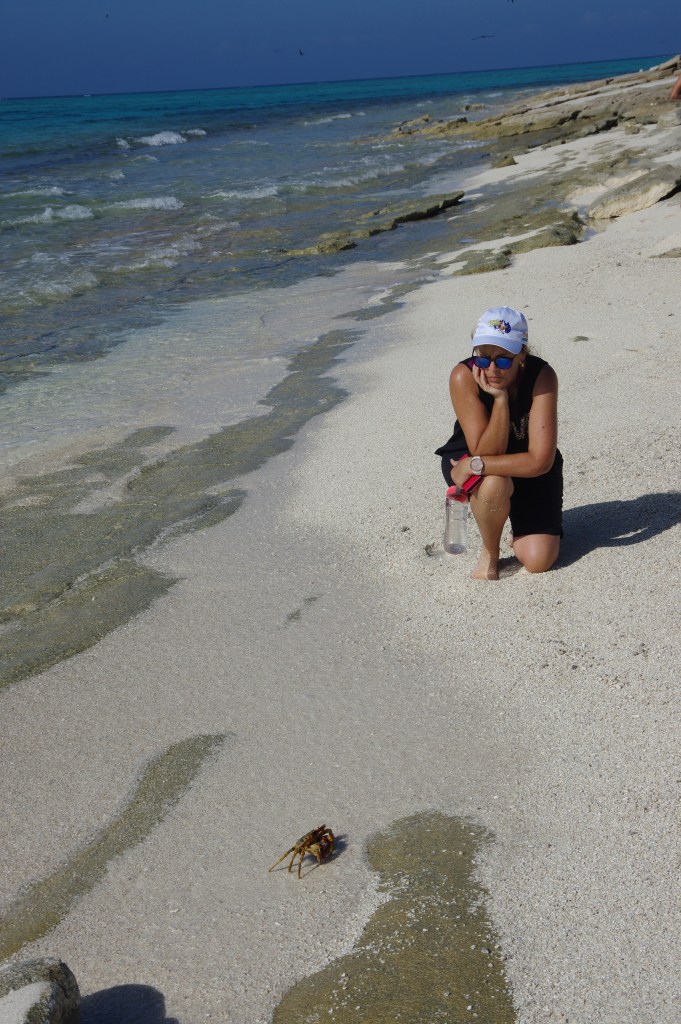
The hundreds of birds soaring overhead or nesting in the shrubs were more curious or indifferent rather than afraid. We saw dozens of red hermit crabs ambling along the water’s edge, and crabs the size of your hand scuttling along the rocky eastern shore.

Rather than give a day-by-day and blow-by-blow account of our time at the Diamond Isles, I’m going to give a brief outline of how our days usually played out, and I’m sure the pictures will help to paint the scene.

Mornings:  There was always a sched from the rally organisers.  One morning, John read my poem to everyone (see previous blog post if you missed it).  It went down very well, with everyone wanting copies, and I became a minor celebrity.  😊

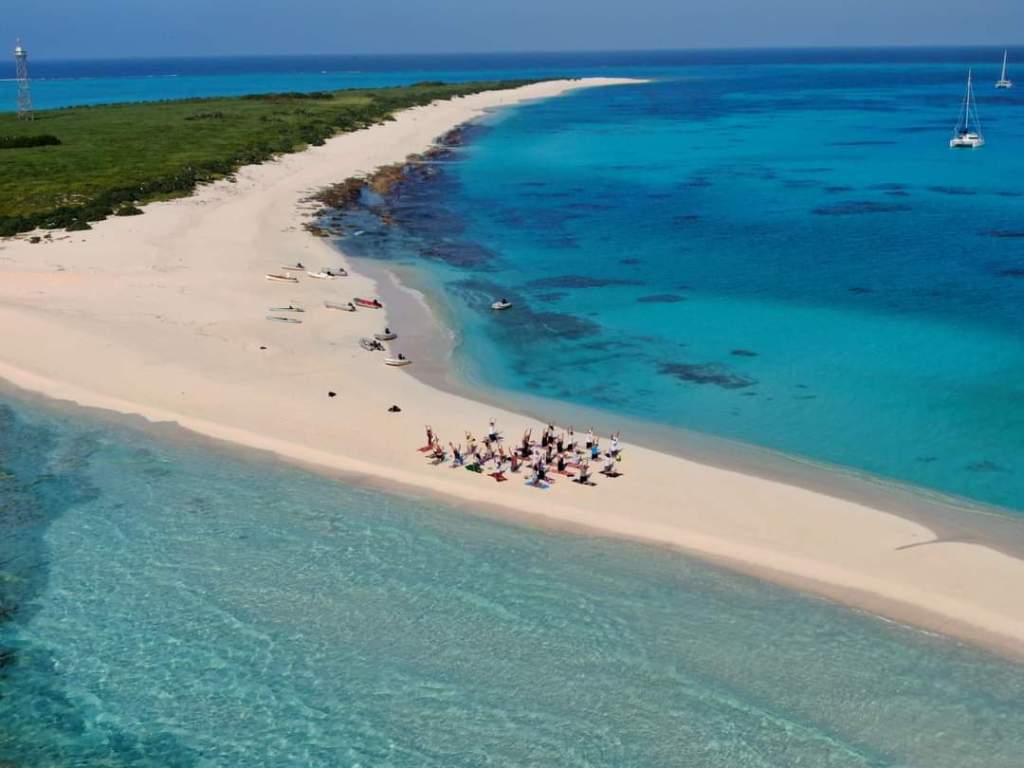
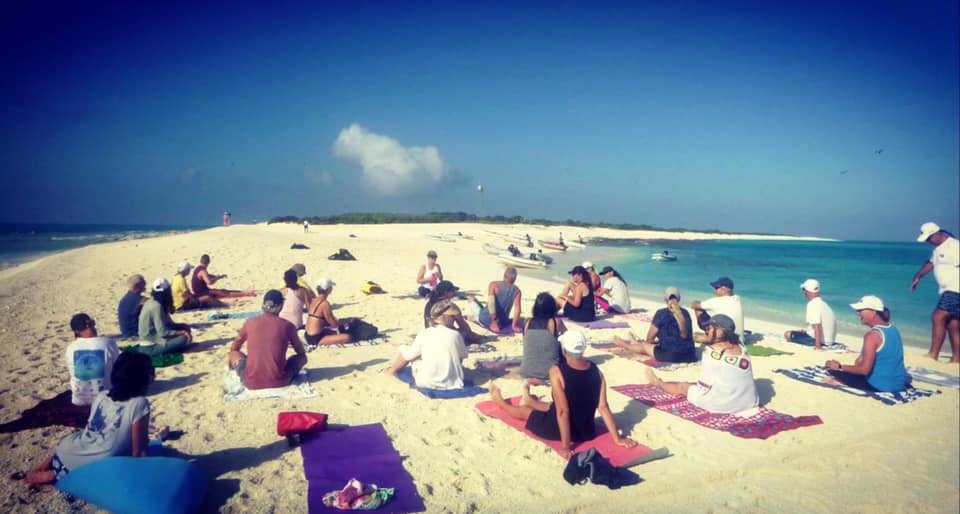
There was a yoga class on offer early every morning on the sand spit, run by Leanne Hembrow.  I can’t imagine a more magnificent place to practice yoga, and I attended several times.  After class, there was often a swim in the crystal waters.

One morning, we circumnavigated the islet on foot, and took photos of the nesting birds and surrounds (see previous photos).  Snowflake eels hunt the crabs in the shallows, and Caylie from Solo was, I think, the only one to get any footage, and things got a little exciting when the big eel came swimming straight towards her!

Team Solo encounter a snowflake eel. Video credit – Caylie Jeffery.

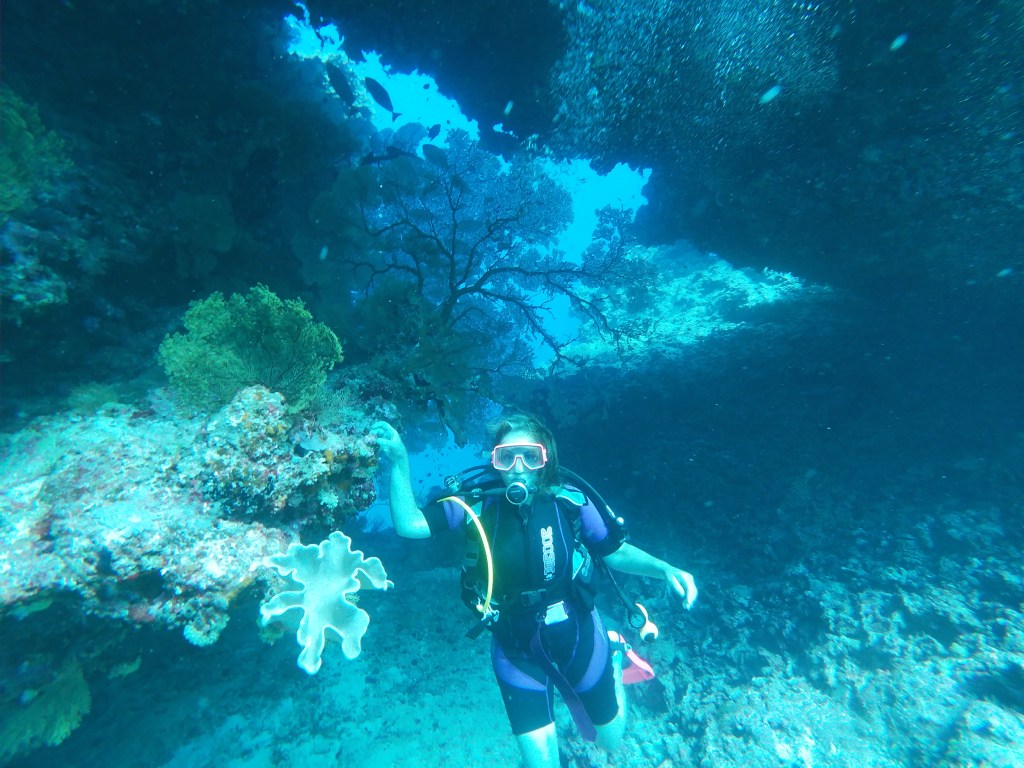
Later in the mornings/early afternoon, there was usually a snorkelling or diving experience, and we were fortunate enough to scuba dive with Peter and Michelle on the ‘Barracuda Bommie’, where there was indeed a huge resident school of barracuda, as well as a huge dog-tooth tuna (and her suitors), and a beautiful swim-though cave with an impressive Gorgonian fan. 

Dogtooth Tuna

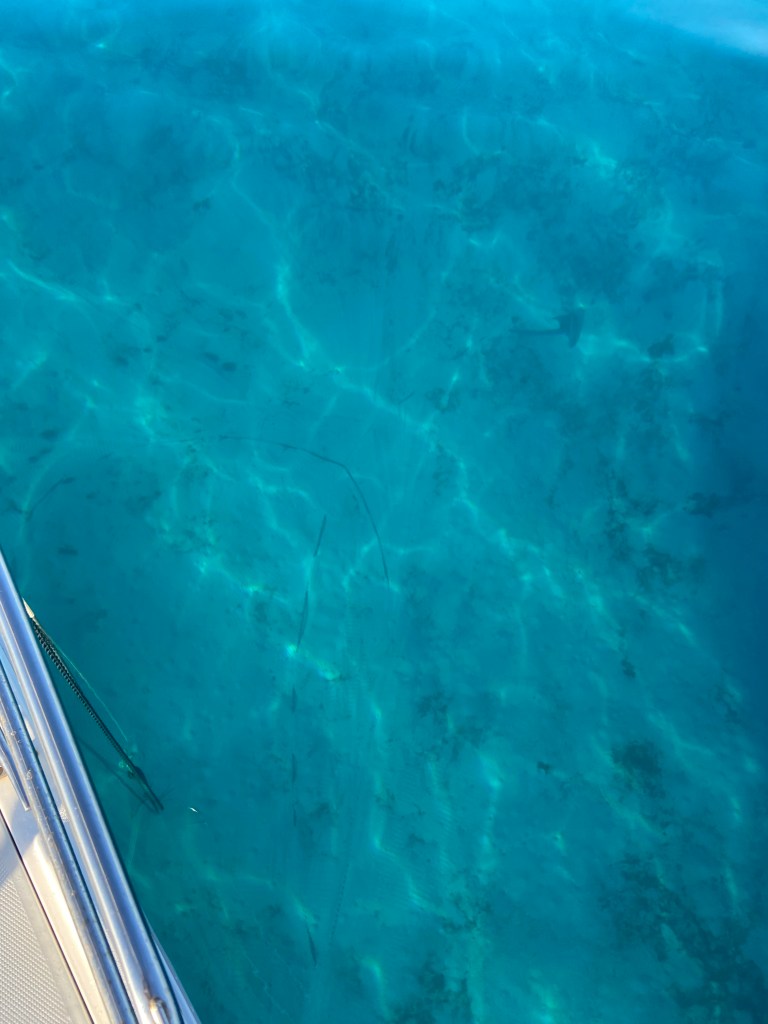
Can you see the shark?

Afternoons consisted of more water activities and culminated with sundowners on the beach.  Jamie always enjoyed these events, as there’s nothing he loves more than a good chat. 

At one of these beach events, the family from Mint recounted their lightening strike and how they managed the frightening situation.  Of special mention is the 15-year-old, Tyson, who is mature beyond his years and was a terrific help to his parents, keeping channels of communication open, providing updates on their status, and helming the boat while his father was down below controlling the engines!

Dinner was often reef fish, donated to us by fishing friends such as Forfar from Sarisha, who is quite the accomplished fisherman, and has passed on a few valuable tips.  Most nights, people went back to their own boats as it’s risky being out on the reef in a dinghy at night, although we did have the guys over from Indigo one night for a delicious fish curry (Emperor).  We were extremely grateful to Tracey and Julian, who had Jamie on board again, so that Graeme and I could go diving together.  Jamie loved being on their boat.  They have a washing machine and a bread maker, so he was able to help with washing and making pizza dough.  “Happy as a Jamie in a laundromat”!

Next stop, Flinders Reef. Until then…

Beyond the Barrier Rally – Part 2

Marion Reefs

7/8 June:  We left Saumarez Reefs around 0545, heading for Marion Reefs. 

Marion Reefs is 310 nautical miles east of Townsville, but from Saumarez, it was another overnight sail for us of some 180 nm . The Reefs consists of six main reefs, however we would be focussing on two areas with sand cays, Paget Cay and Carola Cay.

We sailed all day and all night, once again, in very squirrely seas.  We were grateful to arrive in Marion Reef at Paget Cay around 1320 on 8 June.  Stunning surrounds with a long stretch of sandy coral cay and a crystal clear anchorage in topaz waters.  The first thing we did after anchoring, was to throw on our togs and leap into the water!   Later, Graeme went for a spearfish at an amazing bommie, but the water was too clear making it hard to sneak up on the fish, so his speargun didn’t have the necessary range, and then the sharks arrived early so Grae returned empty handed. He had some problems with the shark shield too – it didn’t seem to be operating!  

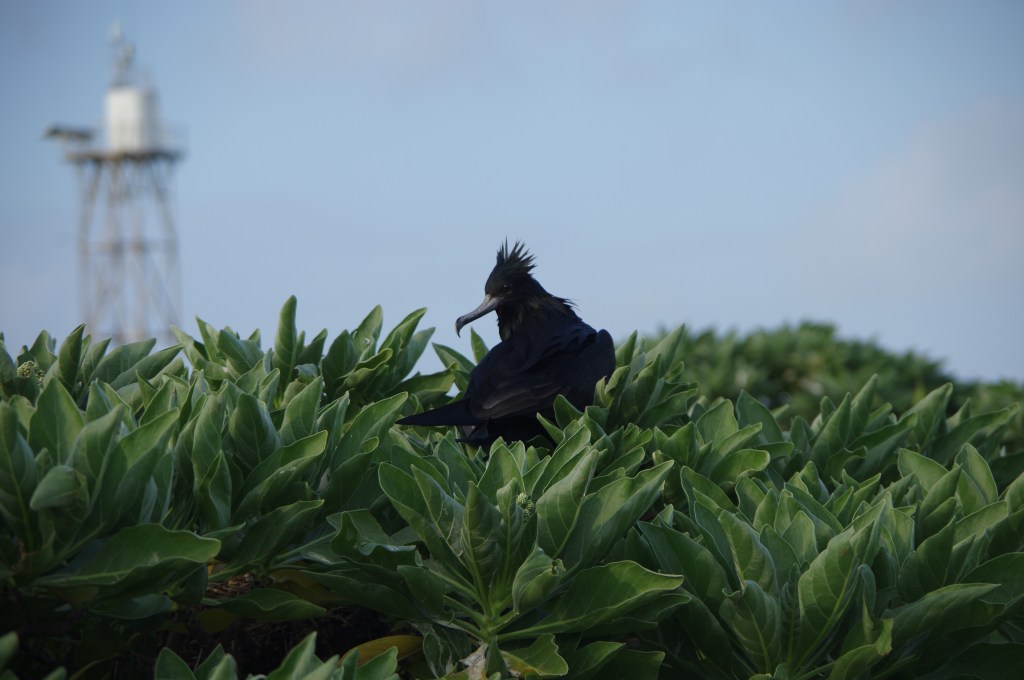
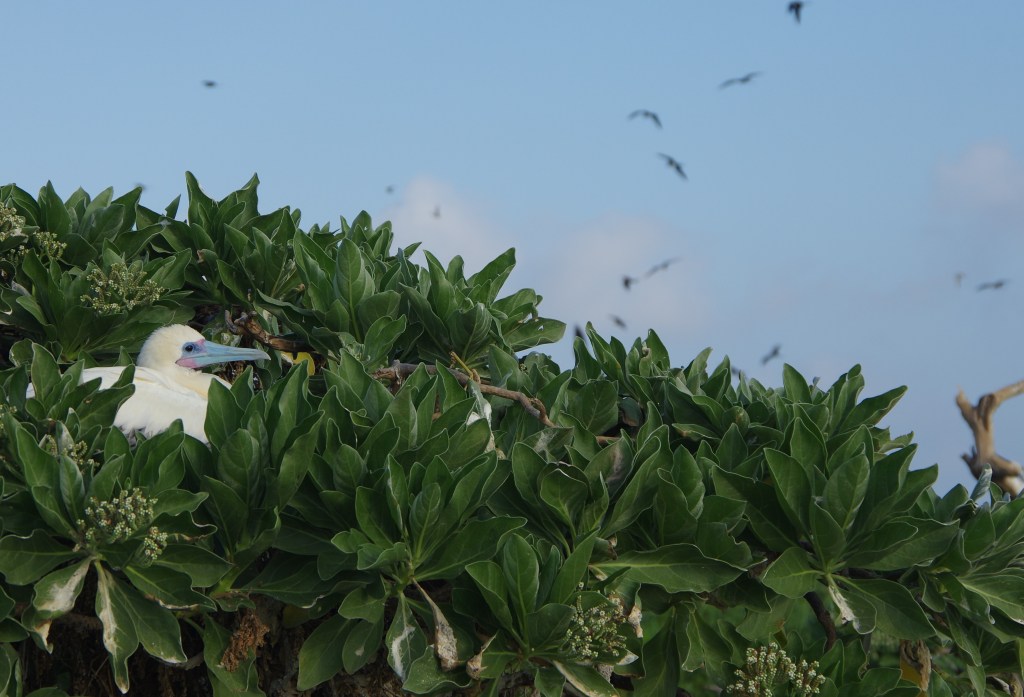
We had happy hour on Paget Cay in the company of frigate and brown booby birds. Due to the messy seas on passage, many people still had their ‘sea legs’ and it felt like the cay was rocking.

9 June:  We were extremely fortunate (and grateful!) that the lovely couple from Indigo (Tracey and Julian) offered to mind Jamie for us so that Graeme and I could go for a scuba dive together in the morning.  Peter (skipper of the mothership, Phoenix) took us out in his tender, Johny, to a dive site about a mile from the anchorage that they were familiar with.  Graeme was away into the water quite quickly.  Unfortunately, just as I was about to get in the water with all my gear on, my BCD (inflatable vest) failed.  It had a split hose (the hose where you inflate and deflate the device), so that was it for me diving!  (Yes, OK, some people dive without a BCD. I’m yet to reach that level.) I snorkelled over the top of the group of 3 bommies while the rest scuba dived.  It was a pretty dive, with plenty of coral and fish life.  Graeme came back to report gorgonian fans (a flat filigree tree of coral, found in deeper water, usually brightly coloured and beautiful to discover), as well as giant clams and resident reef sharks.

Reef shark at a comfortable distance on Marion Reef
Christmas Tree Worms (look like a spiral pipe cleaner and retract if threatened).
Gorgonian fans (coral) at Marion Reef
Giant clam on Marion Reef

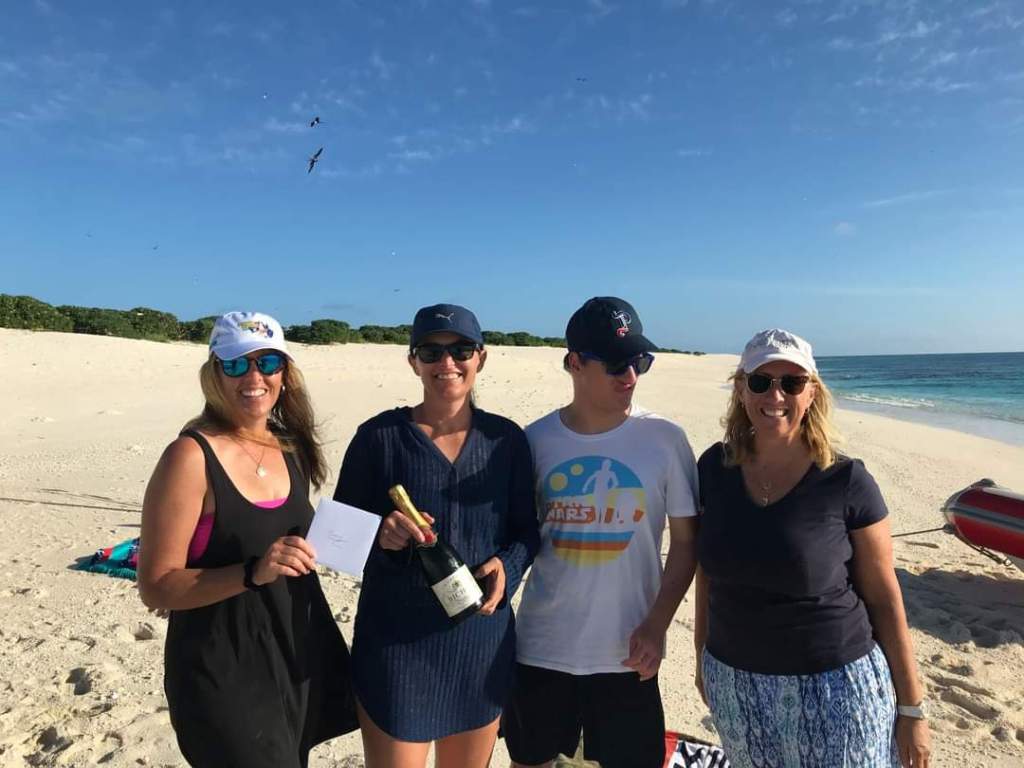
In the afternoon, we joined Mischief, Walden and Indigo for a snorkel off the beach near a wreck, which proved extremely rewarding, with a maze of channels to explore, a huge variety of reef fish of all sizes and colours, including anemone fish darting in and out of anemones, long toms and an unusual school of angelfish.  We also saw giant spider shells, cone shells, massive hard and soft corals, and sea snakes.  A great dive, culminating in a bottle of champagne shared on the beach before heading back to our boats for the night.

We spent the night enduring more rock and roll than an Elvis concert, after a change came through with the wind turning from the North to the West, then South, then settling on Southeast. It was forecast to only be 10kts, but it brought with it wind squalls up to 25kts, and heavy rain.  Picture trying to cook dinner when you alternatively have to hold on to the kitchen bench to keep from being flung backwards into the loungeroom, or wedging yourself against it so that you don’t end up on top of it!  Sleeping in conditions where you keep becoming airborne is also not as much fun as it sounds. 
10 June: The next morning, some claimed it was the rolliest anchorage they had ever experienced.  We were certainly up and down (more up than down!), rearranging things and stuffing cupboards with towels to reduce the clinking of bottles and glassware.

In the morning, Graeme went for a spearfish with Leyton from Walden and the guys from Discovery.  He returned with a spotted sweetlips – a delicious reef fish – but only after outwitting the sharks!

We packed up and headed the 10 miles to Carola Cay, another sand island in the Marion Reefs.  Indigo and Mischief were very trusting, following us as I visually navigated from the front deck.  Goolara, one of only 2 powerboats on this trip (and absolutely beautiful!), moved along the reef edge, pulling in fish after fish.

We anchored outside the rest of the boats (who had come over the day before) in about 13m of water, amongst deep bommies.  We made bread and did lots of cleaning up before making our way over the sand cay for our first coral cay happy hour. 

We walked up the sand hill to the weather station, but didn’t get too close as the zillions of birds were coming in to roost. 

Returned to the boat as the sun was beginning to set, and had a much nicer evening, with red emperor for dinner (thanks to Forfar from Sarisha for a few magnificent fillets!)  That evening, I wrote a bit of a poem about the rally, including all the rally boat names (in bold). I’ll include it here as we wrap up this blog.

Ode to the Inaugural Beyond the Barrier Rally, June 2021

A-sailing I will go
It’s my passion, don’t you know?
Off on a voyage of discovery
Like Marco Polo so long before me

Not alone!
Not solo will I be
But rather with my rally friends
Goolara, The Bach, Ruela, Mika and Kalani

And we’ll call on pneuma; God’s breath,
As we cast off our lines,
To fill our sails and speed us
To distant, warmer climes

And our boats will dip and glide
And rise in the sea
Each one contributing
To an ocean symphony

And when it rolls all night
And the cruising gets tough
Or the fish won’t bite
Or the waves are rough

I will remember my dreams
Resolute will I stay
And like a phoenix from the ashes
I’ll rise and face the new day

Then we’ll find our own
Slice of paradise
And we’ll sip cool drinks with mint
And plenty of ice

And hell no, I won’t be bored none!
What with
Fishing diving snorkelling yoga
and playing “Where’s Walden

I’m sure at some point
Mischief will find me
And I’ll prob’ly get drunk
Or at least a bit tipsy

We’ll go for sundowners
On some lonesome coral cay
Where the waves lap the shore
Listen: Can you hear what they say?

Sarisha, sarisha”
It’s a musical sea whisper
And it’s there that I’ll find my serenity
As the sun sets over an indigo sea

So, I’ll leave you with this
As I head out to sea;
If I have nothing else, I’ve got my Down Under Rally shirt
And my dignity

Beyond the Barrier Rally – Part 1

Saumarez Reefs

About time, I hear you say! Finally a new blog! Yes, we’ve been a little busy, (mostly socialising, I will admit). AND, we had NO internet service while we were out on the reef, so that gives me a little reprieve, I hope?

3 June:  Our first destination was the Saumarez Reefs, which lay some 200 nautical miles from Bundaberg. We estimated that would be a 40-hour journey if we maintained the modest speed of 5 knots per hour, based on our boat type and the predicted conditions.

Originally, the plan was to leave Bundaberg and head straight for Saumarez, but some clever people suggested a layover at Lady Musgrave on the way, to break the trip up a little.  Most of the rally participants, us included, decided this was the way to go, as we liked the idea of a short trip to help us settle in and get our ‘sea legs’.

You may have wondered from my last blog why we left Bundaberg at 0300 (and if we got any sleep before the alarm went off at 0230 – not much!).  Well, for those unfamiliar with sailing in reef areas, you need to plan your trip based on what time you need to arrive.  In reef areas, coral bommies can rise from depths of 50 metres to the surface, creating significant danger.  If you hit one, you’ll likely sink your boat.  Not something we really want to do! So, you plan to arrive based on the best conditions for being able to get a visual sighting of any navigational hazard.  Best time for visibility is usually between the hours of 10am and 2pm, with the sun well overhead – when you’re not looking into the sun or dealing with the sun shining off the water.  When looking out for bommies, we know how deep the coral is based on the colour we can see.  If it’s yellow or green, it’s close to the surface and we try very hard to avoid it. This means I’m usually up on the bow of the boat keeping watch and using hand signals to alert Graeme (on the helm) to any potential hazards and which way to steer to avoid them! This works well for us.

4 June: We were grateful to be able to break the trip up into two legs.  The island at Lady Musgrave announces itself with a white stripe of beach and a dark swath of vegetation way before you can discern the reef. 

The water begins to change colour as you approach, shading from a navy-blue to sapphire to aquamarine.  Leaving at 3am saw us arriving in Lady Musgrave easily within the visual navigation window, so no problem finding a sandy spot between bommies and settling in for the night, after what had been a pretty rough and rolly trip with little wind and lumpy seas. 

Lady Musgrave is a wonderful place to spend a bit of time. There’s good diving and snorkelling, and an island to explore, while your boat can shelter in the enclosed lagoon. Our friends, Andrew and Lynne on Mischief, have been fortunate enough to be there during turtle nesting season. Those who have followed our blog will know we’ve visited before. Alas, weren’t there to do any of those things this time. We were simply hoping to get a good nights’ sleep in the protected lagoon.  But it was not to be! Some unexpected rain squalls came through the anchorage during the night, which meant much anxiety and anchor watching.  No dragging for us, of course, with our trusty Rocna anchor, but others had difficulties, and had to re-anchor in the night, which is an extremely risky proposition with no visual on the bommies.  
Anchor a-weigh at 1000 and out through the pass into conditions that became unpleasant fairly quickly, and remained that way through the day and into the night, with what Graeme describes as ‘squirrely’ seas, due to the way they make us skitter this way and that in an unpredictable and flighty motion.  The following video shows us ‘squirrelling’ around in the messy seas, with credit to Kym Petersen from Discovery. Oddly, the seas never look big in photos/video, but the way the boat is rolling around may help you appreciate what we were going through inside.

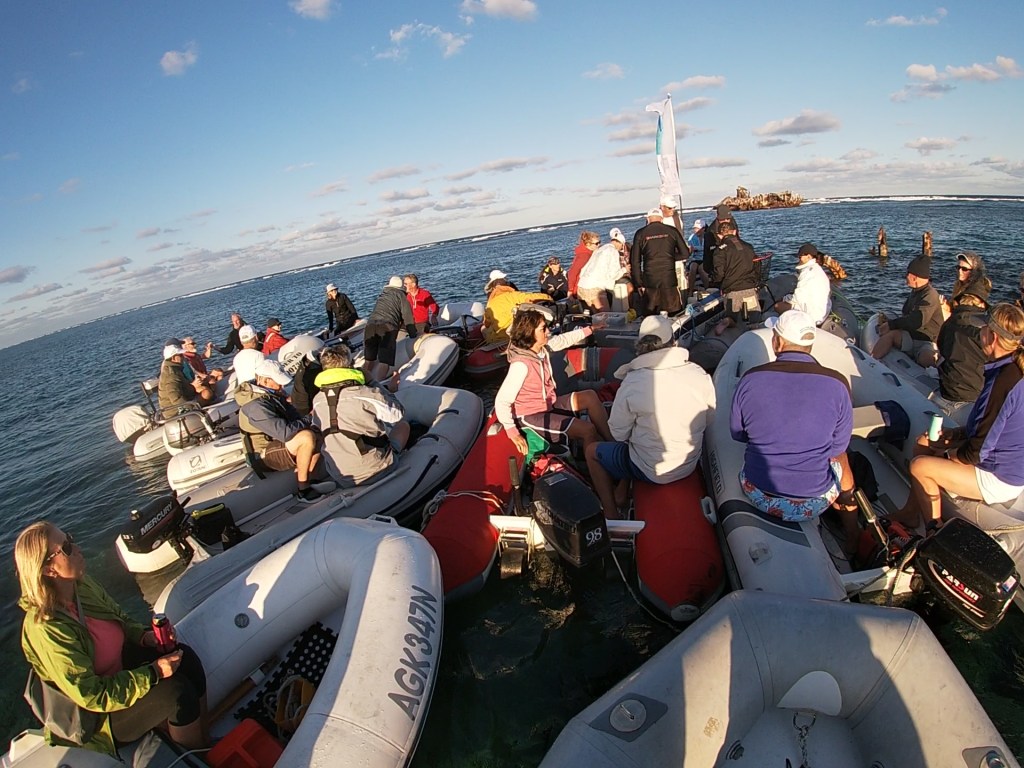
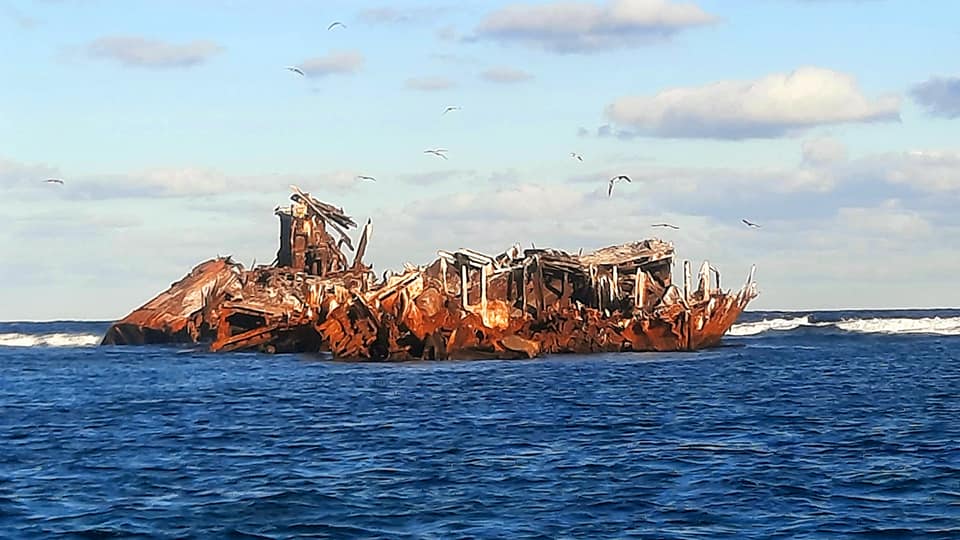
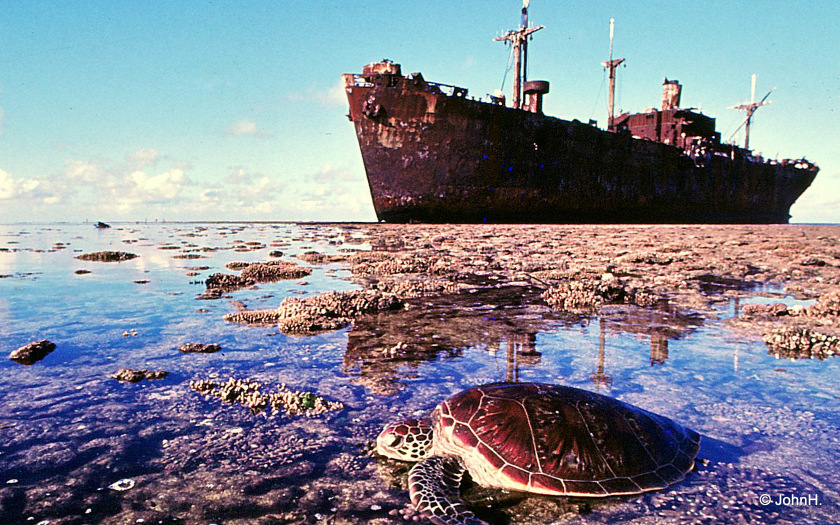
5 June:  The unpleasant passage finally came to an end about 24 hours later (averaging MORE than 5 knots, thankfully).  We couldn’t have been more relieved to follow the waypoints into the lagoon at Saumarez Reefs, where we anchored near the wreck of the SS Francis Preston Blair.

There’s no sand cay at Saumarez, but the fringing reef is visible, and the wreck stands proud. You can see where we anchored in the picture above.

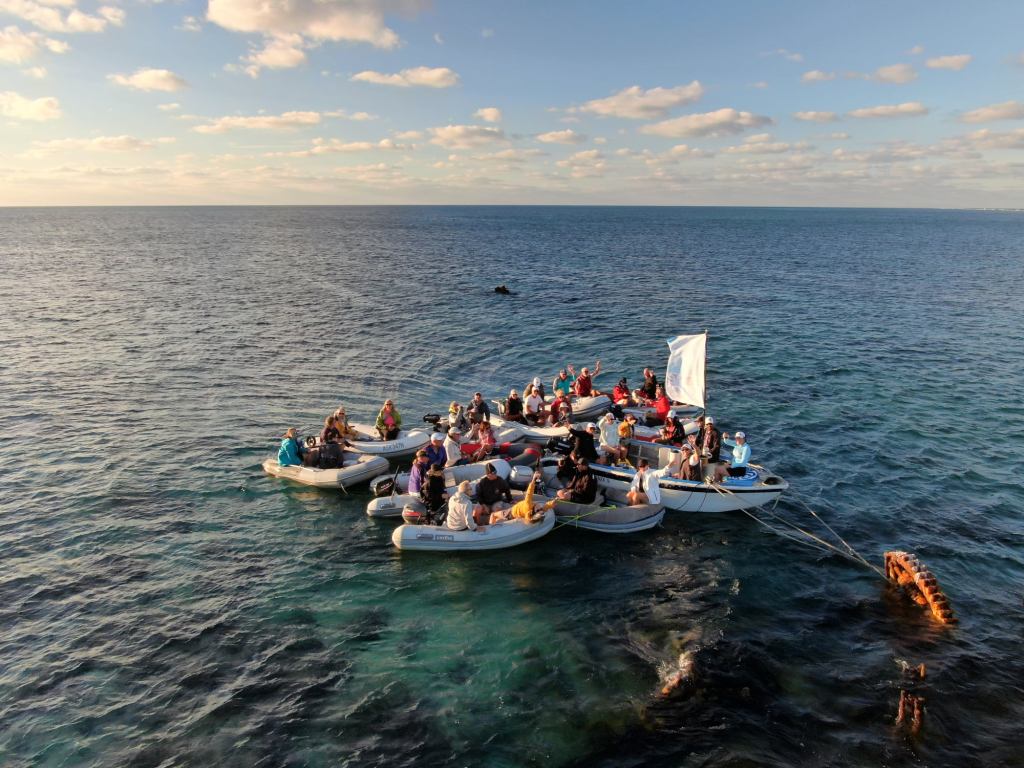
Graeme took the opportunity to go for a snorkel that day, reporting some wonderfully clear conditions with lots to see, including turtles and lots of fish.  For sundowners, we created a ‘dinghy island’ in shallow water and floated around, chatting about the passage and the beauty of the area. Here’s a link to a video by the Down Under Rally guys. We are the dinghy furthest left. (This link will open in a new tab then you’ll need to close it and come back here to see the rest of the blog.) https://www.facebook.com/downunderrally/videos/241069104152629

The Francis Preston Blair was built in 1943 … The WW2 7196-ton Liberty Ship was struggling to maintain course during a cyclone and was forced aground on Saumarez Reefs 9.30am on 15 July 1945, while travelling between Papua New Guinea and Sydney [possibly under attack at the time]. The Liberty Ship was one of 2710, built during the war effort. The daughter of one of the crew described her father’s account of the grounding, saying ‘It was the typhoon that put Blair on the reef. The ship was taking water over the bow. When she struck the reef, she rose, then settled gently. The captain ordered all to stay on board due to the sharp coral and large number of sharks’.

The Australian Government purchased the wreck in 1952 … for target practice by the RAAF’s F-111 bombers.

Peter Sayre, Australia’s Coral Sea Islands & Marine Park (2019)

6 June: The next day, pretty much everyone went snorkelling near the wreck.  This is the first time we have done any diving with sea snakes, and we were pretty apprehensive about running into these slithery critters, having strong aversions to their land-based cousins.  (And did I mention, they’re deadly?)   Fortunately, they have very small mouths and are not aggressive.  Turns out they’re wonderful to watch. They have been known to cause fatalities when they bite people in the webbing of their fingers, so as long as you’re not trying to hit them or handle them, you’re pretty safe.  They tend to coil out from under a rock ledge, ripple like a gymnast’s ribbon to the surface, where they take a breath, then ripple back down to their nook.  Some people experienced their inquisitiveness, with the little snakes coiling around their legs and arms.  I was more than happy to watch from a distance! 

Sea snake video by Graeme

We enjoyed morning tea on one of the big Schonning catamarans, Pneuma, hosted by Rod and Christine.  It was a good opportunity to meet and chat to more of the rally participants over fresh baked bread and caramel slice. Jamie discovered they have a washing machine on board and extracted a promise to be allowed to help with the washing at some stage in the future.

Our first experience of the Coral Sea reefs was proving to be challenging, exciting and rewarding . There’s never been a rally out to these places before, and we were discovering we had become part of something unique and really special.

Next stop: Marion Reef.